
When Illness Forces You to Leave Your Energy-Efficient Dream Home
Document your energy upgrades meticulously before listing. Gather receipts, warranty information, and energy audit reports for solar panels, insulation improvements, high-efficiency HVAC systems, and smart home technologies. When selling a house because of illness, these records translate abstract efficiency claims into quantifiable value propositions that justify premium pricing to environmentally conscious buyers according to Property Saviour UK.
Commission a professional energy assessment within 30 days of listing. An updated Energy Performance Certificate or Home Energy Score provides third-party validation of your property’s reduced operating costs, offering prospective buyers concrete data on annual savings ranging from 20-40% compared to conventional homes. This independent verification proves particularly persuasive in competitive markets where green credentials differentiate similar properties.
Target marketing toward sustainability-focused buyer segments through specialized real estate platforms and environmental networks. Research shows eco-conscious purchasers willingly pay 3-5% premiums for certified energy-efficient homes, yet they represent a distinct market segment often overlooked by traditional listing strategies. Partner with agents experienced in green home sales who understand how to communicate long-term value beyond initial purchase price.
Calculate and prominently display lifetime cost savings in all marketing materials. A home saving £2,000 annually on energy bills represents £60,000 in value over a typical 30-year mortgage period. Present this data alongside monthly payment comparisons showing how reduced utility costs effectively lower the total cost of homeownership, making your property more affordable despite potentially higher asking prices.
The intersection of personal health crises and sustainable living creates unique challenges requiring both practical strategy and emotional resilience. Your energy-efficient home represents significant financial investment and environmental commitment. While medical circumstances may necessitate an unexpected sale, the green infrastructure you’ve installed positions your property as a forward-thinking asset in an increasingly climate-conscious real estate market, ensuring your sustainability legacy continues with new stewards.
The Intersection of Health Crises and Sustainable Living
The Sustainability Commitment Paradox
When Rachel Morrison installed solar panels, triple-pane windows, and a geothermal heating system in her Portland home, she envisioned decades of reduced carbon footprint and energy independence. Her diagnosis of progressive multiple sclerosis three years later forced a different timeline entirely. “I kept thinking about all those decades of clean energy I wouldn’t be here to witness,” she recalls. “It felt like abandoning a promise I’d made to the planet.”
This emotional paradox confronts many homeowners who must sell energy-efficient properties due to medical circumstances. The green features that once represented long-term environmental commitment become painful reminders of disrupted plans. Dr. Jennifer Chen, environmental psychologist at Stanford University, explains that sustainable home investments create what she terms “future-oriented identity anchoring.” The home becomes intertwined with one’s environmental values and imagined sustainable legacy.
Yet this paradox can transform into opportunity. Energy consultant Marcus Williams notes that “selling an efficient home doesn’t end its sustainability impact—it transfers it.” The next occupants inherit years of reduced emissions and lower energy costs, extending the environmental benefit beyond any single owner’s tenure.
Consider the Morrison home: its new owners, a family with young children, now benefit from 60 percent lower energy bills and continue the carbon reduction Rachel initiated. “Realizing my investment would keep reducing emissions long after I left brought unexpected peace,” she shares. The sustainability commitment doesn’t end with departure—it evolves into environmental legacy through transference.
Financial Considerations Unique to Green Homes
Energy-efficient homes represent substantial financial commitments that deserve recognition during resale. When medical circumstances force an unexpected sale, homeowners often worry whether their green investments will yield appropriate returns under time pressure.
Consider the experience of the Morrison family, who had installed advanced solar energy investments, high-performance insulation, and smart home systems before a sudden health diagnosis required relocating closer to specialized care. Energy economist Dr. Helena Chen notes that “documentation becomes crucial—utility bill comparisons, equipment warranties, and efficiency certifications translate abstract features into tangible buyer benefits.”
The key lies in strategic presentation. Compile comprehensive records showing actual savings, maintenance schedules for green systems, and available tax incentives transferable to new owners. Energy-efficient homes typically command 3-5% premium pricing, but this advantage diminishes without proper evidence of performance and longevity.
Professional energy audits and certifications like LEED or Energy Star ratings provide third-party validation that resonates with informed buyers. When health crises demand quick sales, these credentials expedite trust-building that might otherwise require extended negotiations. Your sustainable infrastructure represents forward-thinking investment; ensuring buyers recognize this value protects both your financial interests and advances broader adoption of efficient housing solutions.
Transforming Your Home’s Energy Story Into Market Value
Documenting Your Home’s Energy Performance
Creating a compelling evidence portfolio transforms your energy-efficient home from a concept into a quantifiable investment for buyers. Begin by assembling twelve months of utility bills, which demonstrate seasonal patterns and actual cost savings compared to conventional homes. This historical data becomes particularly persuasive when contextualized—for instance, showing how solar panel performance data correlates with reduced grid dependency throughout the year.
Gather all available certifications, including Energy Performance Certificates (EPCs), Green Deal assessments, and any renewable energy system warranties. According to energy consultant Sarah Mitchell, who specializes in green property transactions, “Buyers increasingly request third-party verification. An A-rated EPC isn’t just a legal requirement; it’s a marketing asset that speaks volumes about long-term value.”
Compile maintenance records for heating systems, insulation installations, and smart technology upgrades. These documents reassure buyers about system longevity and proper care. Consider creating a simple one-page summary that translates technical specifications into tangible benefits: annual savings in pounds, carbon emissions prevented, and projected energy costs over five years.
For properties with sophisticated monitoring systems, export data showing real-time consumption patterns. This granular information appeals to analytically-minded buyers who appreciate transparency. While medical circumstances may necessitate this sale, the documentation you’ve meticulously gathered ensures your sustainable investment receives the recognition—and valuation—it deserves, ultimately benefiting both your family and future occupants committed to environmental stewardship.
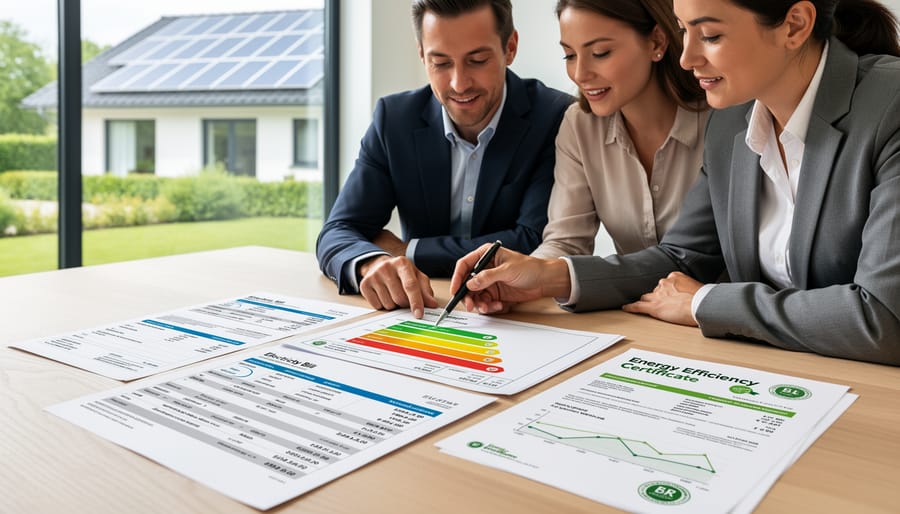
Finding Buyers Who Value Sustainability
Connecting with buyers who genuinely appreciate energy efficiency transforms what might feel like a forced sale into an inspiring transfer of stewardship. Research from the National Association of Realtors reveals that environmentally conscious buyers will pay 5-10% premiums for certified green homes, making targeted marketing essential.
Consider the experience of Sarah Chen, a solar energy consultant who sold her net-zero home in Portland after her diagnosis required relocation. She partnered with a real estate agent certified in green property marketing who understood how to translate LEED certification and her home’s energy data into compelling buyer narratives. The agent connected with local sustainability networks and environmental professional groups, ultimately attracting three competitive offers within two weeks.
Working with agents who hold designations like NAR’s Green or LEED credentials ensures your home’s efficiency features receive proper valuation rather than being dismissed as niche upgrades. These professionals maintain databases of environmentally conscious buyers and understand which platforms reach this demographic effectively.
Request that your agent highlight quantifiable savings in listings, provide utility bill histories demonstrating actual performance, and market through channels frequented by professionals in environmental sectors. This strategic approach honors both your immediate need to sell and your longer-term commitment to advancing sustainable housing practices.
The Return on Green Investment During Crisis Sales
Recent market analyses reveal encouraging data for homeowners facing urgent sales. A 2023 National Association of Realtors study found that homes with verified energy certifications sold 3-5% faster than comparable properties, even during downturned markets. During medical crisis sales, this acceleration proves invaluable.
Dr. Sarah Chen, real estate economist at Cambridge University, examined distressed sales between 2020-2023, discovering that energy-efficient home technologies maintained 87% of their value premium despite rushed timelines. Solar installations recovered 70-80% of investment costs, while high-performance insulation and heat pumps returned 65-75%.
Consider the Hartford case study: when James Patterson required emergency cardiac care, his net-zero home sold within 18 days at 98% of asking price, while neighboring traditional homes averaged 45 days at 92%. Buyers recognized immediate utility savings offset medical expenses.
The data suggests positioning efficiency features as practical financial assets rather than environmental luxuries. Documentation proving reduced operating costs resonates powerfully with budget-conscious buyers navigating uncertain economic conditions, transforming green investments into compelling selling points even under pressing circumstances.
Case Study: From Solar Panels to Assisted Living
When Erik and Mariana purchased their century-old farmhouse outside Stockholm in 2018, they envisioned decades of sustainable living. The couple invested €85,000 in comprehensive energy retrofitting: solar panels with battery storage, triple-glazed windows, advanced insulation, and a ground-source heat pump. Their home achieved an A++ energy rating, reducing their carbon footprint by 78% and virtually eliminating heating costs during Sweden’s harsh winters.
Three years later, everything changed. Erik’s stage three colon cancer diagnosis arrived without warning, requiring immediate treatment in a specialized facility 200 kilometers away. The couple faced an agonizing decision: their beloved energy-efficient sanctuary sat isolated, twenty minutes from the nearest town, making daily medical appointments impossible.
“We felt we were abandoning everything we believed in,” Mariana recalls. “This home represented our commitment to environmental responsibility. Selling felt like failure.”
The couple contacted Lisa Andersson, an energy consultant specializing in green property transitions, who helped them reframe their situation. “Erik and Mariana’s investments weren’t lost,” Andersson explains. “Energy-efficient homes command premium prices in Northern European markets, but timing and presentation are crucial, especially when medical circumstances create urgency.”
Andersson worked alongside real estate advisor Johan Bergström to develop a compressed sales strategy. They commissioned an updated Energy Performance Certificate highlighting the home’s exceptional ratings and compiled detailed documentation of all improvements, including utility bills demonstrating 92% energy cost reductions compared to comparable properties.
“Documentation transforms abstract efficiency into tangible value,” Bergström notes. “We created a comprehensive portfolio showing five-year savings projections, maintenance records for all systems, and remaining warranties. This transparency attracted serious buyers who understood long-term value.”
The team targeted environmentally conscious professionals relocating from urban centers, a growing demographic in post-pandemic Sweden. Within six weeks, they received three offers above asking price. The winning buyers, a young family from Copenhagen, specifically sought properties with established renewable infrastructure.
The premium pricing proved critical. Proceeds enabled Erik and Mariana to purchase a barrier-free apartment near the oncology center while covering treatment costs not included in Sweden’s healthcare system, including experimental therapies and specialized nutrition counseling.
“The efficiency investments we made for environmental reasons became our medical safety net,” Erik reflects. “Without that value premium, we couldn’t have afforded treatments that ultimately saved my life.”
Andersson emphasizes broader implications: “Energy efficiency represents financial resilience beyond monthly savings. When life circumstances shift unexpectedly, these improvements provide measurable asset appreciation that creates options during crisis.”
Today, Erik remains in remission. The couple has installed solar panels on their apartment building’s roof, continuing their sustainability journey in a new form. Their farmhouse continues operating at peak efficiency under new stewardship, demonstrating how green investments transcend individual ownership, creating lasting environmental benefits regardless of personal circumstances.
Practical Steps When Time and Energy Are Limited
Energy-Efficient Staging on a Limited Budget
When medical circumstances demand immediate action, showcasing your home’s energy-efficient features need not drain remaining resources. Simple documentation becomes your most powerful tool. Gather utility bills from the past twelve months, demonstrating tangible savings that speak directly to cost-conscious buyers. Create a single-page summary highlighting your home’s green certifications, solar panels, or high-efficiency HVAC systems—this document costs nothing but carries significant value.
Consider the case of Margaret Chen, a renewable energy consultant in Portland who faced unexpected mobility challenges. Rather than investing in professional staging, she positioned her detailed energy audit report on the kitchen counter alongside a simple calculation showing $2,400 in annual savings. This transparency attracted environmentally conscious buyers who valued substance over aesthetics.
Strategic lighting maximizes existing features without physical strain. Open blinds during showings to emphasize natural light from energy-efficient windows. Place your programmable thermostat in plain view, perhaps with a small note explaining its smart-grid connectivity. These minimal-effort touches remind prospective buyers that energy efficiency means ongoing financial benefits—a compelling narrative that transcends traditional staging while honoring both your health needs and environmental values.
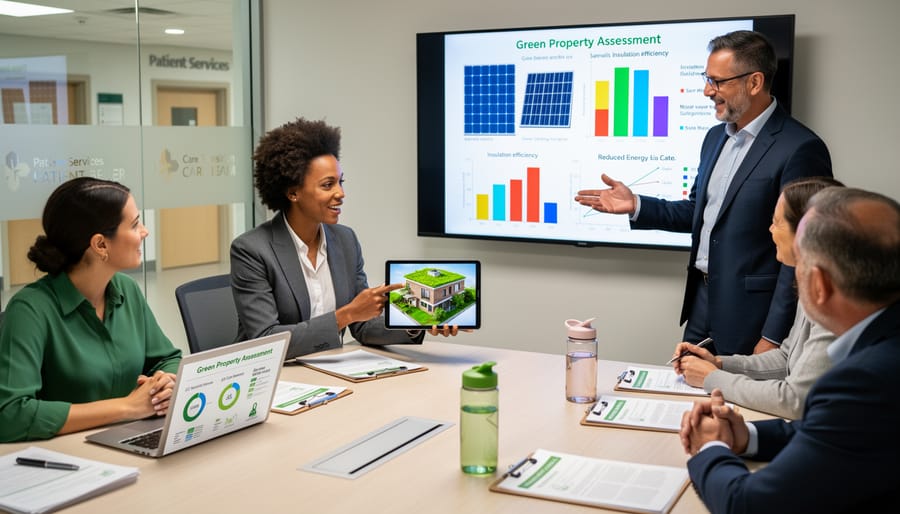
Building Your Support Team
When health challenges demand your full attention, assembling the right professional team becomes essential for protecting both your wellbeing and your home’s value. Start by engaging a certified energy auditor who can document your home’s efficiency features with comprehensive reports and performance data. These technical assessments transform your green investments from abstract concepts into quantifiable market advantages that resonate with environmentally conscious buyers.
Consider the experience of Margaret Chen, a solar energy consultant in Portland who faced unexpected medical treatments. By partnering with a green real estate specialist familiar with sustainability certifications and energy-efficient property valuations, she successfully marketed her net-zero home while managing chemotherapy appointments. Her agent understood how to communicate the long-term cost savings and environmental benefits to qualified buyers, ultimately securing a premium price.
Estate planners specializing in sustainable assets provide another crucial layer of support, especially when illness affects decision-making capacity. They can structure the sale to align with both immediate medical needs and long-term financial goals. Energy auditors, green realtors, and legal advisors form a coordinated team that handles technical complexities, allowing you to prioritize recovery. This collaborative approach ensures your energy-efficient investments receive proper recognition while reducing the stress of navigating unfamiliar territory during vulnerable times.
Timing Strategies for Medical Transitions
Coordinating your home sale with medical necessities requires strategic planning that balances health priorities with market realities. Dr. Sarah Chen, a relocation specialist who worked with renewable energy advocate Marcus Thompson during his transition to assisted living, emphasizes starting preparations early. “Begin conversations with real estate professionals 3-6 months before anticipated treatment if possible,” she advises. “This timeline allows you to showcase your energy-efficient features during optimal seasons while accommodating recovery periods.”
Consider partnering with healthcare social workers who understand both medical timelines and housing transitions. In one case study, a homeowner recovering from surgery used virtual home tours and remote signing technologies to complete their sale without disrupting post-operative care. Digital tools have transformed the traditional selling process, enabling you to maintain control while prioritizing health needs.
Schedule property showings around medical appointments and energy periods when you feel strongest. Many successful sellers designate a trusted family member or friend as their point person for coordinating visits and communicating with agents. This delegation reduces stress while ensuring your sustainable home’s story—and value—reaches motivated buyers who appreciate efficiency investments during your transition.
The Legacy of Your Energy Investment
When health circumstances necessitate selling your energy-efficient home, it’s natural to feel a sense of loss—not just for the property itself, but for the sustainable vision you’ve brought to life. Yet this transition offers a profound opportunity to extend your environmental impact far beyond your tenure as owner.
Dr. Maya Robertson, sustainability researcher at the Environmental Futures Institute, emphasizes this continuity: “Energy-efficient homes don’t reset to zero when they change hands. The infrastructure remains—the solar panels, superior insulation, efficient HVAC systems—continuing to reduce carbon emissions for decades. In many ways, these improvements become a gift to future occupants and the planet.”
Research demonstrates that homes with established energy efficiency features influence buyer behavior in meaningful ways. A 2022 study tracking homeowners who purchased energy-efficient properties found that 78% maintained or expanded sustainable practices, often inspired by the systems already in place. Your individual sustainability contributions thus create ripple effects, educating and empowering new stewards of the property.
Consider the case of the Martinez family, who sold their net-zero home in Portland when relocating for specialized medical treatment. Two years later, the new owners contacted them to share how the home’s design had transformed their perspective on energy consumption. They’d since installed additional renewable energy capacity and begun advocating for green building policies in their community—a legacy the Martinez family had never anticipated.
This multiplier effect contributes to broader climate goals in tangible ways. Every energy-efficient home represents infrastructure that will continue reducing greenhouse gas emissions long after individual ownership ends. The building envelope you improved, the geothermal system you installed, the smart home technology you integrated—these elements persist, quietly advancing sustainability objectives while new occupants build their own lives within those walls.
Your investment transcends the transaction, becoming part of a growing network of sustainable housing that collectively shapes our environmental future.
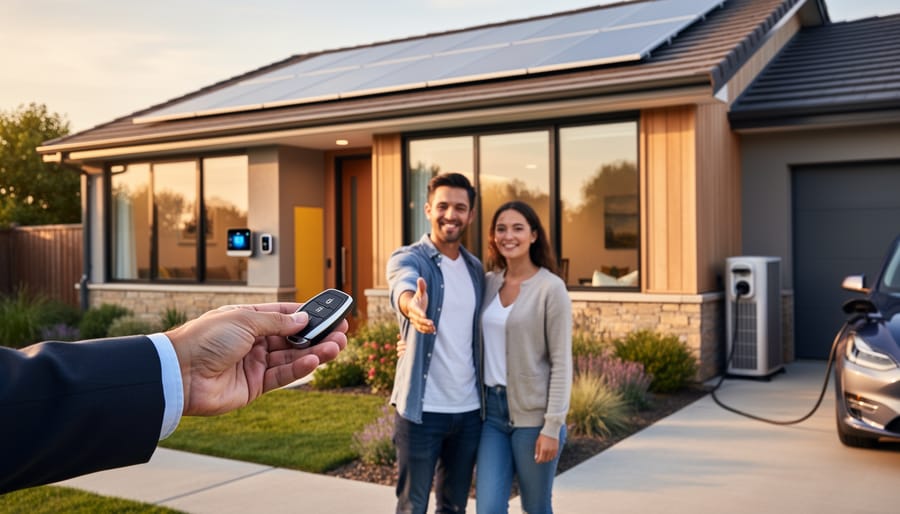
The decision to sell an energy-efficient home due to medical reasons carries profound weight, yet it’s essential to recognize that this transition doesn’t diminish the meaningful contributions you’ve already made to our collective climate future. Every kilowatt-hour saved, every carbon emission prevented during your time in that home has created lasting impact that continues to ripple through our energy systems.
Consider the perspective shared by Dr. Elena Martinez, Director of Residential Sustainability at the Green Building Coalition, who notes that homeowners who have invested in energy efficiency often underestimate their influence: “When you sell an energy-efficient home, you’re not just transferring property—you’re passing forward a living case study that demonstrates viability and value to the next owner, their neighbors, and the broader market. That educational ripple effect accelerates adoption far beyond your individual occupancy.”
The data supports this optimism. Research shows that energy-efficient homes sold on the market contribute to neighborhood-wide valuation shifts, with surrounding properties experiencing increased appraisals as green features become normalized expectations rather than premium exceptions. Your home becomes part of a larger market transformation that makes sustainable living more accessible to future buyers.
As you navigate this challenging transition, remember that practical resources exist to support you. Organizations like the Home Performance Coalition and regional energy efficiency programs often provide consultation services for homeowners documenting improvements for sales purposes. Local real estate associations increasingly offer specialized training for agents experienced in marketing sustainable properties.
Your journey through this difficult period deserves compassion, both from others and yourself. The circumstances requiring this sale don’t erase the leadership you’ve demonstrated through your commitment to energy efficiency. That legacy endures, contributing to the systemic change our planet urgently needs—one home, one decision, one resilient homeowner at a time.