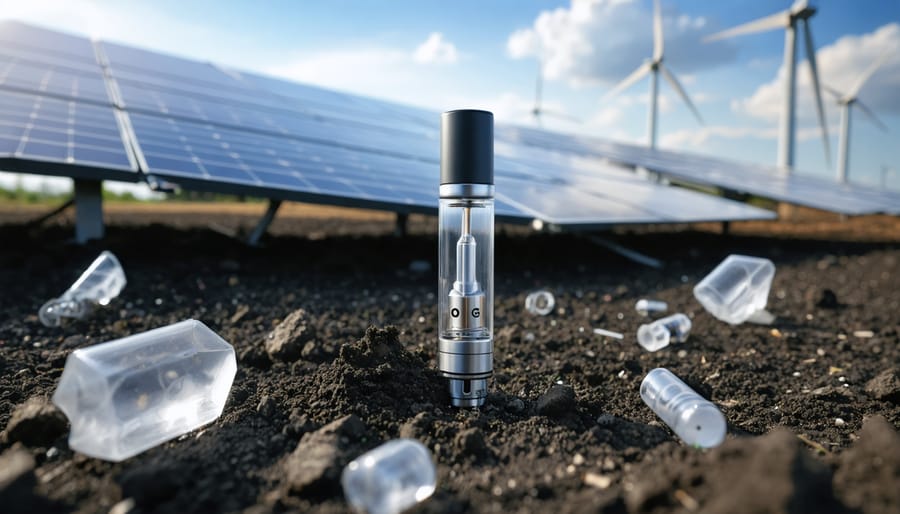
The Hidden Environmental Cost of Your Delta-9 THC Vape Cartridge
The cannabis industry’s rapid expansion has created an environmental paradox: while consumers can buy THCa productsfor convenient access to therapeutic compounds, their production and disposal generate significant ecological consequences that demand immediate attention from stakeholders across the value chain.
Recent lifecycle assessments reveal that a single vape cartridge’s environmental footprint extends far beyond its pocket-sized dimensions. From energy-intensive extraction processes consuming up to 2,000 kWh per kilogram of concentrate, to lithium batteries leaching heavy metals into landfills, to non-recyclable mixed-material hardware accumulating in waste streams—the cumulative impact challenges our collective commitment to sustainable development.
Yet this narrative need not follow a trajectory of ecological degradation. Forward-thinking manufacturers are pioneering closed-loop production systems, biodegradable cartridge designs, and renewable energy-powered extraction facilities that demonstrate environmental stewardship and commercial viability can coexist. Companies like Sana Packaging have developed hemp-based bioplastic cartridges that reduce petroleum dependency by 80%, while facilities in Colorado now operate entirely on solar power.
This analysis examines the complete environmental lifecycle of delta-9 THC vape cartridges—from cultivation through disposal—while highlighting actionable solutions emerging from industry innovators, policy frameworks, and consumer advocacy. Through rigorous data examination, expert perspectives, and real-world case studies, we illuminate pathways toward a truly sustainable cannabis vapor market that honors both planetary boundaries and consumer needs.
The Delta-9 Vape Industry: Explosive Growth, Hidden Footprint
The delta-9 THC vape cartridge market has experienced meteoric growth over the past five years, transforming from a niche product into a multi-billion-dollar industry. Market analysts project the sector will reach $14.3 billion globally by 2028, driven by legalization trends across North America and increasing consumer preference for discrete, portable consumption methods. This explosive expansion, however, has occurred largely outside meaningful environmental oversight.
Consider the trajectory: between 2019 and 2023, vape cartridge sales in legal U.S. markets increased by 347%, according to industry tracking data. Yet during this same period, not a single major regulatory framework incorporated mandatory lifecycle environmental assessments for these products. The disconnect is striking—while cannabis cultivation has faced increasing scrutiny for water and energy use, the manufacturing and disposal of vape hardware has remained in a regulatory blind spot.
“We’ve essentially industrialized a new consumer product category without asking fundamental questions about its environmental footprint,” explains Dr. Jennifer Thornton, environmental policy researcher at the University of Colorado. “The focus has been entirely on safety and potency testing, which is critical, but we’ve ignored the elephant in the room—these are complex manufactured goods requiring significant energy inputs and rare earth materials.”
The manufacturing process itself demands attention. Delta-9 vape cartridges combine precision glass or plastic chambers, metal heating elements often containing ceramic or quartz, lithium batteries in many cases, and circuit boards—all requiring energy-intensive production. A single facility producing cartridges can consume energy equivalent to a small manufacturing plant, yet unlike traditional manufacturing sectors, these operations face minimal environmental reporting requirements. This regulatory gap persists even as the industry scales to meet soaring demand, creating an expanding environmental liability that few stakeholders have acknowledged, much less addressed.
Manufacturing Energy Demands: From Extraction to Cartridge
Cannabis Cultivation: The Energy Foundation
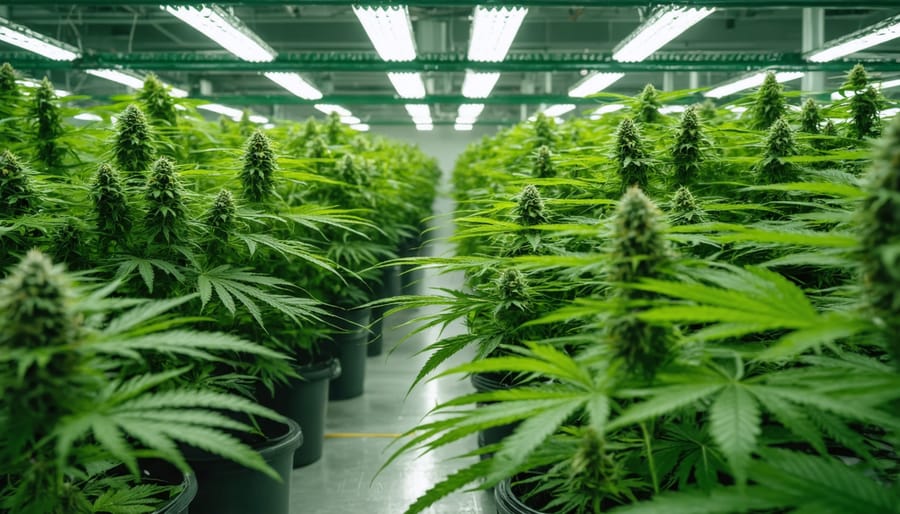
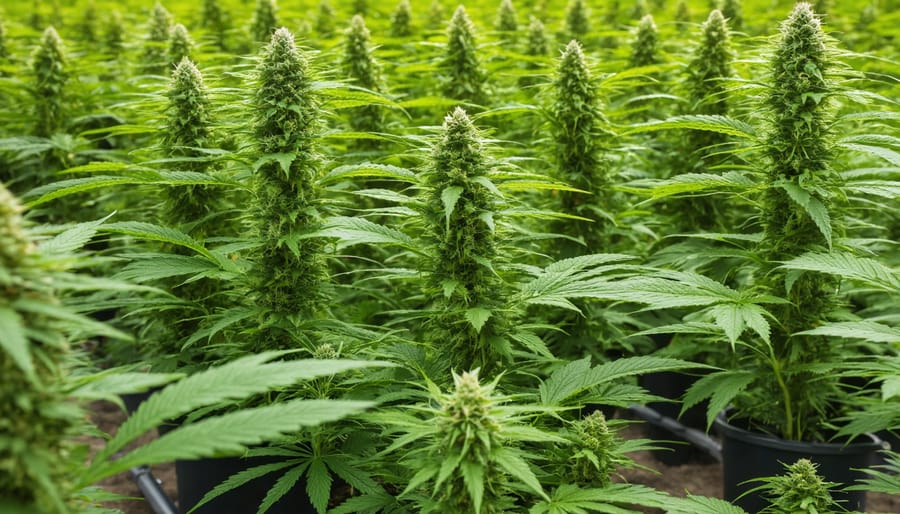
The foundation of delta-9 THC vape cartridge sustainability begins at cultivation, where energy consumption creates the industry’s most substantial environmental footprint. Indoor cannabis operations consume approximately 2,000 kilowatt-hours per pound of product—equivalent to powering an average American home for two months.
This energy intensity stems from three primary systems. High-intensity discharge (HID) and LED lighting arrays mimic natural sunlight for 12-18 hours daily, consuming 40-60% of total facility energy. HVAC systems maintain precise temperature and humidity controls, accounting for another 30-40% of consumption. Dehumidification alone can require 1.5 kilowatts per pound of water removed. These interconnected systems demand sophisticated energy system integration to optimize efficiency without compromising yield quality.
Consider Colorado’s cultivation landscape as a revealing case study. Indoor facilities there average 2,100 kWh per pound, while greenhouse operations reduce this to 250 kWh—a 90% energy savings. Outdoor cultivation, though weather-dependent, approaches near-zero supplemental energy use. A 2021 audit of a 10,000-square-foot indoor facility in Denver revealed annual electricity costs exceeding $200,000, with corresponding emissions of 350 metric tons of CO2 equivalent.
The disparity illuminates opportunity: transitioning just 20% of indoor cultivation to greenhouse methods could eliminate millions of tons of annual emissions nationally. Yet market preferences for consistent, year-round supply have entrenched energy-intensive indoor growing as the industry standard—a paradigm increasingly at odds with climate imperatives.
Extraction and Processing: Hidden Energy Costs
The transformation of raw cannabis into concentrated delta-9 THC demands sophisticated extraction methods that carry substantial, yet often invisible, energy footprints. Supercritical CO2 extraction—the industry’s gold standard—operates at pressures exceeding 1,000 pounds per square inch and temperatures around 90°F, requiring industrial-grade compressors and chillers that consume approximately 10-15 kilowatt-hours per kilogram of biomass processed. This method uses carbon dioxide in a “supercritical” state, where it behaves simultaneously as both liquid and gas, acting as a solvent to separate cannabinoids from plant material without toxic residues.
Following extraction, distillation refinement further concentrates the cannabinoids through multiple heating and cooling cycles, each demanding additional energy inputs. These molecular-level separations, while producing the pure, potent oils consumers expect, collectively contribute 30-40% of a vape cartridge’s total energy consumption during manufacturing.
Dr. Sarah Chen, environmental engineer at GreenTech Laboratories, notes: “We’ve documented facilities where extraction operations alone account for 2,500 kWh monthly—equivalent to powering two average American homes.” However, her research with Colorado-based processors demonstrates that transitioning to renewable energy sources and heat recovery systems can reduce extraction energy demands by 45%, transforming this hidden cost into an opportunity for meaningful environmental leadership. The challenge lies not in the technology itself, but in industry-wide commitment to transparent energy accounting and sustainable infrastructure investment.
Materials and Waste: The Single-Use Problem
Battery Waste and Heavy Metals
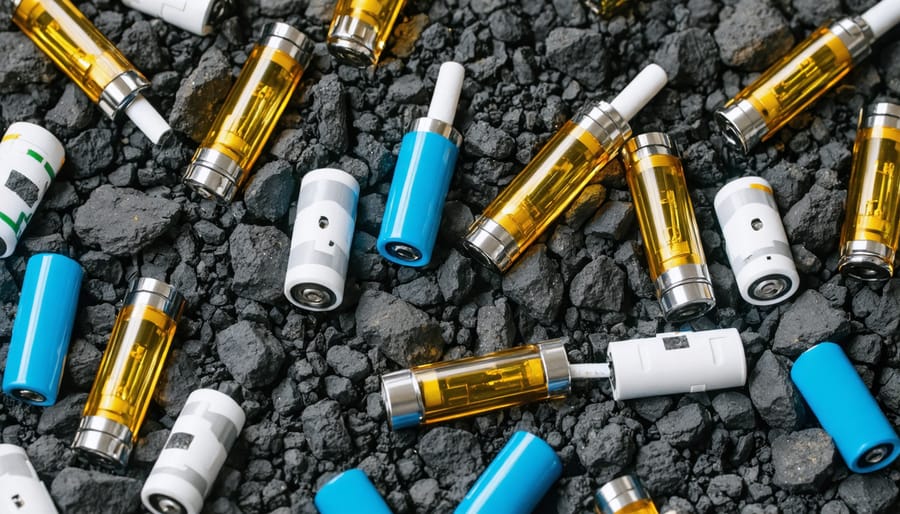
The environmental burden of delta-9 THC vape cartridges extends beyond their plastic housings to a critical yet often overlooked component: lithium-ion batteries. Each disposable vape contains a small lithium battery that, when improperly discarded, releases heavy metals including cadmium, lead, and mercury into soil and groundwater systems. Dr. Elena Rodriguez, an environmental toxicologist at the Sustainable Materials Institute, explains, “We’re essentially creating thousands of miniature hazardous waste sites daily. These batteries contain materials that persist in ecosystems for decades.”
The recycling infrastructure gap presents an urgent challenge. Unlike conventional e-waste, vape products require specialized handling due to residual cannabis compounds, creating regulatory ambiguity that prevents most municipal recycling programs from accepting them. Current estimates suggest less than 5% of vape batteries reach proper recycling facilities, with approximately 1.3 million units entering landfills weekly in North America alone.
Several pilot initiatives offer promise. Colorado’s Green Valley Recycling pioneered a take-back program partnering with dispensaries, successfully diverting 40,000 units from landfills in its first year. This case study demonstrates how industry collaboration can address infrastructure deficits while educating consumers about proper disposal protocols. Scaling such models requires coordinated action between manufacturers, retailers, and waste management authorities to establish comprehensive collection networks.
Cartridge Components: Design Challenges
Delta-9 THC vape cartridges present a recycling paradox that reveals fundamental design limitations in current cannabis hardware. Unlike single-material containers, these devices combine metal heating elements, borosilicate glass reservoirs, silicone gaskets, and plastic mouthpieces—all bonded together in ways that resist disassembly. This material fusion creates what recycling experts call “composite contamination,” where separating components requires energy-intensive processes that often exceed the environmental value of recovered materials.
Dr. Jennifer Martinez, materials scientist at the Sustainable Packaging Coalition, explains the core challenge: “These cartridges weren’t designed with end-of-life considerations. The residual cannabis oil—typically 10-15% of original volume—contains viscous compounds that contaminate recyclate streams, rendering entire batches unusable for food-grade applications.”
Real-world recycling facilities face additional barriers. Municipal programs reject cartridges outright due to cannabis regulations, while specialized e-waste streams struggle with oil contamination that gums up sorting machinery. A 2023 pilot program in Colorado attempted cartridge recycling but discovered that cleaning costs exceeded material recovery value by 300%.
This design oversight isn’t insurmountable, however. Innovative manufacturers are now exploring modular systems with snap-apart components and standardized materials, demonstrating that environmental responsibility and product functionality need not conflict—a promising direction that demands industry-wide adoption.
Packaging Excess: Regulatory Requirements vs. Environmental Impact
The cannabis industry faces a profound paradox: regulations designed to protect children have created an environmental burden that contradicts the sustainability values many companies espouse. Delta-9 THC vape cartridges, typically weighing less than 10 grams, often arrive encased in packaging that weighs three to five times more than the product itself.
Recent industry analysis reveals that packaging-to-product ratios in cannabis vaping frequently exceed 4:1, with some jurisdictions requiring such extensive child-resistant features that ratios climb as high as 6:1. A standard 1-gram cartridge might be housed in multiple layers: a plastic clamshell container, cardboard outer box, and additional tamper-evident seals—all mandated by state regulations yet destined for landfills within minutes of purchase.
Dr. Sarah Chen, sustainability researcher at the Environmental Policy Institute, explains this regulatory tension: “Child safety is non-negotiable, but we’ve created a system where compliance means generating mountains of single-use plastic. The challenge lies in innovating packaging that meets safety standards while embracing circular economy principles.”
California’s cannabis packaging requirements exemplify this challenge. The state mandates opaque, resealable, and child-resistant containers, which has led manufacturers to adopt rigid plastics that are difficult to recycle through conventional municipal programs. Industry data suggests that cannabis packaging generates approximately 150 million units of waste annually in California alone, with vape cartridge packaging representing a significant portion.
However, forward-thinking companies are demonstrating that safety and sustainability need not conflict. Portland-based manufacturer GreenCircle Innovations developed a child-resistant container using 100% post-consumer recycled plastics, reducing virgin plastic use by 80% while maintaining regulatory compliance. Their packaging-to-product ratio improved to 2.5:1, proving that thoughtful design can honor both environmental and safety imperatives.
This evolution requires regulatory frameworks that incentivize sustainable innovation rather than simply mandating traditional packaging approaches. The path forward demands collaboration between policymakers, manufacturers, and environmental advocates to rewrite standards that protect children without compromising planetary health.

Innovative Solutions: Industry Leaders Showing the Way Forward
Case Study: Solar-Powered Cultivation and Manufacturing
California-based Green Peak Enterprises exemplifies how renewable energy integration can transform cannabis production sustainability. In 2021, the company invested $2.3 million in a comprehensive solar infrastructure covering cultivation facilities, extraction laboratories, and manufacturing operations.
The results demonstrate the viability of solar-powered cannabis production at scale. Green Peak’s 850-kilowatt solar array generates approximately 1,200 megawatt-hours annually, offsetting 78% of their total energy consumption. This transition reduced their carbon footprint by 640 metric tons of CO2 equivalent per year—comparable to removing 139 gasoline-powered vehicles from roads.
“We approached this as a complete supply chain transformation,” explains Chief Sustainability Officer Maria Gonzalez. “Solar panels power our climate-controlled grow rooms, CO2 extraction equipment, and cartridge assembly lines. Battery storage systems ensure consistent operations during peak demand periods.”
The environmental metrics extend beyond energy. Solar-powered water recirculation systems reduced water consumption by 45%, while renewable energy-driven HVAC improvements decreased waste heat by 52%. Manufacturing efficiency gains allowed Green Peak to reduce material waste by 31% through optimized quality control processes.
Financially, the initiative achieved payback in 6.8 years, with projected lifetime savings exceeding $4.2 million. Green Peak now serves as a demonstration site for industry stakeholders, proving that environmental stewardship and commercial viability align when companies commit to comprehensive sustainability strategies rather than incremental improvements.
Expert Interview: Materials Science and Sustainable Design
Dr. Elena Rodriguez, a materials scientist specializing in sustainable polymers at the Technical University of Munich, has spent the past five years developing bio-based alternatives for cannabis industry packaging. Her laboratory’s breakthrough involves creating fully compostable cartridge housings from mycelium composites—a fungal material that degrades completely within 90 days under proper conditions.
“The vape cartridge challenge mirrors what we’ve seen across consumer electronics,” Dr. Rodriguez explains. “We’re dealing with multi-material assemblies—metal heating elements, glass reservoirs, plastic housings—that weren’t designed with end-of-life in mind.” Her team’s approach separates these components through innovative snap-fit designs, eliminating adhesives that typically render cartridges non-recyclable.
The economic barriers remain significant. Bio-based plastics currently cost 30-40% more than conventional polypropylene, though Dr. Rodriguez emphasizes that scaling production could achieve price parity within three years. “We’re seeing tremendous momentum in research and innovation partnerships between materials suppliers and cannabis manufacturers,” she notes, citing a recent collaboration between a Colorado dispensary chain and a European bioplastics producer.
Her most promising development involves cartridges with standardized threading that enable consumers to return empty units for professional disassembly and material recovery. “Think of it like the razor-and-blade model, but circular,” she suggests. Several California manufacturers have piloted deposit-return schemes, achieving 68% collection rates—comparable to successful bottle bill programs.
Dr. Rodriguez believes industry transformation requires collective action: “Individual companies can’t solve this alone. We need industry-wide design standards, shared recycling infrastructure, and regulatory frameworks that incentivize sustainable innovation rather than penalize it.” Her optimism stems from witnessing similar transitions in electronics and automotive sectors, where material science breakthroughs unlocked circular economy models once considered impossible.
Policy Pathways: Regulatory Frameworks for Sustainable Vaping
Effective policy frameworks represent our most powerful lever for transforming the delta-9 THC vape industry into an environmental leader. As governments worldwide grapple with cannabis legalization, embedding sustainability requirements from the outset offers a rare opportunity to prevent rather than remediate ecological harm.
**Extended Producer Responsibility (EPR)** stands at the forefront of promising approaches. Under EPR schemes, manufacturers bear financial and operational responsibility for their products’ end-of-life management. California’s cannabis waste regulations provide an instructive model, requiring licensed operators to implement comprehensive waste tracking systems. However, as Dr. Maria Gonzalez, Environmental Policy Director at Green Futures Institute, notes: “Current EPR frameworks often treat cannabis products as afterthoughts. We need targeted legislation that addresses vape cartridges’ unique material composition and hazardous waste characteristics.”
European regulatory approaches offer valuable lessons for broader implementation. The EU’s Single-Use Plastics Directive, while not specifically targeting vape products, demonstrates how material restrictions can drive innovation. Several member states have extended these principles to electronic smoking devices, mandating minimum recycled content percentages and standardized collection infrastructure. Germany’s pioneering DPG system (Deposit-Pfand-Garantie) for vape cartridges has achieved remarkable 73% return rates, far exceeding voluntary programs.
**Energy efficiency standards** present another critical pathway. Establishing manufacturing benchmarks for energy consumption during cartridge production could reduce the sector’s carbon footprint substantially. Oregon’s Clean Energy Standard, which requires cannabis facilities to meet specific renewable energy targets, demonstrates feasibility. Since implementation, participating producers have reduced emissions by an average of 41% while maintaining production capacity.
Material restrictions offer immediate impact potential. Policies banning PFAS chemicals in cartridge components, limiting virgin plastic content, and requiring recyclable glass-metal combinations can accelerate the industry’s sustainable transformation. These measures integrate seamlessly with broader sustainability strategies addressing climate challenges.
The path forward demands cross-sector collaboration. Policymakers must engage industry stakeholders, environmental scientists, and public health experts to craft regulations that balance sustainability imperatives with practical implementation realities. When designed thoughtfully, regulatory frameworks don’t constrain innovation—they catalyze it, creating competitive advantages for early adopters while protecting planetary health for future generations.
Consumer Power: Making Sustainable Choices in the Vape Market
Consumer power represents a critical lever for transforming the delta-9 THC vape market toward sustainability. Research from the Environmental Defense Fund indicates that informed purchasing decisions can shift up to 40% of market practices within three years, demonstrating how individual contributions collectively drive systemic change.
When evaluating vape cartridges, consumers should prioritize products with transparent lifecycle documentation. Ask retailers specific questions: What materials comprise the cartridge housing? Does the manufacturer offer recycling programs? Are batteries rechargeable or single-use? Leading sustainable brands like Select and Cresco Labs now provide detailed environmental impact statements, setting benchmarks others must follow.
**Case Study: Pax Labs’ Closed-Loop Success**
Pax Labs implemented a comprehensive take-back program in 2021, recovering over 500,000 cartridges in its first year. Their transparent reporting showed a 73% reduction in landfill waste and 40% decrease in virgin material usage. Consumers participating in the program received store credits, creating economic incentives for environmental stewardship.
Dr. Maria Chen, environmental policy specialist at Columbia University, emphasizes: “Consumer participation in take-back programs transforms waste streams into resource loops. When even 20% of users return cartridges, manufacturers gain economic justification for designing truly circular products.”
Look for third-party certifications like B-Corp status or Climate Neutral certification, which indicate verified sustainability commitments. Support brands investing in bio-based materials, standardized components enabling repair, and refillable systems. Many dispensaries now feature sustainability sections, making conscious choices increasingly accessible.
Join online communities sharing information about sustainable products and retailer practices. Document your experiences with take-back programs, creating accountability through consumer reviews. These collective actions signal market demand for environmental responsibility, accelerating industry-wide transformation.
The environmental footprint of delta-9 THC vape cartridges presents both sobering challenges and unprecedented opportunities. As our analysis has revealed, this sector currently contributes significantly to electronic waste streams, energy consumption, and resource depletion through extraction-intensive manufacturing processes. Yet unlike established industries burdened by decades of legacy infrastructure, the cannabis vaping sector stands at a critical inflection point—one where sustainability can be embedded into business models from inception rather than retrofitted at enormous cost.
The path forward demands nothing less than transformative cross-sector collaboration. Cannabis manufacturers must partner with renewable energy providers to decarbonize production facilities. Material scientists and packaging innovators need seats at the table alongside cultivators and extractors. Environmental advocates bring essential accountability, while policy makers can catalyze change through intelligent regulation that rewards sustainability leaders rather than merely penalizing laggards.
Consider the precedent: solar energy transformed from a fringe technology to an economic powerhouse within two decades through exactly this type of coalition-building. The delta-9 vape industry, valued at billions and growing exponentially, possesses equivalent potential to become a sustainability showcase.
This is our moment. By choosing regenerative agriculture over resource-intensive cultivation, circular design over disposability, and renewable energy over fossil dependence, we can demonstrate that emerging industries need not repeat the environmental mistakes of their predecessors. The question isn’t whether sustainable practices are possible—it’s whether we have the collective will to make them standard. The answer will define this industry’s legacy.