
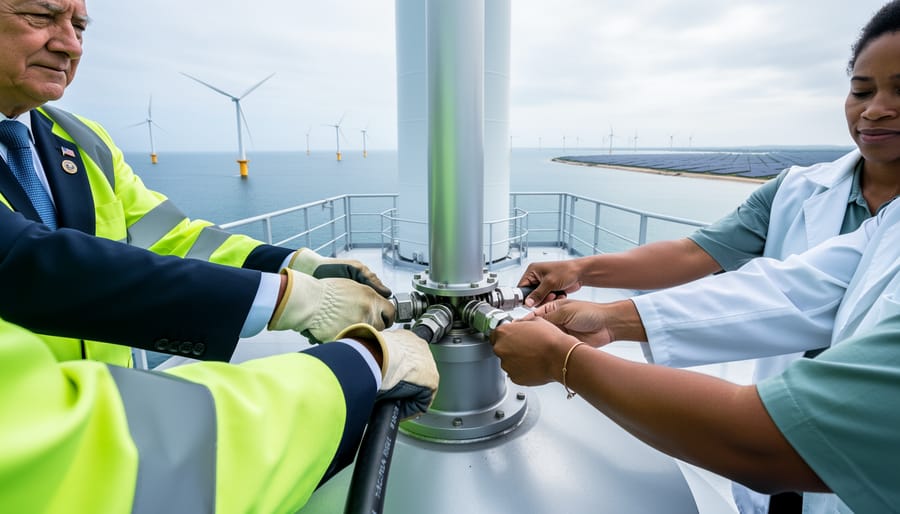
What Are Global Collaborations (and How Do They Drive the Energy Transition)?
Global collaborations are structured partnerships between governments, businesses, research institutions, and civil society organizations that pool resources, expertise, and technology to address shared environmental and energy challenges across national borders. These multi-stakeholder alliances have become essential infrastructure for lowering greenhouse gas emissions accelerating clean energy deployment, and building climate resilience at a scale no single entity can achieve alone.
The urgency is straightforward. Climate change ignores borders, and the transition to sustainable energy systems requires coordination that matches the scope of the problem. A solar technology breakthrough in Germany means little for global decarbonization if it remains confined to European markets. Likewise, climate adaptation strategies developed for coastal cities in Southeast Asia offer lessons for similar communities in Latin America and Africa, but only when knowledge flows freely across regions.
What makes global collaborations particularly powerful in 2026 is their ability to bridge the gap between ambition and implementation. International climate commitments set targets, but collaborations deliver the technical assistance, financing mechanisms, and capacity building that turn pledges into operating wind farms, functioning carbon markets, and resilient energy grids. They create channels for technology transfer, standardize best practices, and distribute both the costs and benefits of the energy transition more equitably.
This article explains how global collaborations actually function, from governance structures to funding flows. You’ll discover the distinct types of partnerships operating today, examine case studies demonstrating measurable impact, and understand why these alliances have evolved from diplomatic niceties into operational necessities. Whether you’re evaluating partnership opportunities, designing coordination mechanisms, or assessing collaborative models for policy decisions, the framework ahead clarifies what works, what doesn’t, and why certain collaborations succeed while others stall.
What Global Collaborations Mean for Sustainable Energy
Global collaborations in the energy sector are structured partnerships that bring together governments, research institutions, private companies, and civil society organizations across multiple countries to tackle climate change and accelerate the transition to clean energy. Unlike bilateral agreements between two nations or localized initiatives within a single region, these collaborations create frameworks for coordinated action on a scale that matches the planetary nature of the climate crisis. They pool expertise, share technological advances, harmonize policies, and mobilize resources in ways no single entity could achieve alone.
The defining characteristic of global collaborations is their multi-stakeholder, cross-border architecture. Where bilateral energy agreements typically focus on specific transactions, such as technology transfer or infrastructure development between two countries, global collaborations establish ongoing platforms for collective problem-solving. They address challenges that transcend national boundaries: standardizing renewable energy technologies, developing shared research agendas, creating international skills training programs, and coordinating investment in sustainable infrastructure. According to IEA clean energy innovation tracking, these coordinated approaches prove essential for accelerating the deployment of breakthrough technologies across diverse markets.
- Global Collaborations
- Structured partnerships spanning multiple countries and sectors that coordinate resources, knowledge, and action toward shared sustainable energy goals.
- Cross-Border Partnerships
- Working relationships between organizations in different nations that facilitate technology transfer, joint research, and policy alignment for energy transition.
- Multilateral Initiatives
- Coordinated programs involving three or more countries or institutions that establish common frameworks for climate action and clean energy development.
- Knowledge Transfer Networks
- Platforms and systems that enable the systematic sharing of research findings, best practices, and technical expertise across geographical and organizational boundaries.
- Coalition Models
- Governance structures that unite diverse stakeholders, academic institutions, government agencies, industry players, and advocacy groups, around aligned sustainability objectives.
What distinguishes global collaborations from other forms of international cooperation is their emphasis on creating durable institutional mechanisms rather than one-off projects. They establish governance structures, funding models, and communication channels designed to sustain engagement over years or decades. This long-term commitment enables partners to work through complex technical challenges, align regulatory approaches across jurisdictions, and build the trust needed for genuine knowledge exchange. The frameworks created by these collaborations also provide entry points for new participants, allowing the partnerships to expand and evolve as the energy transition progresses.
How Global Energy Collaborations Work
Partnership Formation and Governance
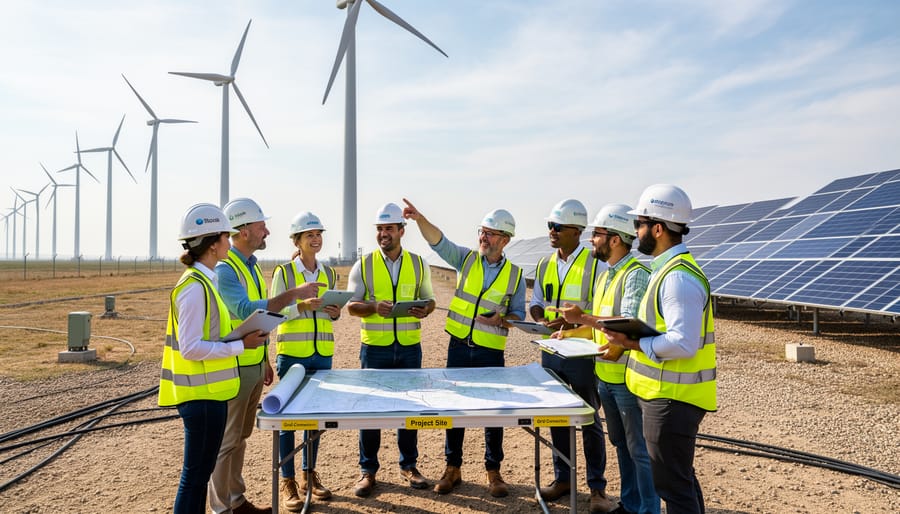
Global energy collaborations typically begin when institutions identify shared challenges that exceed individual capacity, whether accelerating offshore wind deployment, establishing hydrogen corridors, or harmonizing grid integration standards. The formation process usually involves exploratory dialogues where potential partners assess alignment in objectives, capabilities, and timelines before formalizing commitments through memoranda of understanding or partnership agreements.
Governance structures must accommodate diverse organizational cultures and legal frameworks. Most successful collaborations establish steering committees with balanced representation from participating organizations, ensuring decisions reflect collective priorities rather than single-nation interests. These committees typically meet quarterly to review progress, allocate resources, and adjust strategies based on emerging opportunities or obstacles.
Clear governance frameworks define decision-making protocols, intellectual property rights, data-sharing arrangements, and dispute resolution mechanisms upfront. Organizations contributing unequal resources often implement tiered membership structures, where funding levels correspond to voting influence while maintaining inclusive participation channels for smaller contributors. This approach prevents domination by large funders while acknowledging their investment risk.
Effective collaborations build in flexibility to adapt as technologies evolve and policy landscapes shift. They establish transparent reporting systems that track deliverables against milestones, maintaining accountability across jurisdictions with different regulatory requirements. The most enduring partnerships invest in relationship-building beyond formal meetings, creating informal networks where technical experts and policy advisors exchange insights that strengthen the collaboration’s responsiveness to real-world implementation challenges.
Knowledge Transfer and Innovation Networks
Knowledge transfer operates through both formal and informal channels designed to move insights across borders efficiently. Digital collaboration platforms have become central infrastructure, enabling research teams in different countries to share datasets, methodology updates, and experimental results in real time. These platforms range from open-access repositories where academics publish pre-prints before formal peer review, to secure project management systems where consortium members coordinate multi-site pilot programs.
Exchange programs remain equally vital, placing researchers and practitioners in partner institutions for weeks or months. A scientist developing wave energy systems in Scotland might spend time at a tidal research facility in Norway, learning operational techniques impossible to convey through documentation alone. These immersions build personal networks that outlast individual projects, informal connections through which knowledge continues flowing long after formal collaborations end.
Professional networks and working groups create structured spaces for sharing best practices. Regular convenings, whether virtual or in-person, allow energy system operators to compare grid management approaches, or building retrofitters to discuss insulation techniques suited to different climates. The value lies not just in presenting successes but in openly discussing failures, what didn’t work, and why, accelerating collective learning.
Translation and adaptation mechanisms ensure innovations developed in one context can be applied elsewhere. This includes not only linguistic translation but cultural and regulatory translation: adapting a policy framework from Denmark for application in Poland requires understanding different governance structures and market conditions.
Forms of Global Energy Partnerships
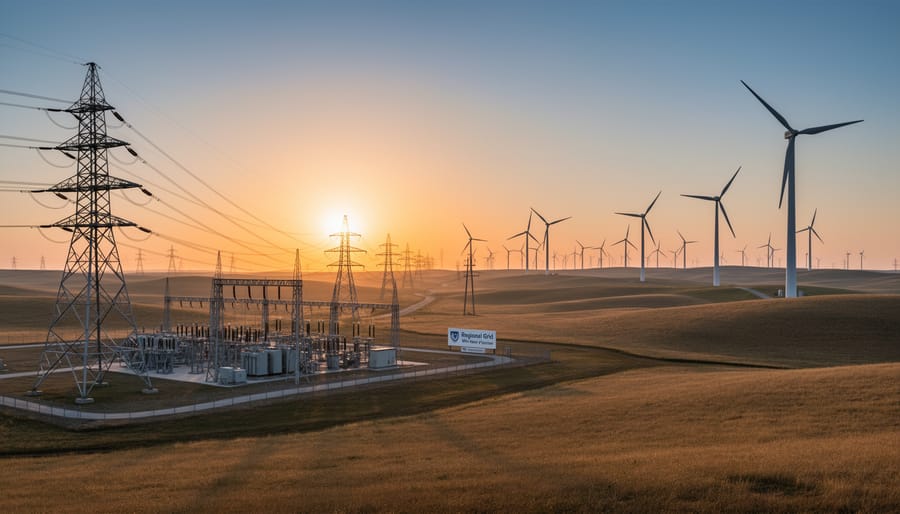
Global energy partnerships take many forms, each designed to address different aspects of the transition to sustainable energy systems. Understanding these distinct models helps organizations identify the most effective collaboration frameworks for their specific goals and capabilities.
The landscape of global energy collaborations encompasses several key structures:
- Multilateral policy frameworks that align regulatory standards and emission reduction targets across nations
- Research and innovation consortia bringing together universities and laboratories to advance clean energy technologies
- Industry technology alliances pooling private sector expertise to scale commercial deployment of solutions
- Capacity-building networks focused on workforce development and knowledge transfer to emerging markets
- Funding coalitions mobilizing public and private capital for large-scale infrastructure projects
Multilateral agreements represent the most visible form of global collaboration, establishing binding commitments and coordination mechanisms among participating countries. These frameworks set overarching targets for decarbonization while creating accountability structures that drive national policy implementation. The Paris Agreement exemplifies this model, though numerous sector-specific agreements address particular challenges like methane emissions or coal phase-out timelines.
Research consortia operate across borders to tackle technical challenges no single institution could solve independently. These networks combine specialized expertise from different regions, share expensive research infrastructure, and accelerate innovation cycles by distributing the workload of experimentation and validation. Projects examining grid integration of intermittent renewables or next-generation energy storage benefit significantly from pooled international resources and diverse testing environments.
Regional energy communities create deeper integration among geographically proximate nations, often building shared infrastructure and harmonized markets. The Nordic power market demonstrates how neighboring countries can optimize renewable generation by balancing hydro, wind, and other resources across borders. These regional models frequently serve as testing grounds for governance structures later adapted to broader global partnerships.
Academic networks facilitate knowledge exchange through joint degree programs, researcher mobility initiatives, and collaborative publishing platforms. Universities across continents co-develop curricula addressing sustainable energy management, ensuring graduates worldwide share common frameworks for understanding the transition. The Climate and Energy Coalition actively supports these educational partnerships, recognizing that intellectual alignment accelerates practical cooperation.
Public-private partnerships bridge the gap between policy ambition and commercial reality. Governments provide regulatory certainty and initial capital while industry partners contribute technical expertise and operational efficiency. These collaborations prove particularly effective in emerging markets where the renewables vs coal shift requires substantial upfront investment that neither public nor private sectors can shoulder alone. Joint ventures developing offshore wind farms or green hydrogen production facilities demonstrate how risk-sharing unlocks projects that might otherwise remain unfinanced.
Industry coalitions focus on standardization, supply chain coordination, and collective advocacy. When manufacturers agree on common technical specifications for equipment like electric vehicle charging stations or heat pumps, they reduce costs through economies of scale while improving interoperability across markets. These voluntary alignments often move faster than formal regulatory processes, creating de facto global standards that accelerate technology adoption.
How Global Collaborations Accelerate the Energy Transition
Technology Development and Deployment
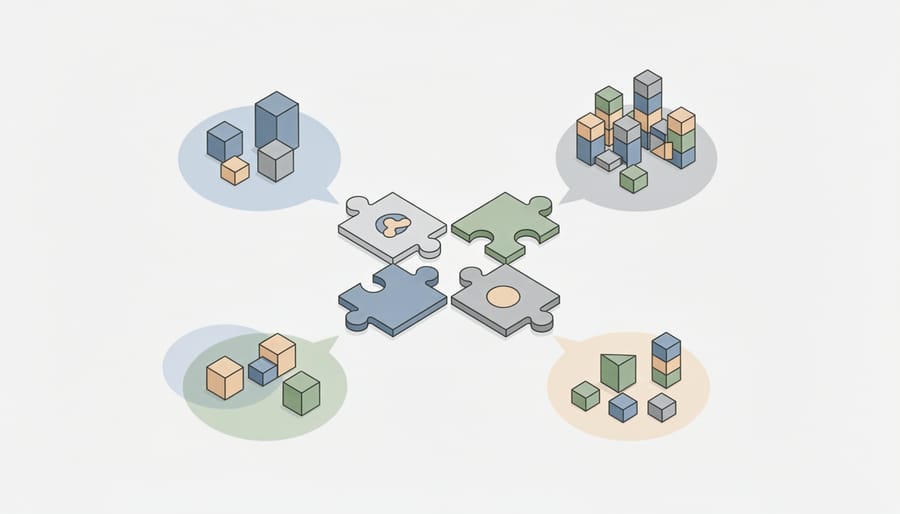
Global partnerships compress the timeline from laboratory breakthrough to market-ready solution by pooling research capacity and infrastructure across borders. When institutions in different regions combine their specialized expertise, battery chemistry here, grid integration there, manufacturing efficiency elsewhere, they avoid duplicating expensive early-stage work and accelerate the path to commercial viability.
Shared pilot projects demonstrate how technologies perform in diverse conditions without requiring each country to fund separate trials. A consortium testing offshore wind turbines in North Sea conditions, for instance, generates performance data that partners in Japan or Scotland can apply to their own installations, adjusting for local variables rather than starting from zero. This distributed testing model reveals technical limitations faster and spreads the financial risk of innovation.
These collaborations also create standardization pressure that helps technologies scale. When research networks agree on compatible technical specifications early in development, manufacturers gain confidence to invest in production capacity, knowing their products will work across multiple markets rather than requiring costly customization for each region.
Skills Development and Knowledge Exchange
Global energy collaborations create critical pathways for building the skilled workforce for zero-carbon economies. International partnerships connect universities, research institutions, and industry training centers, enabling cross-border exchange programs where engineers, technicians, and policymakers gain hands-on experience with emerging technologies they can’t yet access at home.
The Coalition facilitates several such networks, linking academic programs across Northern Europe with industry partners to develop curricula that address real gaps in renewable energy expertise. These partnerships don’t just transfer abstract knowledge. They create mentorship connections, enable secondments to pioneering projects abroad, and establish credential recognition frameworks that make skills portable across borders.
Knowledge exchange extends beyond formal education to include peer learning networks where practitioners share operational insights from different regulatory environments and market conditions. A wind farm operator in Scotland might troubleshoot challenges with a counterpart in Norway, while grid integration specialists collaborate on solutions that work across diverse infrastructure contexts. This constant circulation of practical experience accelerates learning curves and prevents regions from repeating mistakes others have already solved.
Investment and Resource Mobilization
Global energy collaborations fundamentally reshape how capital flows toward sustainable infrastructure by pooling resources across borders and spreading financial exposure. Multilateral development banks, sovereign wealth funds, and international climate funds collectively mobilize billions through partnership structures that individual nations couldn’t access alone. These frameworks reduce perceived investment risk by bringing together diverse financing sources, public grants, concessional loans, and private equity, creating blended finance models that make large-scale projects viable.
Risk-sharing mechanisms prove particularly effective for emerging technologies and markets where uncertainty deters conventional investors. When multiple governments and institutions co-invest in demonstration projects or guarantee revenue streams, they lower the cost of capital and accelerate deployment timelines. International partnerships also standardize project documentation, environmental assessments, and financial reporting, making cross-border investment more efficient and transparent for institutional investors seeking sustainable energy opportunities.
Global Collaborations in Action: Northern Europe’s Coalition Model
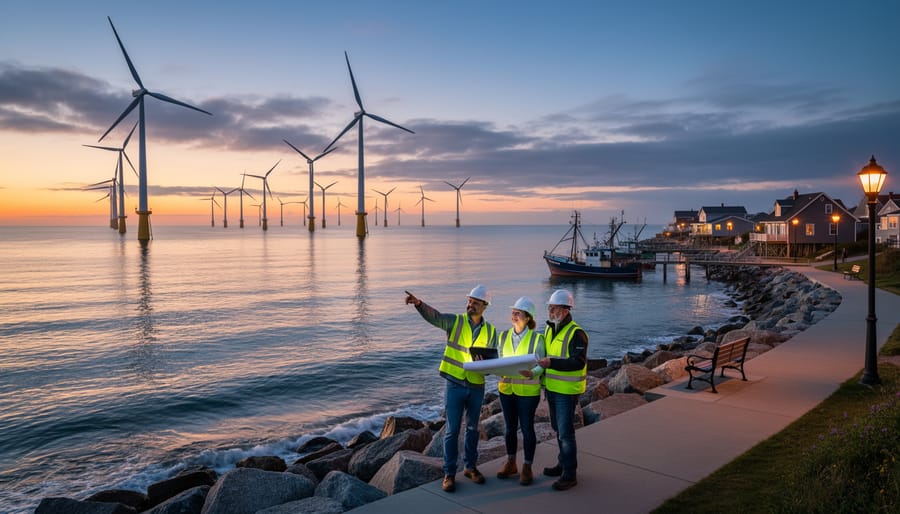
The Climate and Energy Coalition‘s work across Northern Europe offers a compelling demonstration of how global frameworks adapt to regional realities while drawing on international expertise. Rather than imposing standardized solutions, the Coalition’s model synthesizes lessons from diverse geographies, offshore wind innovations from Denmark, carbon capture research from Norway, district heating transformations in Sweden, and translates them into actionable strategies for emerging markets across the region.
This approach centers on contextual application. When supporting Finland’s transition from fossil fuel dependency, Coalition facilitators connected Finnish energy planners with Canadian experts who had navigated similar challenges in cold-climate infrastructure. The exchange went beyond technology transfer: it addressed governance questions, workforce retraining frameworks, and community engagement strategies that proved directly relevant to Finland’s political and cultural landscape. The resulting partnerships shortened implementation timelines by eighteen months compared to independent development paths.
The Coalition’s Northern European network demonstrates particularly effective integration of academic rigor with practical deployment. Research institutions in Uppsala collaborate with municipal energy authorities in Tallinn, testing grid flexibility solutions under real-world conditions while documenting lessons for other jurisdictions. These partnerships acknowledge that theoretical models developed in one context require adaptation when applied elsewhere, especially when addressing how transitions impact vulnerable communities differently across income levels and geographies.
Crucially, the model navigates divergent policy environments without forcing consensus. Baltic states pursuing rapid renewable deployment work alongside nations taking more cautious approaches informed by climate uncertainty arguments. The Coalition facilitates knowledge exchange across these positions, creating space for evidence-based debate while maintaining forward momentum on areas of agreement.
The regional structure enables rapid response to emerging challenges. When energy security concerns escalated in 2024, the Coalition convened stakeholders within weeks, sharing diversification strategies and renewable acceleration frameworks that individual nations could implement according to their circumstances. This agility, combining global knowledge networks with regional coordination, illustrates how effective collaborations balance standardization with flexibility, ensuring solutions remain relevant across varied political, economic, and environmental contexts.
Common Questions About Global Energy Collaborations
How do global collaborations differ from formal international agreements?
Unlike binding treaties or formal accords, global collaborations operate through voluntary partnerships focused on practical knowledge exchange, joint projects, and shared learning. They offer more flexibility in structure and faster implementation than traditional diplomatic frameworks.
What makes an energy collaboration successful?
Effective collaborations balance clear objectives with adaptable governance, ensure equitable participation across partners of different sizes and resources, and maintain transparent communication channels. Success also depends on aligning incentives so all parties see tangible benefits from their involvement.
Can smaller organizations meaningfully participate in global partnerships?
Absolutely. Many collaborations specifically value diverse perspectives and local expertise that smaller entities bring. Organizations can start by contributing specialized knowledge, joining working groups on specific topics, or participating in knowledge-sharing platforms before committing to larger initiatives.
How are collaboration outcomes measured?
Partners typically track both process metrics, such as knowledge transfers, joint publications, and capacity-building activities, and impact indicators like technology deployment rates, policy adoptions, and investment mobilized. The challenge lies in attributing specific outcomes to collaborative efforts versus individual partner actions.
Beyond these structural questions, practitioners often wonder about the coordination challenges inherent in multi-stakeholder partnerships. Time zone differences, cultural communication styles, and varying regulatory environments can complicate even well-intentioned collaborations. The most resilient partnerships address these barriers upfront by establishing shared working languages, rotating meeting times to distribute inconvenience, and creating cultural orientation resources for new participants.
Funding models present another common concern. While some collaborations operate through pooled budgets or membership fees, others function on an in-kind basis where partners contribute expertise, data access, or convening capacity rather than direct financial resources. This flexibility allows organizations with limited budgets but valuable knowledge to participate fully.
The transformative potential of global collaborations lies not in replacing local action but in amplifying it. As we’ve explored, these partnerships create frameworks where knowledge flows across borders, resources reach critical projects, and innovations scale beyond their points of origin. The most effective energy transitions happen when global networks provide strategic direction and technical support while local coalitions ground solutions in regional realities.
What makes today’s collaborative landscape particularly powerful is its diversity. Academic researchers developing next-generation battery technologies work alongside policymakers harmonizing grid standards, while industry leaders pilot green hydrogen projects that inform workforce training programs. This multi-stakeholder approach addresses the energy transition’s complexity from every angle, technological, economic, political, and social. No single organization or nation possesses all the answers, but collectively, coordinated partnerships can assemble them.
The urgency of climate action demands we move beyond viewing collaboration as optional. International partnerships accelerate what would otherwise take decades, sharing both successes and failures so every region learns faster. They distribute financial risk, making ambitious projects viable. They build the workforce capacity needed for emerging energy economies. Most critically, they ensure the transition benefits everyone, not just early adopters with abundant resources.
For organizations evaluating their role, the question isn’t whether to engage but how. Your institution might contribute cutting-edge research, regional expertise, policy insights, or implementation capacity. Conversely, you might benefit from accessing global innovation networks, securing partnership funding, or connecting with experienced practitioners tackling similar challenges. The Climate and Energy Coalition and similar frameworks exist precisely to forge these connections, transforming isolated efforts into coordinated movements capable of reshaping our energy systems for a sustainable future.