
What Is Lowering Greenhouse Gas Emissions (and How Does It Work)?
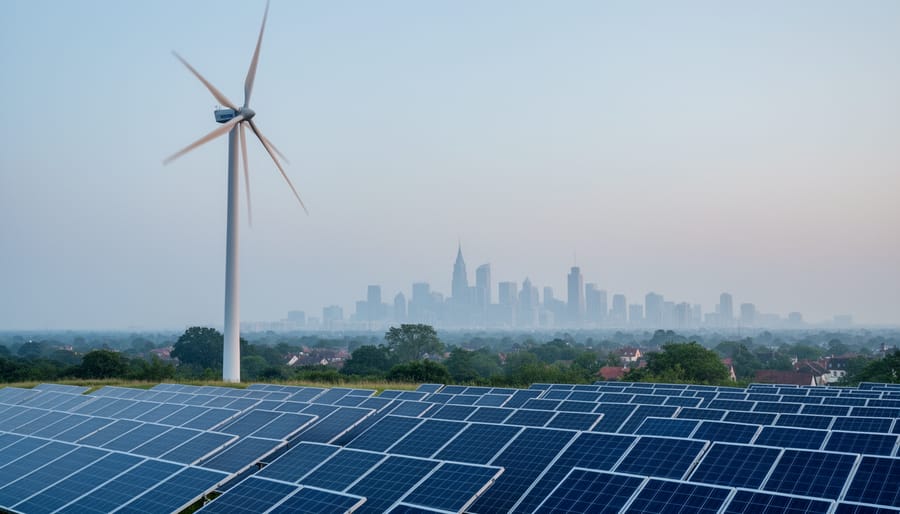
Lowering greenhouse gas emissions means deliberately reducing the release of heat-trapping gases into the atmosphere through strategic changes in energy production, industrial processes, transportation systems, and land use. The imperative has never been clearer: with atmospheric CO2 concentrations now surpassing levels not seen in three million years, emission reductions represent our most direct lever for limiting temperature rise and protecting both economic stability and human welfare, especially for vulnerable communities facing disproportionate climate impacts.
This isn’t merely an environmental ambition. Emission reduction has matured into a comprehensive economic and technological transformation reshaping global markets. The past five years alone have witnessed renewable energy costs drop below fossil fuels in most regions, electric vehicle sales triple worldwide, and carbon pricing mechanisms expand to cover nearly a quarter of global emissions. Corporate leaders now view emission cuts as risk management, competitive advantage, and regulatory compliance rolled into one strategic priority.
Yet the path forward demands more than good intentions. Meaningful reduction requires understanding which interventions deliver measurable results, how different sectors contribute to the problem, and where implementation efforts generate the greatest return. The gap between pledges and performance remains substantial. Global emissions in 2025 still tracked well above trajectories consistent with limiting warming to 1.5°C, underscoring the urgency of translating commitments into verifiable action.
This article dissects the mechanics of emission reduction across energy systems, examines proven strategies from industrial decarbonization to nature-based solutions, and explores real-world case studies demonstrating what works at scale. Through expert insights and practical frameworks, we’ll map the transition from carbon-intensive operations to climate-aligned models that preserve economic vitality while safeguarding planetary boundaries.
What Lowering Greenhouse Gas Emissions Means
Lowering greenhouse gas emissions refers to reducing the quantity of gases released into the atmosphere that trap heat and drive global warming. At its core, this involves decreasing carbon dioxide, methane, nitrous oxide, and fluorinated gases produced by human activities such as energy generation, industrial processes, transportation, agriculture, and land use changes. The objective is not merely symbolic: each fraction of a degree of warming avoided translates directly into reduced climate impacts, from sea-level rise to ecosystem collapse.
Understanding emission reduction requires clarity on three distinct approaches. Absolute reductions mean cutting total emissions in tonnes, regardless of economic growth or production levels. This is the most straightforward measure: an organization emitting 10,000 tonnes annually that cuts to 7,000 tonnes has achieved a 30% absolute reduction. Relative reductions, by contrast, lower emission intensity, the amount released per unit of output, such as tonnes of CO₂ per megawatt-hour of electricity or per dollar of revenue. A manufacturer might reduce emissions per product while total emissions still rise if production scales up significantly. Net-zero targets go further, requiring that any remaining emissions be balanced by equivalent removals through carbon capture or natural sinks, achieving overall atmospheric neutrality.
The terminology matters for accountability and ambition:
- Absolute emissions
- The total quantity of greenhouse gases released, measured in tonnes of CO₂ equivalent, without adjustment for economic activity or output levels.
- Emission intensity
- Emissions per unit of activity, such as grams of CO₂ per kilowatt-hour or tonnes per million dollars of revenue, allowing comparison across different scales of operation.
- Carbon neutrality
- Balancing gross emissions with offsets, often through purchasing credits, without necessarily reducing emissions at source.
- Net-zero
- Reducing emissions to the greatest extent possible and balancing only unavoidable residual emissions with verified removals, typically requiring deep cuts of 90-95% from baseline levels.
- Scope 1/2/3 emissions
- Categorization of emissions by source: direct emissions from owned operations (Scope 1), indirect emissions from purchased energy (Scope 2), and all other value chain emissions including suppliers and product use (Scope 3).
Why this matters for climate stability connects to basic physics. Atmospheric CO₂ concentrations have risen from 280 parts per million before industrialization to over 420 ppm today, driving approximately 1.1°C of warming. Climate models demonstrate that limiting warming to 1.5°C, the threshold beyond which tipping points and irreversible changes become significantly more likely, requires cutting global emissions by roughly 45% from 2010 levels by 2030 and reaching net-zero by mid-century. Each year of delay narrows the remaining carbon budget and necessitates steeper, costlier reductions.
How Emission Reduction Works
Measurement and Accounting
Accurate emission tracking forms the foundation of any reduction strategy. Organizations and nations rely on standardized protocols to measure their greenhouse gas output across all sources, creating a transparent baseline against which progress can be assessed.
The most widely adopted framework is the Greenhouse Gas Protocol, which categorizes emissions into three scopes. Scope 1 covers direct emissions from owned or controlled sources like company vehicles and facilities. Scope 2 accounts for indirect emissions from purchased electricity, steam, heating, and cooling. Scope 3 encompasses all other indirect emissions occurring in the value chain, from raw material extraction to product disposal. This comprehensive approach reveals the full carbon footprint rather than just obvious sources.
National inventories follow guidelines established by the Intergovernmental Panel on Climate Change, using sector-based methodologies that track emissions from energy, industry, agriculture, waste, and land use. These standardized approaches enable meaningful comparison between regions and consistent monitoring over time.
Modern accounting relies on activity data multiplied by emission factors. A manufacturer might record fuel consumption in liters, then apply established emission factors per liter to calculate total CO2 equivalent. Advanced monitoring systems increasingly use continuous sensors and satellite data to verify reported figures, reducing reliance on estimates.
Third-party verification adds credibility to emission reports. Independent auditors review calculation methodologies, data sources, and documentation to ensure accuracy before organizations publish climate disclosures or submit compliance reports to regulatory bodies.
Implementation Pathways
Translating emission reduction commitments into tangible outcomes follows a structured pathway that organizations and governments refine through experience. The journey begins with strategy development grounded in a comprehensive emissions inventory. Decision-makers assess baseline data, identify reduction opportunities across operations, and establish realistic timelines aligned with climate science and organizational capacity. This planning phase demands honest evaluation of technical feasibility, resource availability, and stakeholder readiness.
Execution transforms plans into action through targeted interventions. Organizations typically pursue quick wins, replacing inefficient equipment, optimizing processes, while simultaneously investing in longer-term transformations like renewable energy infrastructure or supply chain redesign. Successful implementation requires dedicated teams, clear accountability structures, and sufficient budgets. Companies often phase interventions based on cost-effectiveness curves, prioritizing measures that deliver maximum emission cuts per unit of investment.
Monitoring systems track progress against established targets through regular measurement cycles. Organizations collect operational data, recalculate emissions using consistent methodologies, and identify deviations from projected trajectories. This visibility enables course corrections before small gaps become insurmountable deficits. Advanced monitoring integrates real-time sensors and automated reporting to catch issues immediately rather than during quarterly reviews.
Continuous improvement closes the loop. Teams analyze what worked, what didn’t, and why. They capture lessons about technology performance, behavioral change barriers, and coordination challenges. These insights inform the next planning cycle, creating an upward spiral of ambition and capability. Organizations raise targets as they build confidence, discover overlooked opportunities, and access improved technologies. This iterative approach acknowledges that emission reduction isn’t a one-time project but an ongoing evolution of operations and culture.
Categories of Emission Reduction Strategies
Energy System Transformation
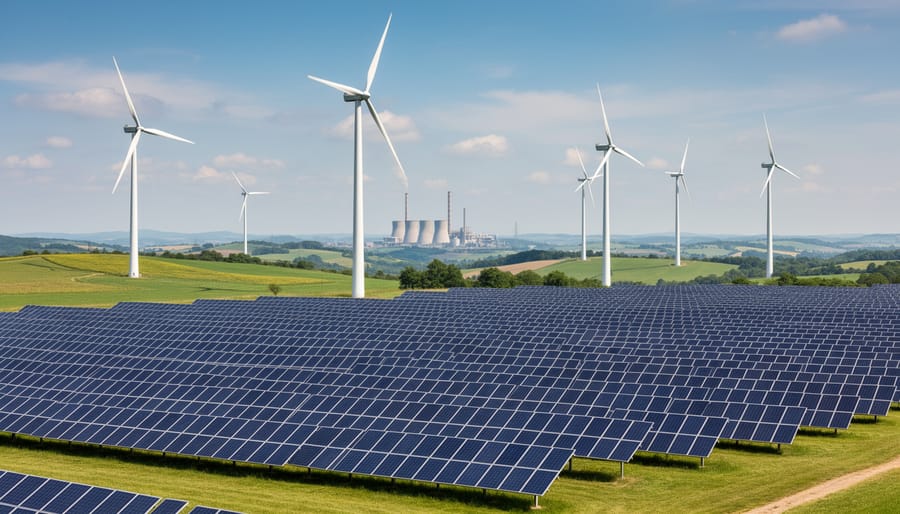
Energy system transformation represents the most substantial opportunity for emission reductions, accounting for roughly three-quarters of global greenhouse gases. The transition centres on three interconnected strategies that reshape how we generate and consume power.
Renewable energy deployment replaces fossil fuel generation with wind, solar, hydroelectric, and geothermal sources. In 2026, renewables provide the cheapest new electricity in most markets, making the coal transition economically attractive beyond environmental imperatives. Grid-scale battery storage and demand response systems address intermittency challenges, enabling higher renewable penetration rates.
Energy efficiency improvements cut consumption without sacrificing output. Industrial facilities achieve this through heat recovery, process optimization, and advanced motor systems. Buildings benefit from enhanced insulation, smart heating controls, and high-efficiency appliances that slash energy demand by 40-60% compared to older infrastructure.
Electrification of end uses transfers energy consumption from direct fossil fuel burning to electricity, which can be decarbonized at source. Transport electrification, from passenger vehicles to freight, eliminates tailpipe emissions, while electric heat pumps replace gas boilers in buildings. The role of nuclear in transition provides stable baseload power that complements variable renewables, particularly in regions with limited renewable resources or high electricity demand.
Together, these strategies create a reinforcing cycle: cleaner electricity makes electrification more effective, while efficiency gains reduce the scale of generation needed.
Industrial Process Innovation
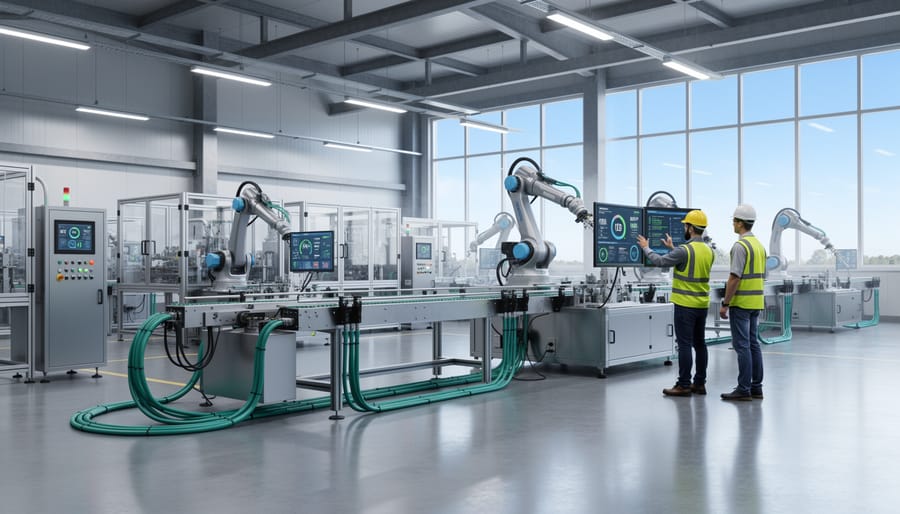
Heavy industry and manufacturing account for roughly a quarter of global greenhouse gas emissions, making process innovation essential to meaningful climate progress. These sectors face unique challenges: high-temperature heat requirements, chemical reactions that inherently produce carbon dioxide, and capital-intensive infrastructure designed for decades of operation.
Modern emission reduction approaches in industry center on three core strategies. Process electrification replaces fossil fuel combustion with electric alternatives, electric arc furnaces for steel production, heat pumps for industrial processes, and electric kilns for cement manufacturing. This shift proves effective only when paired with clean electricity sources.
Material efficiency and circularity reduce emissions by extending product lifecycles and minimizing virgin material extraction. Steel recycling uses 75 percent less energy than primary production. Aluminium recycling cuts emissions by 95 percent compared to smelting from bauxite ore. Chemical manufacturers increasingly design for disassembly and material recovery rather than single-use applications.
Carbon capture and alternative chemistry address emissions that can’t be eliminated through electrification alone. Cement producers are testing carbon capture systems while exploring novel binders that avoid the calcination process responsible for most cement emissions. Chemical manufacturers are developing bio-based feedstocks and green hydrogen pathways to replace fossil inputs in plastics, fertilizers, and industrial chemicals.
Land Use and Natural Solutions

Nature-based solutions offer a dual benefit: they cut emissions from land use activities while actively removing carbon dioxide from the atmosphere. Reforestation and afforestation create new carbon sinks as growing trees absorb CO2, with potential sequestration rates of 3 to 10 tons per hectare annually depending on species and location. Restoring degraded forests accelerates this process where soil carbon and biodiversity recover alongside tree cover.
Sustainable agriculture reduces emissions through improved livestock management, optimized fertilizer application, and conservation tillage that preserves soil carbon. Agroforestry integrates trees into farming systems, combining food production with carbon storage. Wetland restoration protects peatlands and mangroves, which store carbon densities far exceeding those of forests when left intact.
These approaches require careful implementation. Monoculture tree plantations deliver less climate benefit than biodiverse native forests. Agricultural transitions demand farmer training and market support. Permanence matters: carbon stored in ecosystems remains vulnerable to fire, disease, and land conversion, making long-term protection essential. When designed with ecological integrity and community involvement, nature-based solutions contribute meaningfully to emission reduction targets while delivering co-benefits for water quality, biodiversity, and rural livelihoods.
Behavioral and Systemic Change

Reducing emissions demands changes beyond technology alone. Urban planning that prioritizes mixed-use neighborhoods cuts commuting distances and enables walking or cycling. Public transit networks, when convenient and reliable, shift people away from personal vehicles. Consumer choices, buying durable goods, reducing meat consumption, minimizing waste, collectively lower demand for emission-intensive products. Systemic transformation requires policy frameworks that make sustainable options accessible and affordable, alongside education that builds awareness and agency. These behavioral shifts, supported by infrastructure and social norms, address emissions at their source: human activity patterns.
Applications Across Sectors and Scales
Corporate and Industrial Applications
Businesses across sectors are embedding emission reduction into core operations through comprehensive strategies that span energy procurement, process optimization, and supply chain transformation. Leading corporations establish science-based targets aligned with the Paris Agreement, then deploy capital toward energy efficiency retrofits, renewable energy contracts, and low-carbon manufacturing technologies. This integration extends beyond facility-level changes to encompass product design, logistics networks, and vendor requirements that cascade reductions throughout value chains.
A manufacturing consortium in Northern Europe demonstrates this integrated approach in practice. Five mid-sized industrial manufacturers, spanning chemicals, metal fabrication, and textiles, formed a collaborative initiative in 2023 to share best practices and negotiate joint renewable energy purchases. Within two years, the group reduced collective emissions by 34% through coordinated investments in electric heating systems, waste heat recovery, and shared renewable electricity agreements that lowered costs through economies of scale.
The consortium’s success hinged on several factors: executive commitment backed by board-level oversight, transparent emissions accounting using GHG Protocol standards, and workforce training programs that equipped 400 employees with skills to operate and maintain new low-carbon systems. Member companies also redesigned logistics to consolidate shipments and shift to rail transport where feasible, cutting supply chain emissions by 18%. This collective model proves particularly effective for small and medium enterprises that lack individual capacity to drive deep decarbonization alone.
Regional and National Initiatives
Northern Europe demonstrates how coordinated policy frameworks can accelerate emission reductions across entire regions. Sweden’s climate policy framework, integrated with its industrial strategy since the early 2020s, connects carbon pricing mechanisms to targeted support for green technology deployment. This dual approach creates market incentives while funding the infrastructure transitions that heavy industries require. By 2026, this model has enabled major steel producers to shift toward hydrogen-based processes, reducing emissions by approximately 30% compared to 2020 baselines.
Denmark’s energy islands initiative exemplifies infrastructure-scale planning. These artificial islands, designed to become renewable energy hubs in the North Sea, will integrate offshore wind farms with hydrogen production facilities and international transmission networks. The project links energy policy, maritime spatial planning, and cross-border cooperation into a single framework expected to supply clean energy equivalent to several million European households.
Finland’s approach emphasizes the research-industry-government triangle. National innovation funding directly supports collaborative projects where universities develop emission reduction technologies alongside industrial partners who can deploy them at scale. This structure shortens the gap between laboratory breakthroughs and commercial application, particularly in bioeconomy solutions and carbon capture integration. Regional governments facilitate these partnerships through regulatory sandboxes that allow controlled testing of novel approaches before full-scale implementation, creating learning environments that inform broader policy development.
Overcoming Implementation Challenges
Organizations pursuing emission reductions confront several recurring obstacles that can slow or derail their progress. Understanding these challenges and their proven solutions enables more effective implementation across diverse contexts.
Financial constraints represent the most frequently cited barrier. The upfront capital required for renewable energy installations, process upgrades, and efficiency retrofits often exceeds available budgets, particularly for small and medium enterprises. Innovative financing mechanisms have emerged as practical solutions: green bonds now provide access to dedicated sustainability capital, while energy-as-a-service models shift costs from capital expenditure to operational expense. Performance contracting arrangements, where providers guarantee emission reductions and share the financial benefits, remove much of the investment risk while accelerating deployment timelines.
Technical limitations pose another substantial challenge, especially in hard-to-abate sectors like heavy manufacturing, aviation, and chemical production. Many processes lack commercially viable low-carbon alternatives at scale. Collaborative research consortia have proven effective here, pooling resources across competitors to advance shared technological solutions. Pilot programs that de-risk emerging technologies through government-industry partnerships enable testing at demonstration scale before full commercial deployment.
Workforce capabilities often lag behind technological possibilities. The transition demands new skill sets that blend traditional engineering with digital monitoring, systems thinking, and sustainability expertise. Building this zero-carbon workforce requires coordinated efforts between educational institutions, industry, and training providers to develop curricula, apprenticeships, and reskilling programs that prepare workers for evolving roles rather than displacing them.
Coordination across fragmented value chains creates complexity when emissions span multiple organizations and jurisdictions. Sector-specific roadmaps that establish common targets, standardized reporting protocols, and shared infrastructure investments help align diverse stakeholders. Regional collaboration platforms facilitate knowledge exchange and resource sharing, particularly important in Northern Europe where cross-border initiatives accelerate progress beyond what individual nations could achieve independently.
Frequently Asked Questions
How long does it take to see meaningful reductions in greenhouse gas emissions?
Organizations typically achieve measurable reductions within 18 to 36 months of implementing a structured strategy, with energy efficiency measures often delivering immediate results while larger infrastructure transitions require 5 to 10 years for full deployment. The timeline depends heavily on the sector, existing infrastructure, and the scale of transformation required.
Is reducing emissions economically viable for businesses?
Most emission reduction strategies generate positive returns within 3 to 7 years through reduced energy costs, enhanced operational efficiency, and improved market positioning. Many companies find that renewable energy procurement and efficiency upgrades lower operating costs while meeting stakeholder expectations for climate action.
Are current technologies sufficient to achieve significant emission reductions?
Existing technologies can deliver 70 to 80 percent of needed emission reductions across most sectors, particularly through renewable energy, electrification, and efficiency improvements. Hard-to-abate sectors like aviation, shipping, and heavy industry require emerging technologies that are advancing rapidly but not yet commercially scaled.
How accurate are greenhouse gas emission measurements?
Direct emissions from energy use can be measured with 95 percent accuracy using established protocols, while supply chain and indirect emissions involve greater uncertainty and rely on estimation models. Ongoing improvements in monitoring technology and standardized reporting frameworks continue to enhance measurement precision.
Can economies grow while reducing emissions?
More than 30 countries have demonstrated absolute decoupling of economic growth from emissions over the past two decades, proving that GDP expansion and emission reduction can occur simultaneously. The transition creates new employment in clean technology sectors while requiring workforce development to support displaced workers from high-carbon industries.
How do we address uncertainty in climate projections when planning emission reductions?
Decision makers use scenario planning and risk management frameworks to account for climate uncertainty focusing on strategies that deliver benefits across multiple potential futures rather than optimizing for a single projection. This approach prioritizes no-regret actions like efficiency improvements while maintaining flexibility to adjust as understanding evolves.
These questions reflect the practical concerns that organizations and policymakers face when moving from commitment to implementation. The answers highlight that emission reduction isn’t just environmentally necessary but increasingly makes financial and strategic sense, particularly as technology costs decline and market dynamics shift toward low-carbon solutions.
Lowering greenhouse gas emissions stands as the defining challenge and opportunity of our generation. The path to zero emissions begins with concrete, measurable reductions today, built on the measurement systems, technological innovations, and collaborative frameworks we’ve explored throughout this article.
The transition requires unprecedented coordination. Governments must establish clear policy signals and regulatory frameworks. Industries need to invest in cleaner processes and reimagine their operations. Research institutions continue developing breakthrough technologies that make deep decarbonization economically viable. Communities adapt their consumption patterns and demand sustainable solutions. Success emerges not from any single actor, but from the alignment of these diverse stakeholders around shared goals.
This transformation creates substantial opportunities beyond climate benefits. The renewable energy sector already employs millions globally, with projections showing continued growth through 2030. Manufacturing innovation driven by emission reduction targets generates competitive advantages for early adopters. Cities redesigned around low-carbon transportation become more livable. Agricultural practices that sequester carbon improve soil health and long-term productivity. The skills developed for this transition build resilient economies prepared for future challenges.
Looking ahead, the pace of innovation accelerates. Emerging technologies in carbon capture, green hydrogen, and advanced materials expand what’s possible. Digital systems enable more precise emission tracking and optimization. New financing mechanisms unlock capital for ambitious projects. Most importantly, the knowledge networks connecting researchers, practitioners, and policymakers across Northern Europe and globally strengthen our collective capacity to achieve ambitious targets while ensuring just transitions for affected workers and communities.