
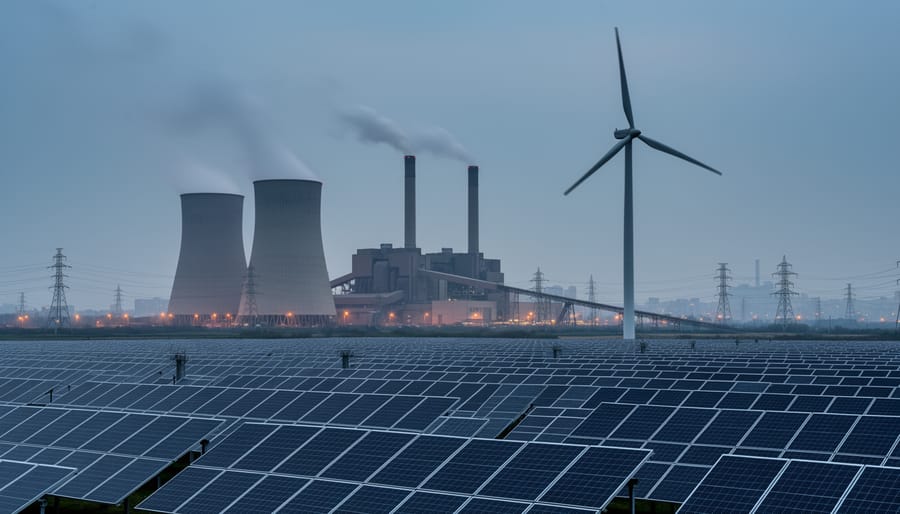
China Renewable Energy vs Coal: What the Shift Means for Global Climate Goals
China stands at an energy crossroads that will determine whether global climate targets remain achievable, and the answer for policymakers and industry leaders is clear: the country’s renewable sector has achieved historic dominance in generation share, yet paradoxically, its coal capacity continues expanding to backstop grid reliability. This dual reality, where coal-fired generation declined absolutely for the first time in 2025 even as new coal plants came online at near-record levels, reveals a strategic hedging approach rather than a clean break with fossil fuels.
For professionals navigating investment decisions, technology transfers, or climate negotiations, understanding this tension is essential. China installed enough renewable capacity in recent years to meet 75% of global electricity demand growth through solar alone in 2025, pushing renewables to 33.8% of worldwide power generation and surpassing coal for the first time in the modern era. Yet the same year saw coal capacity additions climb 3.5%, underscoring Beijing’s unwillingness to retire baseload security even as clean sources now generate the majority of the country’s electricity.
This isn’t a simple story of transition or backsliding. It’s a calculated coexistence shaped by grid stability concerns, regional energy security, and the technical realities of integrating variable renewables at unprecedented scale. The choices China makes between locking in stranded coal assets and accelerating flexible grid solutions will ripple through supply chains, carbon markets, and international climate commitments for decades. The data tells us where we are; the strategic question is where China’s energy pathway leads next.
China’s Energy Crossroads: At-a-Glance
China stands at an unprecedented energy crossroads in 2026, embodying a paradox that will shape global climate trajectories for decades. While the nation continues to lead the world in renewable energy deployment, it simultaneously added coal power capacity at one of the highest rates on record, capacity additions increased by 3.5% in 2025 even as actual coal-fired generation declined.
The numbers tell a complex story. In 2025, China achieved a significant milestone: electricity generated from clean sources crossed a threshold that demonstrated renewables could displace coal in absolute terms, contributing to the historic global shift where renewables reached 33.8% of power generation and overtook coal for the first time in the modern era. Solar power played an outsized role, meeting 75% of global electricity demand growth throughout the year. Yet this renewable surge unfolded against the backdrop of persistent coal infrastructure expansion, creating a tension between installed capacity and actual generation.
What makes this moment pivotal is the decline in coal generation despite capacity increases, suggesting that new coal plants are running at lower utilization rates or serving as grid stability backstops rather than primary generation assets. Forecasts through 2030 project continued slight declines in global coal-fired generation, but China’s choices will determine whether these projections materialize or stall. The country’s ability to accelerate renewable deployment while managing coal’s retreat will either unlock or obstruct the path to limiting warming, making this energy crossroads a defining factor in global decarbonization success.
Understanding China’s Coal and Renewable Energy Pathways
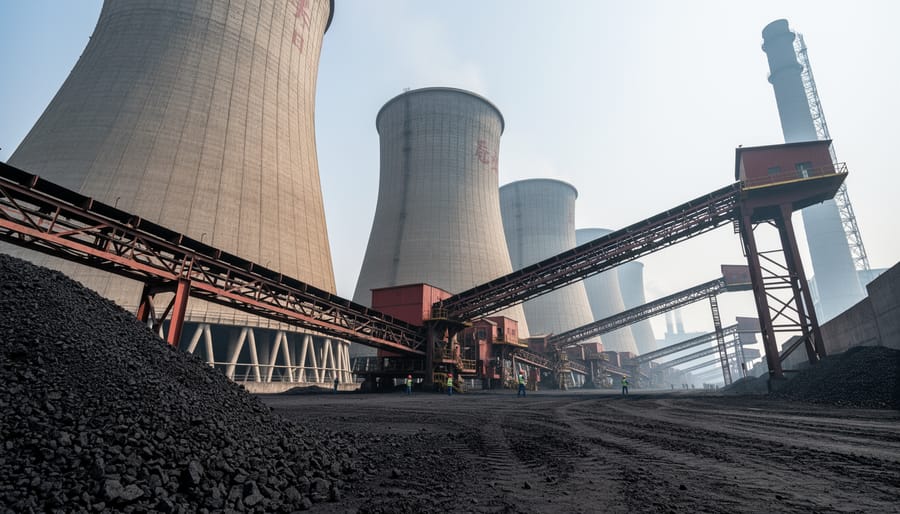
China’s Coal Power Infrastructure
China operates the world’s largest coal power fleet, with more than 1,100 gigawatts of installed capacity, roughly half the global total. This massive infrastructure represents decades of industrial development and remains central to the country’s electricity system, even as clean energy sources expand rapidly. The continued expansion of coal capacity, which increased by 3.5% in 2025 to reach one of the highest levels on record, reflects a complex calculation balancing grid reliability, energy security, and regional economic development rather than a simple commitment to fossil fuels.
The distinction between capacity and generation is critical to understanding this apparent contradiction. Capacity measures the maximum potential output of power plants, while actual generation reflects how much electricity they produce. A coal plant’s capacity factor, the ratio of actual output to maximum possible output, has been declining in China as renewables take priority in the dispatch order. Many newer coal facilities operate as flexible backup rather than running continuously, providing grid stability when solar and wind generation drops. This explains why China saw an absolute decline in coal generation in 2025 despite capacity additions: the plants exist for baseload power and system reliability, but run less frequently.
Regional development also drives capacity decisions. Provincial governments approve coal projects to support local employment and industrial growth, particularly in coal-producing regions where energy security concerns remain acute. These plants serve as insurance against supply disruptions, even if they generate electricity only intermittently as the renewable share climbs.
China’s Renewable Energy Portfolio
China’s renewable energy portfolio represents the world’s largest clean energy buildout, dominated by solar photovoltaic installations that have reshaped the country’s generation mix. In 2025, solar played an outsized role globally, meeting 75% of worldwide electricity demand growth, and China accounted for the lion’s share of that capacity. Wind power, both onshore and offshore, contributes substantial generation, while hydropower remains a longstanding pillar, especially in southwestern provinces. Together, these sources ensured that a significant portion of China’s electricity came from clean energy in 2025, marking a historic shift as renewables overtook coal globally at 33.8% of total generation.
Yet scale alone doesn’t tell the full story. Understanding Solar Energy and wind systems means grappling with variable generation: output fluctuates with weather and time of day, creating grid integration challenges that coal’s dispatchable baseload traditionally solved. China has invested heavily in ultra-high-voltage transmission lines to move renewable electricity from resource-rich western regions to coastal demand centers, and in energy storage to smooth supply. Battery installations are expanding rapidly, but gaps remain, hence the paradox of rising coal capacity alongside renewable leadership. The coal fleet, often running at reduced capacity factors, provides backup when solar and wind output dips, a bridging role that complicates the transition timeline and underscores the infrastructure hurdles China must overcome to fully realize its clean energy ambitions.
Coal vs. Renewables: Dimension-by-Dimension Comparison
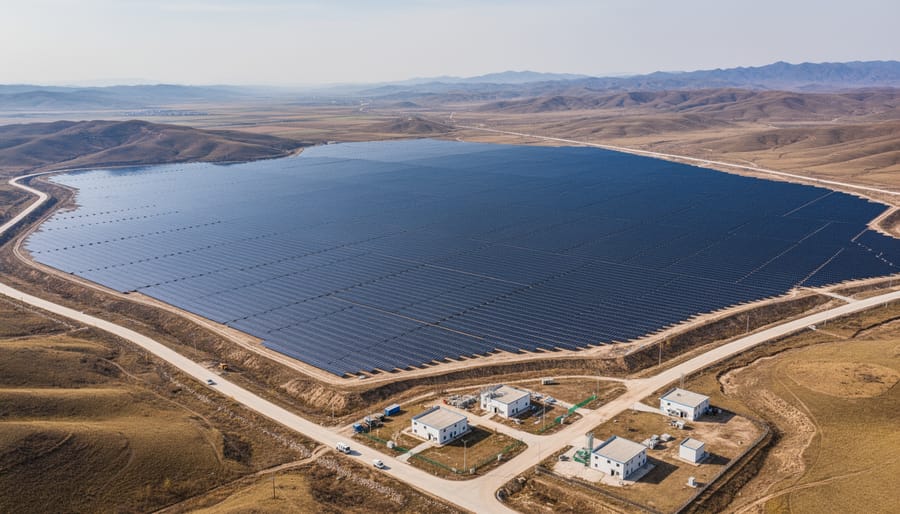
Generation Share and Actual Output
In 2025, China reached a pivotal inflection point in its electricity mix. Clean energy sources generated a substantial portion of the nation’s power, marking a historic shift in the world’s largest energy consumer. This milestone coincided with a broader global transformation: for the first time in the modern era, renewables overtook coal worldwide, reaching 33.8% of global power generation.
What makes China’s trajectory particularly instructive is the paradox in the numbers. Despite new coal power capacity additions increasing by 3.5% to reach one of the highest levels on record, the country achieved an absolute decline in coal-fired generation. Coal plants ran less frequently, their output dropping even as more units came online. This divergence between capacity and actual generation reveals a critical dynamic: new coal infrastructure serves increasingly as backup rather than baseload, while solar and wind shoulder the growth in electricity demand.
The gap between what coal could theoretically produce and what it actually generates widened in 2025. Solar alone met 75% of global electricity demand growth that year, with China responsible for the lion’s share of that deployment. Coal’s generation share contracted not through plant closures, but through displacement, cleaner electrons crowding out dirtier ones in the merit order dispatch system that prioritizes lower-cost, lower-emission power sources.
Capacity Additions and Investment Trends
China’s 2025 capacity additions reveal a striking paradox. New coal power installations jumped 3.5% to reach one of the highest levels on record, yet solar carried the energy transition forward. Across the globe, solar alone met 75% of electricity demand growth in 2025, underscoring renewables’ expanding role even as coal infrastructure continued to be built.
This divergence between capacity and generation is crucial. Capacity measures the maximum potential output a power plant can deliver, while generation reflects actual electricity produced over time. China’s new coal plants often sit idle or run at low capacity factors, held in reserve for peak demand or grid reliability rather than continuous operation. Meanwhile, renewable installations, particularly utility-scale solar, come online rapidly and generate immediately wherever sunlight permits.
Investment flows mirror this shift. Solar projects attract capital due to falling technology costs, faster permitting, and stronger alignment with climate commitments. Coal capacity additions, concentrated in China, stem largely from regional energy security concerns and long-planned projects reaching completion. The result: capacity figures show coal expansion, but generation trends tell the opposite story. China’s coal-fired electricity saw an absolute decline in 2025, even as total capacity grew, evidence that infrastructure doesn’t guarantee utilization in a grid increasingly dominated by cheaper, cleaner alternatives.
Emissions and Climate Impact
The carbon footprint of coal versus renewables represents the starkest divide in China’s energy landscape. Coal combustion releases roughly 900 grams of CO₂ per kilowatt-hour generated, while solar and wind produce near-zero operational emissions. In 2025, global coal generation fell 0.6% a modest but symbolically significant decline that contributed directly to lower power sector emissions. China’s absolute reduction in coal-fired electricity the same year amplified this global trend, demonstrating that even small percentage decreases translate into millions of tonnes of avoided CO₂ when applied to the world’s largest energy system.
The cumulative climate impact extends beyond annual emissions. Each new renewable installation locks in decades of low-carbon generation, whereas continued coal capacity additions, even if underutilized, preserve fossil infrastructure that could hinder long-term decarbonization. China’s trajectory matters disproportionately: the country accounts for roughly half of global coal consumption, meaning its choices reverberate through international climate models. When renewables overtook coal globally for the first time in 2025, reaching 33.8% of generation, China’s accelerating solar deployment played a decisive role. The scale of this transition determines whether the world can credibly pursue 1.5°C pathways or faces widening emissions gaps against Paris Agreement targets.
Grid Integration and Energy Security
China’s grid stability concerns have long justified coal’s continued role, but this rationale faces mounting scrutiny as renewable technologies mature. Coal plants provide dispatchable power, operators can ramp generation up or down to match real-time demand, which explains why new capacity additions reached record levels in 2025 even as actual coal-fired generation declined 0.6% globally. Grid managers view this reserve capacity as insurance against supply shortfalls during peak demand or when wind and solar output drops.
Yet this perceived security comes at a climate cost. The intermittency challenge that once seemed insurmountable is yielding to advances in Energy System Integration where smart grid technologies, demand response, and energy storage systems smooth renewable variability. China now operates the world’s largest battery storage capacity, reducing the operational need to run coal plants as spinning reserves. In 2025, solar alone met 75% of global electricity demand growth, demonstrating that variable sources can shoulder the lion’s share of new load when paired with flexibility mechanisms.
The balance China strikes between energy security and decarbonization hinges on accelerating this grid modernization. As clean sources generated more Chinese electricity in 2025, the absolute decline in coal generation proved that renewables can displace fossil generation while maintaining reliability, if the grid infrastructure evolves to accommodate them. The strategic question shifts from whether renewables can provide security to how quickly the system can adapt to make coal’s backup role obsolete.
Case Study: Solar’s Ascendance and Coal’s Retreat in Practice
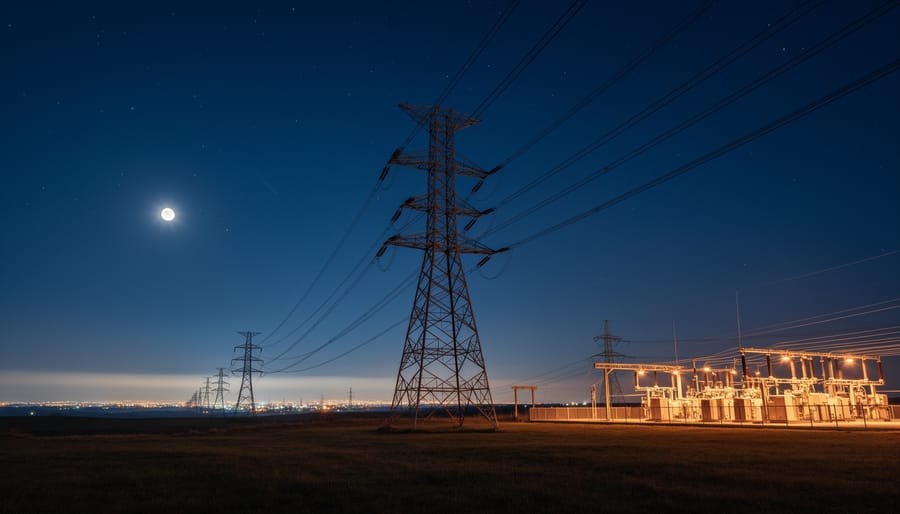
In Shandong Province, China’s industrial heartland and historically one of its heaviest coal consumers, the practical mechanics of the energy transition are playing out with striking clarity. Between 2023 and 2025, the province installed over 18 GW of new solar capacity, much of it deployed across rooftops in manufacturing zones and utility-scale farms on reclaimed industrial land. During the same period, coal plants in the region saw their capacity factors drop from roughly 55% to below 45%, meaning they ran significantly fewer hours despite remaining technically operational.
The shift has tangible economic consequences. A solar developer working on projects in Shandong’s textile hub noted that factory owners increasingly sign long-term power purchase agreements with solar installations rather than relying on grid-supplied coal power. The reason is straightforward: solar electricity now costs less than half the price of coal-generated power in the region, and manufacturers can lock in stable rates for a decade or more. As one project manager put it, “We’re not fighting ideology here, we’re following the spreadsheet.”
Coal plants haven’t disappeared, but their role has fundamentally changed. Several units now operate primarily as reserve capacity, ramping up during peak evening demand or prolonged cloudy stretches, then idling for days when solar output is strong. This operational pattern, frequent cycling rather than continuous baseload supply, reduces their economic viability. Plant operators face higher maintenance costs from thermal stress, while revenue per megawatt-hour falls when output is curtailed.
Academic researchers studying the Shandong case have identified a feedback loop: as solar penetration increases, coal plants run less efficiently and less profitably, which erodes the financial justification for maintaining or building new coal capacity. One energy economist at Tsinghua University observed that the paradox of rising coal capacity alongside falling coal generation reflects institutional inertia and regional employment concerns, not market logic. The momentum, she argued, now clearly favours renewables, solar met three-quarters of global electricity demand growth in 2025, and the cost curve continues to tilt decisively away from coal.
Who Should Choose Which: Implications for Different Stakeholders
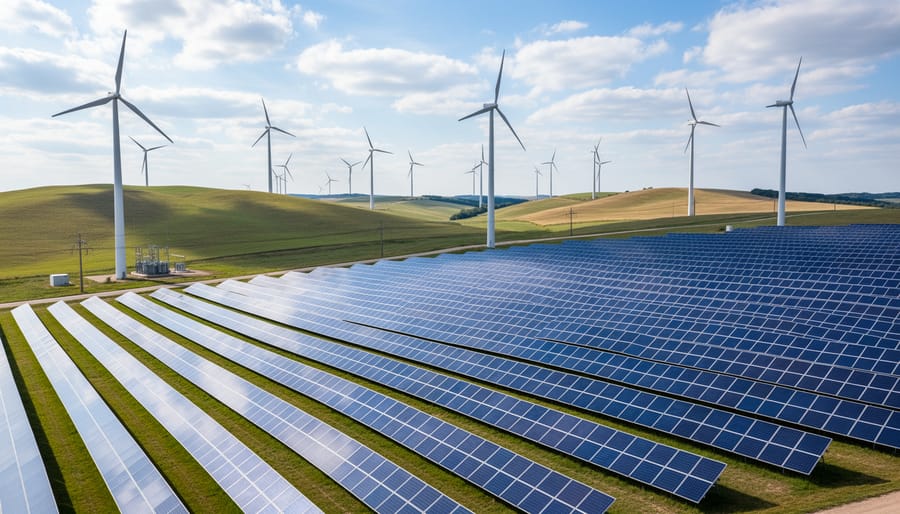
China’s energy crossroads demands different strategic choices from different actors. The decision between coal and renewables isn’t binary across all contexts, it depends on the stakeholder’s mandate, geographic reality, and time horizon.
Policy makers steering national decarbonization pathways should prioritize renewable deployment as the default strategy. With solar alone meeting 75% of global electricity demand growth in 2025 and renewables overtaking coal in generation share (33.8%) for the first time, the trajectory is clear. National-level leaders must translate this momentum into accelerated renewable investment while establishing firm timelines for coal phase-down. The absolute decline in China’s coal-fired generation in 2025, despite capacity additions, demonstrates that generation outcomes matter more than capacity numbers.
Regional governments face harder choices. Provinces with heavy industrial bases or underdeveloped grids may justify limited coal capacity to ensure reliability during the transition, but only as a bridge, not a destination. These authorities should pair any coal projects with aggressive renewable deployment targets and clear capacity factor expectations. Running new coal plants as backup rather than baseload assets shifts the economic calculation dramatically.
Investors seeking long-term value creation should favor renewables decisively. Coal’s declining generation trend (down 0.6% globally, with further declines forecast through 2030) signals structural risk. Capital flowing into solar and wind infrastructure aligns with where demand growth is being met and where policy momentum lies.
- Policy makers focused on decarbonization targets must prioritize renewable scale-up with binding coal phase-down commitments
- Regional authorities balancing development and emissions can justify limited coal capacity only as bridge infrastructure with strict utilization limits
- Investors seeking long-term value should direct capital toward renewables given coal’s structural generation decline
- Industry leaders in heavy manufacturing should plan for renewable-powered operations and engage in flexible demand programs
- International partners supporting just transition should facilitate knowledge transfer on grid integration and financing models
Industry leadersparticularly in energy-intensive manufacturing, should plan their operations around renewable availability rather than legacy coal dependence. This means investing in flexible production schedules, on-site renewable generation, and partnerships that reduce grid strain.
International collaboratorsincluding academic networks, multilateral institutions, and technical experts, play a crucial role in knowledge transfer. The Coalition’s work facilitating partnerships between governments, universities, and industry accelerates the diffusion of best practices in grid integration, financing mechanisms, and policy design. Countries watching China’s transition benefit when lessons about managing coal phase-down alongside renewable scale-up flow freely across borders.
The stakeholder guidance boils down to this: choose coal only when absolutely necessary for near-term grid stability in specific contexts, with explicit plans to minimize its role. Choose renewables wherever technically and economically feasible, which, in 2025, is nearly everywhere.
What China’s Energy Choices Mean for Global Climate Goals
China’s energy trajectory carries consequences far beyond its borders. As the world’s largest emitter and energy consumer, the country’s decisions on coal and renewables determine whether global climate targets remain within reach or slip irretrievably out of grasp.
The math is unforgiving. International climate agreements aim to limit warming to 1.5°C above pre-industrial levels, a threshold that requires cutting global emissions in half by 2030 and reaching net zero by mid-century. Coal combustion remains the single largest source of energy-related carbon dioxide, and China burns more coal than the rest of the world combined. Even modest shifts in China’s coal trajectory reshape global emissions pathways and the carbon budget available to all nations.
The 2025 data offers a critical inflection point. For the first time in the modern era, renewables overtook coal globally, reaching 33.8% of power generation while coal-fired electricity declined by 0.6%. Yet China simultaneously added new coal capacity at one of the highest rates on record, up 3.5% despite an absolute decline in coal generation domestically. This paradox reveals the central tension: capacity additions do not automatically translate to increased emissions if the plants run infrequently, but they preserve the option to burn coal when political or economic pressures mount.
Forecasts from the IEA and Ember project slight but persistent declines in global coal generation through 2030, contingent on China maintaining its renewable acceleration. Solar met 75% of global electricity demand growth in 2025, and sustaining that momentum depends on technology transfer, grid integration expertise, and financing models that emerging economies can replicate. Knowledge-sharing partnerships become the mechanism through which China’s renewable successes scale globally while its coal dependency lessons inform other coal-reliant nations navigating their own transitions. The feasibility of climate goals hinges not on China acting alone, but on collaborative frameworks that spread proven solutions and accelerate decarbonization across borders.
At-a-Glance Comparison
China’s energy landscape in 2025 presents a striking paradox that carries profound implications for global decarbonization. While renewable energy overtook coal for the first time in the modern era, reaching 33.8% of global power generation, China simultaneously added coal capacity at near-record levels, with new coal power installations up 3.5%. Yet the headline story reveals a more nuanced reality: China’s coal-fired generation experienced an absolute decline even as capacity grew, demonstrating that new plants don’t necessarily translate to increased emissions.
Solar power dominated the transition, meeting 75% of global electricity demand growth in 2025, with China leading deployment. Clean sources now generate a substantial share of China’s electricity, while coal-fired generation globally declined 0.6% and is forecast to record slight declines through 2030. This divergence between capacity and generation, between infrastructure built and fuel actually burned, defines the central tension. Understanding this distinction is essential for evaluating whether China’s energy trajectory aligns with or undermines international climate targets, and what other nations can learn from this dual approach to energy security and decarbonization.
What Each Option Is
China’s energy landscape revolves around two distinct pathways that shape its electricity system and climate trajectory.
Coal power refers to thermal generation plants that burn coal to produce steam, driving turbines that generate electricity. In China’s context, this encompasses the world’s largest coal fleet, comprising both long-standing baseload plants that traditionally supply continuous power and newer “ultra-supercritical” facilities designed for higher efficiency and grid flexibility. Despite global decarbonization imperatives and what is mitigation strategies targeting emissions reduction, China added record coal capacity in 2025, though actual coal-fired generation declined by 0.6% as existing plants ran less frequently.
Renewable energy in China’s power mix means electricity generated from natural, replenishing sources, predominantly solar photovoltaic panels, wind turbines, and hydroelectric dams. Unlike coal’s dispatchable output, renewables produce variable generation that fluctuates with weather and daylight. Solar dominated China’s 2025 expansion, meeting 75% of global electricity demand growth and driving renewables to overtake coal for the first time in the modern era, reaching 33.8% of global generation. These technologies require different infrastructure, battery storage, transmission upgrades, and grid management systems, to integrate effectively at scale.
China S Coal vs Renewables Terms to Know
Understanding the language of China’s energy transition is essential for grasping how the world’s largest emitter navigates its coal-to-renewables crossroads. These terms clarify the technical and strategic concepts that shape both China’s domestic choices and their global climate implications, areas where organizations like The Coalition work to facilitate knowledge transfer and support evidence-based decision-making.
- Capacity Factor
- The ratio of actual electricity generation to the maximum possible output if a power plant operated continuously at full capacity. Coal plants typically achieve 50-60% capacity factors, while solar and wind are lower due to their variable nature, explaining why China can add renewable capacity while coal generation declines.
- Variable Renewable Energy (VRE)
- Power sources like solar and wind whose output fluctuates based on weather conditions rather than operator control. Managing VRE integration is central to China’s grid stability concerns as renewables scale to meet three-quarters of new electricity demand.
- Stranded Assets
- Energy infrastructure, particularly coal plants, that becomes economically unviable before the end of its expected lifespan due to policy shifts, carbon pricing, or cheaper alternatives. China faces significant stranded asset risk as renewables increasingly undercut coal economics.
- Grid Parity
- The point at which renewable electricity costs equal or fall below conventional fossil fuel generation without subsidies. Solar achieved grid parity across most of China by 2025, fundamentally altering investment incentives and accelerating the energy transition.
- Baseload Power
- Electricity generation that runs continuously to meet minimum constant demand. Coal traditionally provided baseload in China, but the concept is evolving as storage technologies and demand-side management enable renewables to fulfill reliability functions previously requiring fossil fuels.
These concepts reveal why China’s energy choices matter beyond its borders. When the country added record coal capacity in 2025 while renewables overtook coal globally for the first time, these technical realities shaped the apparent contradiction, capacity additions serve grid planning horizons, but actual generation trends reflect economic and policy momentum toward clean energy.
Common Questions About China’s Coal and Renewable Energy Transition
China’s simultaneous expansion of coal capacity and renewable energy leadership raises questions for observers worldwide trying to understand how the world’s largest emitter can reconcile these seemingly contradictory pathways. The paradox becomes clearer when examining the distinction between capacity and generation, the timeline constraints facing energy planners, and the role international collaboration plays in accelerating the transition.
Why is China still building coal plants if renewable energy is growing so rapidly?
New coal capacity serves primarily as grid stability insurance and regional energy security rather than baseload generation, many plants operate at low capacity factors or remain on standby. In 2025, despite coal capacity additions increasing by 3.5% to reach one of the highest levels on record, China experienced an absolute decline in actual coal generation as solar met 75% of global electricity demand growth.
How quickly can China realistically phase out coal-fired generation?
Global coal-fired generation is forecast to record slight declines through 2030, with China’s trajectory largely determining whether this pace accelerates. The timeline depends on grid infrastructure modernization, energy storage deployment at scale, and regional economic transitions, factors that make a complete phase-out by 2030 unlikely, though significant generation reductions are already materializing.
What can other countries learn from China’s dual approach to coal and renewables?
China’s experience demonstrates that aggressive renewable deployment can reduce coal generation even while maintaining capacity for grid security, offering a transition model for nations balancing energy reliability with decarbonization. The scale and speed of solar expansion, enabling renewables to reach 33.8% of global generation and overtake coal for the first time in 2025, shows how concentrated policy support and manufacturing capacity can accelerate the shift.
How do international partnerships support China’s energy transition and help share lessons globally?
Knowledge-sharing coalitions facilitate technology transfer, grid integration best practices, and financing models that help emerging economies avoid lock-in to high-carbon infrastructure. These partnerships document what works in managing variable renewable generation at scale, translating China’s operational experience into actionable frameworks for policy makers and industry leaders navigating similar crossroads elsewhere.
The answers reveal a transition unfolding through pragmatic compromises rather than binary choices. China’s energy planners face the reality that building renewable capacity quickly doesn’t immediately eliminate the need for dispatchable power sources, particularly in regions where grid infrastructure lags behind generation capacity or where industrial loads demand reliability guarantees that current storage technology can’t yet provide economically.
Understanding this nuance matters for accurately assessing global decarbonization prospects. The 0.6% decline in global coal-fired electricity generation reflects early momentum, but the path forward depends on whether China and other major economies can sustain declining coal generation while renewable capacity continues expanding. International collaboration accelerates this process by sharing technical solutions to intermittency challenges, financing structures that de-risk renewable investments, and policy frameworks that manage the social and economic dimensions of coal workforce transitions, challenges that transcend national borders and require collective problem-solving.
China stands at an energy crossroads that will define the global trajectory toward decarbonization. The nation’s unique position, simultaneously leading renewable deployment while maintaining coal capacity, creates a paradox with worldwide implications. How China manages the accelerated scale-up of clean energy while navigating coal’s decline will determine whether limiting global warming remains achievable.
The evidence from 2025 offers cautious optimism: renewable energy overtook coal in global generation share for the first time, and China’s own coal-fired output declined in absolute terms even as capacity grew. This signals that the transition isn’t binary but evolutionary, requiring strategic balancing of energy security, economic development, and climate commitments.
Realizing a sustainable energy future demands sustained collaboration across borders and sectors. Academia must continue generating actionable insights on grid integration and policy effectiveness. Governments need transparent data-sharing mechanisms to benchmark progress. Industry leaders should invest in transferable models that emerging economies can adapt.
The path forward isn’t about choosing between energy pathways in isolation, it’s about orchestrating a managed transition that other nations can learn from and replicate. China’s experience, with all its complexities and contradictions, becomes a crucial knowledge base for the global community working toward shared climate goals.