

What Are Mitigation Strategies for Climate Change (and How Do They Work)?
Climate change mitigation strategies are deliberate actions taken to reduce greenhouse gas emissions or enhance carbon sinks, with the goal of limiting the magnitude and rate of long-term global warming. These strategies form the frontline defense in humanity’s response to climate disruption, operating on the principle that preventing emissions now costs far less than adapting to catastrophic warming later.
The urgency has never been clearer. As we stand in 2026, the energy sector, policymakers, and industry leaders face a defining challenge: transforming theoretical commitments into measurable reductions. Countries like Canada have legislated this ambition through frameworks such as the Canadian Net-Zero Emissions Accountability Act, which mandates transparency and accountability in achieving net-zero emissions by 2050. Budget 2025 reinforced this trajectory with the Climate Competitiveness Strategy, signaling that mitigation isn’t merely an environmental imperative but an economic one.
Yet mitigation extends far beyond national borders. Canada’s international climate finance commitments, including $5.3 billion pledged through 2026 to support developing nations, demonstrate how global partnerships amplify impact. Consider the $2 million earmarked from 2023 to 2026 specifically for methane mitigation projects in developing countries. This targeted investment exemplifies how precision matters: methane carries 80 times the warming potential of carbon dioxide over two decades, making its reduction a high-leverage intervention.
This article unpacks how mitigation strategies function across scales, from renewable energy transitions to nature-based solutions and carbon pricing mechanisms. Through policy examples and real-world case studies, you’ll discover not just what works, but why certain approaches succeed where others stall. The transition from carbon-intensive systems to sustainable alternatives requires both ambition and practical roadmaps. Here’s how the world is building them.
What Mitigation Strategies for Climate Change Mean
Climate change mitigation strategies represent deliberate interventions designed to reduce the concentration of greenhouse gases in the atmosphere, either by cutting emissions at their source or by enhancing the planet’s natural and technological capacity to absorb carbon. Unlike adaptation approaches that adjust systems to withstand climate impacts already underway, mitigation tackles the root cause of warming by preventing heat-trapping gases from entering the atmosphere or removing them once released. What is mitigation? At its core, it is the proactive strategy that seeks to stabilize global temperatures by fundamentally transforming how we produce energy, grow food, manufacture goods, and design our communities.
- Mitigation
- Actions that reduce greenhouse gas emissions or remove carbon from the atmosphere to limit the severity of future climate change. This includes transitioning to clean energy, improving efficiency, and restoring natural systems.
- Adaptation
- Adjustments to social, economic, and environmental systems that reduce vulnerability to climate impacts already occurring. Examples include building sea walls or developing drought-resistant crops.
- Carbon Sink
- Natural or artificial reservoirs that absorb and store more carbon dioxide from the atmosphere than they release. Forests, oceans, soil, and certain technologies serve this function.
- Net-Zero Emissions
- The balance point where greenhouse gases entering the atmosphere equal those removed, resulting in no net increase in atmospheric concentration. Achieving net-zero requires both deep emission cuts and carbon removal.
- Greenhouse Gas Emissions
- Release of gases that trap heat in the atmosphere, including carbon dioxide, methane, nitrous oxide, and fluorinated gases. These emissions from human activity drive global warming.
Mitigation strategies operate within a growing framework of international commitments and national accountability mechanisms. Countries increasingly anchor their approaches to science-based targets, with legislation like the Canadian Net-Zero Emissions Accountability Act establishing transparency requirements and legally binding pathways to reach net-zero by 2050. This shift from voluntary pledges to enforceable frameworks reflects recognition that incremental adjustments will not suffice. Effective mitigation demands comprehensive transformation across energy systems, land use practices, industrial processes, and transportation networks, all coordinated through clear governance structures that measure progress and hold institutions accountable for outcomes rather than merely intentions.
How Climate Change Mitigation Works

Climate change mitigation operates through three interconnected pathways that tackle the carbon equation from different angles. The first reduces emissions at their source by replacing fossil fuel combustion with renewable energy, electrifying transportation systems, and redesigning industrial processes to eliminate greenhouse gases from production chains. The second accelerates energy system integration where wind farms, solar arrays, and battery storage networks work in concert with modernized grids to displace coal and natural gas generation. The third pathway removes carbon already in the atmosphere, using both nature-based solutions like reforestation and engineered technologies such as direct air capture.
Each mechanism produces tangible results when scaled. A steel manufacturer switching from coal to hydrogen cuts emissions by over 90 percent per ton of output. A municipal transit authority converting its diesel fleet to electric buses eliminates thousands of tons of tailpipe emissions annually while improving urban air quality. A coastal community restoring 500 hectares of mangrove forest sequesters roughly 10,000 tons of carbon dioxide per year while protecting shorelines from storm surge.
The policy-to-implementation pipeline turns these individual actions into national transformation. Legislation creates the architecture: Canada’s Net-Zero Emissions Accountability Act, for instance, mandates transparency and accountability through five-year emission reduction targets, progress reports tabled in Parliament, and independent advisory panel oversight. This framework ensures commitments made in 2023 translate to verifiable reductions by 2030 and net-zero status by 2050.
Below legislation sits regulation: carbon pricing mechanisms that make pollution expensive, renewable energy standards that mandate clean generation, building codes requiring energy efficiency. These tools create market signals pushing private capital toward low-carbon investments. A developer planning a new factory now calculates carbon costs into project economics, often choosing renewable power and efficient design because the regulatory environment makes it financially prudent.
Implementation flows through multiple channels simultaneously. Government programs deploy funding for clean technology adoption. Utilities execute plans to retire coal plants and integrate wind capacity. Research institutions develop next-generation batteries and carbon capture systems. Industry coalitions share best practices for emission reduction across supply chains. Each channel reinforces the others, creating momentum that accelerates the transition from ambition to measurable atmospheric impact.
Types of Climate Mitigation Strategies
Energy System Transformation
Energy system transformation represents the most significant lever for reducing global emissions, as electricity generation and heat production account for roughly a quarter of all greenhouse gases released annually. The shift begins with displacing coal, oil, and natural gas power plants with renewable alternatives, primarily wind turbines and solar photovoltaic arrays that generate electricity without combustion.
Northern Europe demonstrates how this transformation operates at scale. Denmark now derives over 80 percent of its electricity from wind power, having invested decades in offshore wind farms that harness North Sea conditions. Germany’s Energiewende program accelerated solar deployment across rooftops and fields, proving that even less sunny climates can integrate substantial photovoltaic capacity when paired with battery storage systems that smooth out generation peaks and valleys.
Grid modernization underpins these renewable expansions. Smart grids use digital sensors and automated switching to balance supply from intermittent sources, routing electricity where demand exists and storing surplus in battery banks or pumped hydro facilities. Norway’s hydroelectric reservoirs increasingly function as Europe’s battery, storing excess wind and solar power during high-generation periods and releasing it when renewable output dips.
The fossil fuel phase-out proceeds through deliberate retirement schedules that give communities and workers time to transition, coupled with policies that remove subsidies propping up carbon-intensive infrastructure while redirecting capital toward clean alternatives.
Nature-Based Solutions

Nature-based solutions harness ecosystems’ inherent capacity to absorb and store carbon dioxide while delivering benefits that extend far beyond climate regulation. Forest conservation protects existing carbon stocks in mature trees and soil, preventing emissions that would occur through deforestation. A single hectare of intact tropical forest can store over 200 tonnes of carbon, making preservation of these ecosystems one of the most cost-effective mitigation strategies available.
Reforestation and afforestation create new carbon sinks by establishing forests on degraded or previously cleared land. These projects sequester carbon as trees grow while restoring habitat, stabilizing watersheds, and supporting biodiversity. The timeline matters: young forests absorb carbon rapidly during their first decades, then continue storing it for centuries as they mature.
Wetland restoration revives peatlands, marshes, and coastal mangroves that act as carbon powerhouses. Despite covering just 3% of land surface, peatlands store twice as much carbon as all forests combined. When drained or burned, they release massive emissions; when restored, they resume accumulating carbon year after year.
Sustainable agriculture practices transform food production from carbon source to sink. Cover cropping, reduced tillage, and agroforestry build soil organic matter that locks carbon underground while improving crop resilience and water retention. These methods demonstrate how mitigation strategies can align economic productivity with environmental restoration, creating systems that sustain both communities and climate stability.
Technological Carbon Removal
Technological carbon removal offers engineered pathways to pull greenhouse gases from the atmosphere or prevent their release at emission sources. Carbon capture and storage (CCS) traps CO₂ at industrial facilities or power plants before it reaches the air, compressing the gas and injecting it into deep geological formations where it remains sequestered for millennia. Direct air capture (DAC) systems go further, extracting carbon dioxide directly from ambient air using chemical processes, though the energy requirements and costs currently limit large-scale deployment.
Emerging technologies in this space include enhanced weathering, which accelerates natural mineral reactions that bind carbon, and biochar production, where organic waste is converted into stable carbon-rich material for soil application. Methane mitigation represents another critical frontier: capturing this potent greenhouse gas from landfills, agricultural operations, and oil and gas infrastructure prevents emissions before they occur. Canada’s methane mitigation funding of $2 million from 2023 to 2026 supports developing countries in deploying these capture systems, demonstrating how international finance accelerates technology transfer to regions with significant emission reduction potential but limited capital resources.
These technologies complement nature-based approaches by addressing hard-to-abate sectors where process emissions remain difficult to eliminate entirely.
Cross-Sector Efficiency Measures
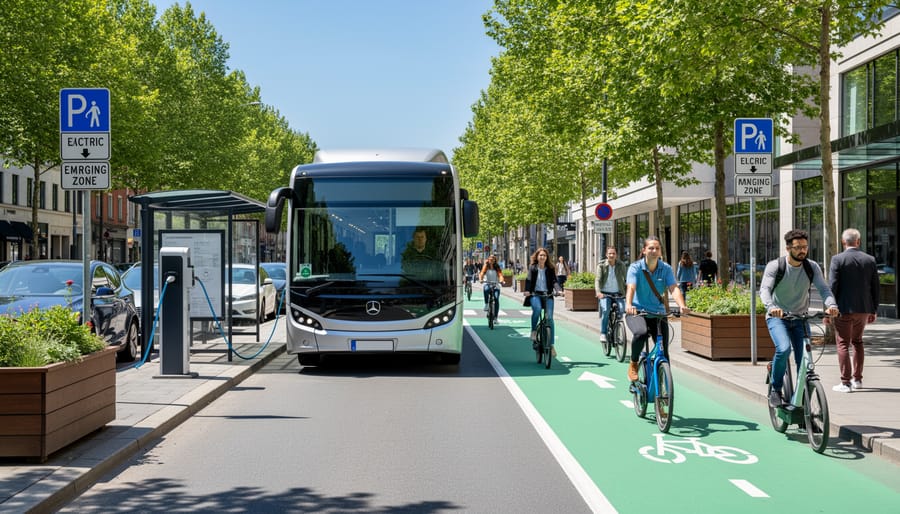
Cross-sector efficiency measures target emissions through systemic improvements that ripple across building, industrial, and waste management systems. Building retrofits transform energy performance by upgrading insulation, installing heat pumps, and integrating community energy storage to balance renewable supply with demand. These interventions cut heating and cooling loads by 30-50% while creating employment in construction and engineering sectors.
Industrial process optimization reduces emissions by redesigning production workflows, recovering waste heat, and substituting fossil fuels with green molecules like green hydrogen in steel and chemical manufacturing. Circular economy approaches close material loops, remanufacturing components, designing for longevity, and converting waste streams into feedstocks, eliminating the emissions embedded in virgin resource extraction and disposal.
Waste reduction strategies divert organic matter from landfills (where decomposition releases methane) into composting or anaerobic digestion systems that generate biogas. Industrial symbiosis networks link facilities so one operation’s byproduct becomes another’s input, slashing transport emissions and raw material demand. These measures deliver compound benefits: a single building retrofit reduces grid strain, lowers tenant energy costs, and decreases peak demand that would otherwise require fossil backup generation.
How Mitigation Strategies Are Applied in Practice
Policy and Regulatory Frameworks
Policy and regulatory frameworks transform climate ambitions into binding obligations, creating the legal and economic architecture that drives emissions reductions across entire economies. These systems work through several interconnected mechanisms: setting clear emissions targets with enforcement teeth, establishing price signals that make pollution costly, mandating performance standards for industries and products, and installing accountability structures that track progress publicly.
Carbon pricing stands as one of the most market-efficient tools, making emissions-intensive activities economically unfavorable while rewarding cleaner alternatives. Whether through carbon taxes or cap-and-trade systems, pricing mechanisms redirect investment flows toward low-carbon technologies without dictating specific solutions. Complementing this, regulatory standards set minimum performance baselines for vehicle emissions, building efficiency, and industrial processes, ensuring that even without perfect price signals, outdated practices phase out on defined timelines.
Canada’s Net-Zero Emissions Accountability Act exemplifies transparency-driven governance, legally requiring the government to set five-year emissions reduction targets, develop credible plans to achieve them, and report progress publicly. This accountability architecture prevents climate commitments from remaining aspirational; it embeds them into the machinery of government with mechanisms for course correction when trajectories fall short.
The most effective frameworks layer these tools together: binding targets create urgency, pricing creates economic incentives, standards ensure baseline action, and transparency provisions allow citizens and markets to hold decision-makers accountable. This integrated approach acknowledges that no single policy tool can decarbonize complex modern economies alone.
International Cooperation and Finance
International climate finance transforms mitigation concepts into tangible action in developing nations that often lack resources to deploy low-carbon infrastructure at scale. Wealthier countries channel funding, expertise, and technology to regions most vulnerable to climate impacts, creating a multiplier effect where each dollar invested accelerates decarbonization across multiple economies simultaneously.
Canada’s climate finance amounts illustrate this progressive commitment: from $1.2 billion during the 2010-2013 Fast-Start period to $2.65 billion between 2015 and 2021, then a substantial leap to $5.3 billion through 2026. These escalating contributions fund renewable energy installations, methane capture systems, and capacity building programs that embed mitigation knowledge within local institutions.
Technology transfer forms the backbone of effective finance. Rather than simply writing cheques, donor nations facilitate knowledge exchange, train local engineers, and establish research partnerships that enable recipient countries to maintain and scale green infrastructure independently. Canada’s $2 million commitment from 2023 to 2026 for methane mitigation projects demonstrates targeted support for high-impact interventions where technical expertise matters as much as funding.
This model creates self-sustaining mitigation ecosystems. As developing nations build domestic capacity, they become innovation hubs themselves, adapting technologies to regional contexts and sharing lessons across South-South cooperation networks. The financial architecture thus becomes a catalyst for distributed problem-solving rather than a perpetual aid dependency.
Regional Innovation Hubs
Regions acting as innovation hubs accelerate mitigation by testing, refining, and demonstrating strategies at scale before they spread globally. Northern Europe exemplifies this model: wind-integrated grids in Denmark, district heating networks in Sweden, and circular economy initiatives in the Netherlands provide replicable blueprints for other contexts. These living laboratories generate performance data, reveal implementation barriers, and produce best practices that inform policy elsewhere. Coalition networks facilitate this knowledge transfer through technical exchanges, joint research projects, and partnership platforms connecting practitioners across continents. A successful building retrofit program piloted in one region can be adapted to local climates and economic conditions through coalition channels, compressing the learning curve for communities starting later. This hub-and-spoke approach means innovation doesn’t remain siloed, proven solutions flow to places that need them most, while diverse regional experiments create a portfolio of options tailored to different energy systems, geographies, and development stages.
Building Capacity for Long-Term Success

Lasting success in climate mitigation hinges on people. Technologies and policies create the framework, but it’s human capital, skilled workers, informed citizens, innovative researchers, that transforms strategies into measurable progress. Building this capacity demands deliberate investment across education systems, research institutions, and industry partnerships.
Workforce development sits at the core of sustainable implementation. As energy systems transition from fossil fuels to renewables, millions need retraining. Electricians must learn to install solar arrays, engineers to design grid-scale battery storage, technicians to maintain wind turbines. Education initiatives now span apprenticeships in green construction, university programs in carbon accounting, and vocational courses in heat pump installation. These pathways don’t emerge spontaneously; they require coordination between educational institutions recognizing future skill demands and industries willing to invest in training before immediate need.
Research ecosystems accelerate innovation when they connect academic exploration with practical application. Universities generate breakthrough insights on energy storage or carbon capture, but translating lab discoveries into deployed solutions requires industry partners who understand manufacturing constraints and market dynamics. Government plays a bridging role here, funding pilot projects that derisk novel approaches and creating spaces where researchers, entrepreneurs, and established companies collaborate on real-world challenges.
Cross-sector partnerships amplify impact beyond what any single entity achieves alone. When academia contributes knowledge, government provides policy support and seed funding, and industry scales proven solutions, the pace of transformation quickens. Coalition models formalize these connections, building networks that share best practices, pool resources for capacity building, and ensure innovations diffuse across regions rather than remaining isolated successes.
Just transition principles ensure no one gets left behind. As coal plants close and oil extraction declines, workers in carbon-intensive sectors face uncertain futures. Effective capacity building anticipates this displacement, offering retraining programs, income support during transitions, and guarantees that green employment replaces lost jobs in affected communities. This isn’t merely compassionate policy, it’s strategic necessity. Public support for mitigation crumbles when workers see only economic loss ahead.
Common Questions About Climate Mitigation Strategies
Understanding climate mitigation strategies often raises practical questions about how frameworks operate, how finance flows, and where individual efforts fit within systemic change. The following answers address the most common queries from professionals and policymakers navigating this landscape.
What is Canada’s National Adaptation Strategy?
Released in 2023, Canada’s first National Adaptation Strategy is described by the Government of Canada as a first-of-its-kind document and a down-payment on ongoing national efforts to build resilience against climate impacts while complementing mitigation actions.
How does the Canadian Net-Zero Emissions Accountability Act work?
This legislation establishes transparency and accountability in Canada’s efforts to achieve net-zero greenhouse gas emissions by 2050, requiring the government to set binding five-year emissions reduction targets and report publicly on progress.
How much international climate finance has Canada committed?
Canada’s climate finance commitments have grown from $1.2 billion during the 2010-2013 Fast-Start period to $2.65 billion from 2015-2021, and most recently to $5.3 billion through 2026 for supporting developing countries’ climate action.
What is the difference between mitigation and adaptation?
Mitigation addresses the root causes of climate change by reducing emissions and removing carbon from the atmosphere, while adaptation prepares communities and systems to cope with climate impacts that are already occurring or unavoidable.
The Climate Competitiveness Strategy, introduced in Budget 2025, demonstrates how mitigation frameworks evolve to align economic development with emissions reduction. This approach recognizes that competitive advantage in global markets increasingly depends on clean technology adoption and decarbonization leadership.
Measuring mitigation effectiveness requires tracking both output metrics like emissions reductions and process indicators such as renewable energy deployment rates, energy efficiency gains, and investment flows into low-carbon infrastructure. The accountability mechanisms in legislation like the Net-Zero Emissions Accountability Act create regular evaluation cycles that allow course corrections when strategies fall short of interim targets.
The relationship between individual and systemic action remains a frequent point of inquiry. While personal choices around transportation, energy use, and consumption contribute to aggregate emissions reductions, systemic change through policy, infrastructure investment, and industrial transformation delivers the scale of impact needed to meet climate goals. Effective mitigation strategies create enabling environments where sustainable choices become default options rather than exceptions requiring extraordinary effort.
Specialized funding mechanisms like Canada’s $2 million commitment from 2023 to 2026 for methane mitigation projects in developing countries illustrate how targeted finance addresses specific high-impact opportunities. Methane’s potent warming effect makes these interventions particularly valuable for near-term climate stabilization while building technical capacity in recipient nations.
The interplay between national frameworks and international cooperation shapes how mitigation strategies spread across borders. Countries that pioneer successful approaches become knowledge hubs, transferring technical expertise and policy models through formal partnerships and informal networks that accelerate global decarbonization beyond what isolated efforts could achieve.
Climate stability remains within reach, not through isolated interventions but through the deliberate weaving together of energy transformation, nature-based solutions, technological innovation, and cross-sector efficiency measures. The pathways explored throughout this article demonstrate that mitigation strategies gain their true power when they reinforce one another, creating momentum that accelerates decarbonization while building resilience into economic systems.
Canada’s progression from $1.2 billion in early climate finance to $5.3 billion through 2026 illustrates how commitments deepen as understanding matures. The National Adaptation Strategy and Net-Zero Emissions Accountability Act provide the transparency architecture necessary to translate ambition into measurable outcomes. Yet frameworks alone cannot deliver transformation. The coalition’s work in connecting researchers, industry leaders, and policymakers across borders creates the knowledge flows and trust networks that turn promising pilots into scaled solutions.
What emerges from examining these interconnected strategies is recognition that every sector holds pieces of the solution. Northern European wind integration informs Canadian grid modernization. Methane mitigation projects funded internationally generate lessons applicable to domestic industrial processes. Forest conservation efforts enhance carbon sequestration while protecting biodiversity, demonstrating how environmental goals align rather than compete.
The transition to sustainable energy futures is neither predetermined nor impossible. It unfolds through thousands of coordinated decisions made by professionals like you, choosing collaboration over silos, evidence over ideology, and long-term prosperity over short-term convenience. The tools exist. The knowledge grows daily. The opportunity to shape what comes next remains open to those willing to engage seriously with the work ahead.