How Does Global Warming Affect the Environment? What Scientists Are Witnessing in 2026
The planet’s rising temperatures are rewriting the rules of life on Earth. In 2026, scientists are documenting environmental transformations at a pace that exceeds earlier projections, from collapsing ice sheets in Greenland to coral bleaching events now occurring annually rather than once per decade. Global warming doesn’t simply make summers hotter. It fundamentally alters the physical systems that regulate our climate, the ecosystems that support biodiversity, and the weather patterns that communities have depended on for generations.
Understanding the science behind climate change reveals why these impacts accelerate rather than progress linearly. Each tenth of a degree matters. Dr. Sarah Chen, lead climate researcher at the International Institute for Environmental Studies, observed during fieldwork in the Amazon this spring that “we’re witnessing feedback loops activate in real time. Permafrost thaw releases methane, which accelerates warming, which accelerates thaw.”
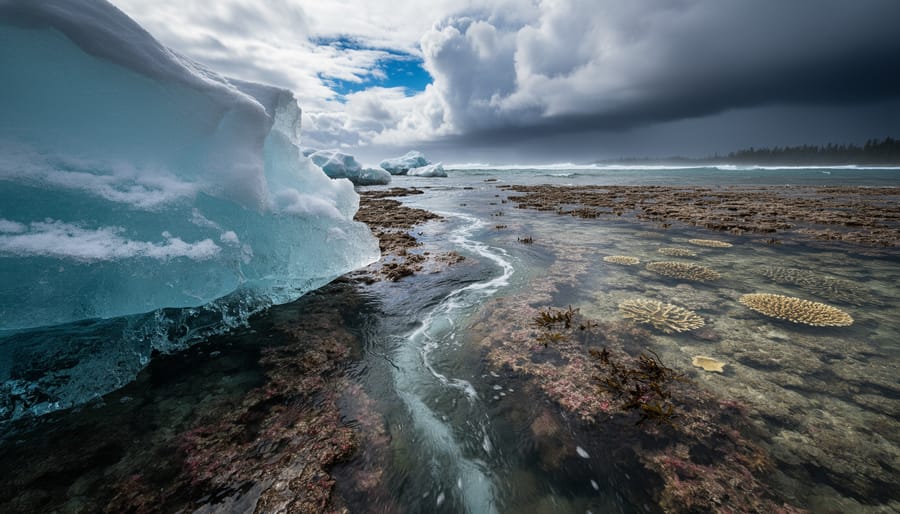
The evidence spans continents. Australia’s Great Barrier Reef has lost 60 percent of its coral cover since 2020. European agriculture faces unprecedented drought cycles. North American forests experience wildfire seasons that now extend year-round in some regions.
For energy professionals and policymakers, these environmental consequences aren’t abstract future scenarios. They’re present-day realities demanding immediate strategic responses. The question isn’t whether global warming affects the environment, but how rapidly we can transition to sustainable systems that halt further deterioration while adapting to changes already underway.
The Cascading Physical Changes to Earth’s Systems
Atmospheric Disruption and Weather Pattern Shifts
Global warming rewrites the atmosphere’s fundamental behavior by injecting excess energy into systems that evolved over millennia. Warmer air holds more moisture, yet distributes it unevenly, some regions drown under intensified rainfall while others bake through prolonged droughts. These shifts cascade through agricultural planning, water management, and infrastructure resilience across every sector that energy professionals serve.
The most dramatic changes appear in jet stream shifts that govern weather delivery across continents. As Arctic temperatures climb faster than equatorial zones, the thermal gradient weakening those high-altitude currents creates meandering patterns that lock weather systems in place. A stalled high-pressure ridge bakes a region for weeks; a persistent low dumps record precipitation until rivers overflow.
Europe exemplifies this acceleration. The latest UN assessments confirm it’s the world’s fastest-warming continent experiencing temperature increases that outpace global averages and compress adaptation timelines. Storm tracks shift northward, Mediterranean droughts intensify, and spring arrives weeks earlier, disrupting ecosystems and energy demand patterns simultaneously.
These atmospheric changes amplify through albedo feedback mechanisms as melting snow and ice expose darker surfaces that absorb rather than reflect solar radiation. Each feedback loop tightens the coupling between emissions today and the weather extremes confronting tomorrow’s renewable installations and grid operations.
Ocean Transformation and Marine System Stress
The world’s oceans have absorbed more than 90% of the excess heat trapped by greenhouse gases, fundamentally altering marine chemistry and circulation patterns. Surface waters have warmed measurably, disrupting the temperature gradients that drive nutrient upwelling and support productive fishing grounds. Deeper layers now stratify more sharply, isolating cold, oxygen-rich water from the surface and creating expanding low-oxygen zones where marine life struggles to survive.
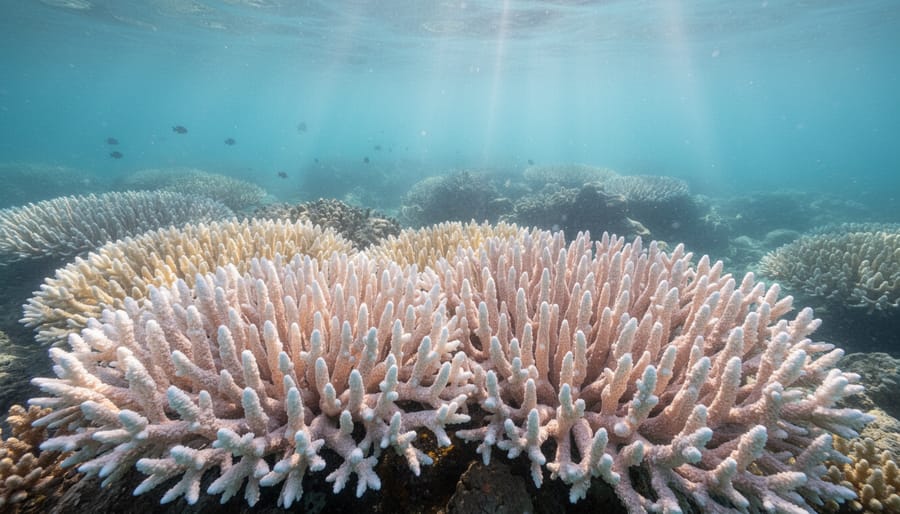
Ocean acidification proceeds in parallel with warming. As seawater absorbs atmospheric carbon dioxide, it forms carbonic acid, lowering pH levels and reducing carbonate availability. Shell-forming organisms from plankton to mollusks face dissolution stress, undermining food webs from the bottom up. Coral reefs, already bleaching under thermal stress, contend with weakened skeletal structures that compromise their resilience.
Major current systems that redistribute heat and nutrients across ocean basins show signs of slowing or shifting. These disruptions cascade through marine ecosystems, altering migration routes for fish populations, redistributing species toward cooler waters, and destabilizing the predator-prey relationships that sustain commercial fisheries. Coastal communities dependent on predictable marine resources confront uncertainty as warming waters redraw ecological boundaries and erode the stability that energy infrastructure and port operations have long assumed.
Ecosystems Under Pressure: Biodiversity and Habitat Loss
Terrestrial Ecosystems: Forests, Grasslands, and Permafrost
Land-based ecosystems reveal some of global warming’s most dramatic environmental transformations. Forests face compound stress as rising temperatures shift suitable habitat zones faster than many tree species can migrate. Boreal forests in high latitudes experience longer growing seasons, but simultaneously suffer from increased pest outbreaks and intensified wildfire risk. When vast forest tracts burn or succumb to drought, they switch from carbon sinks to carbon sources, accelerating atmospheric CO₂ accumulation.
Grasslands and agricultural zones confront altered precipitation patterns that threaten established vegetation communities. Shifting moisture regimes force species composition changes, while extreme heat events damage soil microbial networks critical for nutrient cycling. These disruptions cascade through food webs, affecting everything from pollinators to large herbivores that depend on predictable seasonal resources.
Permafrost thaw represents one of the most consequential feedback mechanisms. As frozen ground warms, it releases methane and carbon dioxide that have been locked away for millennia. This emission surge amplifies warming beyond the effects of human fossil fuel combustion alone. Thawing permafrost also destabilizes terrain, collapsing hillsides and altering hydrological systems across polar and subpolar regions. The scale of carbon stored in permafrost means even partial thaw could commit the planet to additional warming degrees, regardless of emission reduction efforts. These terrestrial changes illustrate how global warming affects the environment through self-reinforcing cycles that energy infrastructure planning must acknowledge and incorporate.
Aquatic and Coastal System Vulnerability
Rising water temperatures in rivers and lakes destabilize freshwater ecosystems by reducing dissolved oxygen levels, stressing cold-water species like trout and salmon, and encouraging the spread of invasive algae that choke native aquatic life. Warmer rivers also disrupt spawning cycles, forcing fish to migrate earlier or to higher elevations where suitable habitat may not exist. In coastal zones, warming ocean waters bleach coral reefs and push fish populations poleward, leaving tropical and temperate fisheries depleted. Sea level rise compounds these pressures by flooding coastal wetlands and mangrove forests that serve as critical nurseries for marine species, while saltwater intrusion contaminates freshwater aquifers that communities and agriculture depend on.
Coastal erosion accelerates as storm surges grow more powerful and sea ice, which once buffered shorelines, retreats. Barrier islands erode, deltas subside, and entire coastal habitats disappear, stripping away natural defenses that once protected inland areas from flooding. These shifts threaten not only biodiversity but also the infrastructure and energy installations sited along vulnerable coastlines. For energy professionals planning wind farms, tidal installations, or cooling water intakes, understanding these aquatic and coastal vulnerabilities informs resilient design and siting decisions that account for shifting baselines rather than historical norms.
Extreme Weather Events: The New Environmental Baseline
Global warming no longer whispers its presence through gradual change. Instead, it roars through extreme weather events that have become the new environmental baseline, reshaping ecosystems faster than many species can adapt. What once qualified as “once in a century” disasters now repeat with alarming regularity, creating cascading damage that compounds before recovery can begin.
Heat waves serve as perhaps the clearest signal of this transformation. Canada’s warming rate now stands at twice the global average, with the Arctic experiencing increases nearly four times as fast. These aren’t abstract temperature shifts. They translate into scorched croplands, heat-stressed wildlife, and forest ecosystems pushed beyond their thermal tolerance thresholds. When temperatures spike, soil moisture evaporates rapidly, leaving parched earth vulnerable to wind erosion and creating conditions where vegetation dies back, exposing topsoil that took millennia to form.
Droughts follow naturally from this warming pattern, draining aquifers and rivers that countless species depend upon. Extended dry periods kill shallow-rooted plants first, then progressively deeper vegetation layers, fragmenting habitats and forcing wildlife into ever-shrinking refuges. The environmental toll extends beyond immediate water scarcity. Drought-weakened trees become susceptible to pest infestations that healthy forests would resist, triggering widespread dieback that releases stored carbon back into the atmosphere.
| Event Type | Frequency Change | Primary Environmental Impact |
|---|---|---|
| Heat Waves | More frequent and extreme | Ecosystem thermal stress, soil degradation |
| Droughts | Longer duration, wider extent | Habitat fragmentation, aquifer depletion |
| Floods | Higher intensity precipitation | Erosion, sediment transport disruption |
| Wildfires | Extended fire seasons | Carbon release, biodiversity loss |
Paradoxically, warming also intensifies flooding. A hotter atmosphere holds more moisture, releasing it in concentrated bursts that overwhelm natural drainage systems. Flash floods scour riverbanks, washing away centuries of accumulated organic matter and destroying spawning grounds for aquatic species. The resulting erosion reshapes landscapes, depositing sediment in locations that smother benthic ecosystems downstream.
Wildfires complete this quartet of destruction, burning with unprecedented ferocity across regions that historically experienced only modest fire risk. Extended fire seasons now consume forests before they reach maturity, preventing the carbon sequestration that mature woodlands provide. The smoke alone travels thousands of kilometres, depositing particulates that darken snow and ice surfaces, accelerating their melt and creating yet another feedback loop.
These extreme events disproportionately affect vulnerable populations, with climate impacts on the poor extending beyond human communities to the ecosystems they depend upon for subsistence. Recovery from each successive disaster becomes harder as baseline conditions deteriorate. Soil quality declines with each drought. Forests regrow more slowly after each fire. Aquatic systems struggle to re-establish after flooding redistributes sediment. The new environmental baseline isn’t stable; it’s a ratchet that clicks steadily toward degradation.
What the Latest Science Tells Us: 2026 Assessment Insights
The scientific evidence compiled in 2026 leaves no room for ambiguity: global warming is driving dangerous environmental disruption at a scale and speed that exceed many earlier projections. Two major assessments published this spring and summer provide the clearest picture yet of how does global warming affect the environment across multiple Earth systems.
The European State of the Climate 2025 report, released April 29, 2026, by around 100 scientists, documents Europe’s position as the world’s fastest-warming continent. The assessment reveals cascading environmental impacts that extend far beyond temperature records. Northern European regions central to the coalition’s work are experiencing particularly dramatic shifts: growing seasons are lengthening, precipitation patterns are becoming more erratic, and permafrost zones are retreating northward at unprecedented rates.
The Earth System Tipping Points brief, published June 23, 2026, takes a broader view and confirms what environmental monitoring has been signaling for years: climate change is causing dangerous disruption affecting billions of people worldwide. The brief identifies several systems approaching critical thresholds, including Arctic sea ice extent, boreal forest resilience, and Atlantic circulation patterns. These findings matter directly to energy professionals because the stability of renewable energy infrastructure depends on predictable environmental baselines that can no longer be assumed.
What makes these 2026 assessments particularly valuable is their focus on interconnection. Temperature rise doesn’t simply warm the air. It alters ocean chemistry, disrupts nutrient cycles, shifts species ranges, intensifies drought-flood swings, and weakens ecosystem resilience simultaneously. For Northern Europe, this means forests face compounding stresses from heat, pests, and moisture extremes all at once.
The reports underscore an urgent reality: understanding environmental impacts isn’t academic. It’s operational intelligence for anyone planning infrastructure meant to last decades in a climate that won’t resemble the past.
Case Study: Northern Europe’s Environmental Transformation
Northern Europe’s accelerating environmental transformation offers one of the clearest windows into how global warming affects the environment in practice. As Europe’s fastest-warming continent experiences measurable shifts, ecosystems, agricultural zones, and energy infrastructure face unprecedented adaptation pressures that demand immediate attention from sustainability professionals.
The Baltic Sea region exemplifies these cascading changes. Rising water temperatures have altered fish migration patterns and breeding cycles, disrupting traditional fisheries that coastal communities have depended on for generations. Simultaneously, changing precipitation patterns affect freshwater inputs, altering salinity levels that marine species evolved to tolerate. These interconnected disruptions demonstrate why understanding environmental impacts requires systems-thinking rather than isolated analysis.
Northern forests tell a parallel story of transformation. Warmer winters reduce natural pest control through sustained freezing periods, allowing bark beetle populations to explode and devastate spruce stands across Scandinavia. Shifting growing seasons confuse deciduous species adapted to precise day-length triggers, creating phenological mismatches between plant flowering and pollinator emergence. The permafrost zones of northern Finland and Sweden are experiencing measurable thaw, releasing stored carbon and methane while destabilizing ground that infrastructure was built upon.
Key observed changes include:
- Extended growing seasons altering agricultural viability zones, pushing traditional crop boundaries northward by 50-100 kilometers
- Increased frequency of extreme precipitation events overwhelming urban drainage systems designed for historical rainfall patterns
- Coastal erosion accelerating along the North Sea and Norwegian coastlines as storm intensity increases
- Peatland degradation releasing stored carbon, transforming these landscapes from carbon sinks into sources
- Hydropower generation variability increasing as snowmelt timing and river flow patterns become less predictable
These tangible impacts underscore why coalition partners across Northern Europe are integrating climate adaptation into every infrastructure decision. Renewable energy installations must now account for shifting wind patterns and increased storm loading. Grid planning requires resilience against extreme weather disruptions that occur with greater frequency than historical models predicted.
The transformation also reveals opportunity within challenge. Regional governments and energy developers are pioneering ways to combat climate change through nature-based solutions that restore wetlands, protect coastal buffers, and integrate biodiversity considerations into renewable energy siting. These approaches recognize that environmental health and energy sustainability are inseparable objectives requiring coordinated action informed by real-world observation rather than abstract modeling alone.
The Energy-Environment Nexus: Why This Matters for Sustainable Transitions
The environmental disruptions documented throughout this article are not distant abstractions for the energy sector, they are the operating context for every infrastructure decision made in 2026. Understanding how global warming affects the environment fundamentally reshapes where we can viably site renewable installations, how we design resilient transmission networks, and which energy solutions will prove durable over decades of accelerating change.
Consider renewable energy planning in regions experiencing rapid ecosystem shifts. Wind farm developers now account for altered bird migration patterns and changing atmospheric density that affects turbine performance. Hydroelectric planners confront rivers with increasingly erratic flow regimes, where historical data no longer predicts seasonal availability. Solar installations face new challenges from intensified weather events that traditional engineering standards didn’t anticipate. These are not theoretical concerns, they are immediate planning imperatives that require integrating environmental monitoring into energy development from the earliest stages.
This is where energy system integration becomes environmental stewardship. By coordinating renewable deployment with ecosystem mapping, we avoid compounding habitat fragmentation even as we reduce emissions. By analyzing how climate-driven changes affect energy demand patterns, cooling loads during intensified heat waves, heating during disrupted winters, we build systems that serve communities through the environmental shifts already underway.
Energy professionals who grasp these environmental dynamics gain a strategic advantage. They can identify opportunities others miss, such as marine energy sites in warming waters or agricultural waste-to-energy projects in regions facing altered growing seasons. More critically, they can avoid costly mistakes: infrastructure investments that ignore environmental trajectories risk obsolescence or catastrophic failure.
The coalition’s membership represents precisely the cross-sector expertise required to navigate this nexus successfully, combining environmental science, engineering innovation, and policy acumen to develop sustainable transitions that work with changing ecosystems rather than against them.
The evidence is unambiguous: global warming is fundamentally restructuring our planet’s environmental systems at a pace that demands immediate, coordinated response. The findings from the Earth System Tipping Points brief published just this week, combined with insights from the European State of the Climate 2025 report compiled by around 100 scientists, confirm that climate change is causing dangerous disruption in nature and affecting billions of people. For energy professionals and policymakers, these environmental transformations aren’t abstract future scenarios but present realities reshaping infrastructure planning, resource availability, and operational risk.
The coalition’s partnership model offers a proven framework for translating scientific understanding into tangible action. By connecting research institutions with industry leaders and policy makers, we create the collaborative capacity needed to address environmental and energy challenges simultaneously. The atmospheric disruptions, ecosystem pressures, and extreme weather patterns documented throughout this article won’t reverse without deliberate intervention grounded in the latest science.
Yet within this crisis lies unprecedented opportunity. The same energy transitions required to limit further warming can restore degraded ecosystems, build resilience into vulnerable regions, and create sustainable prosperity. The question isn’t whether we can afford to act, but whether we can afford not to.