
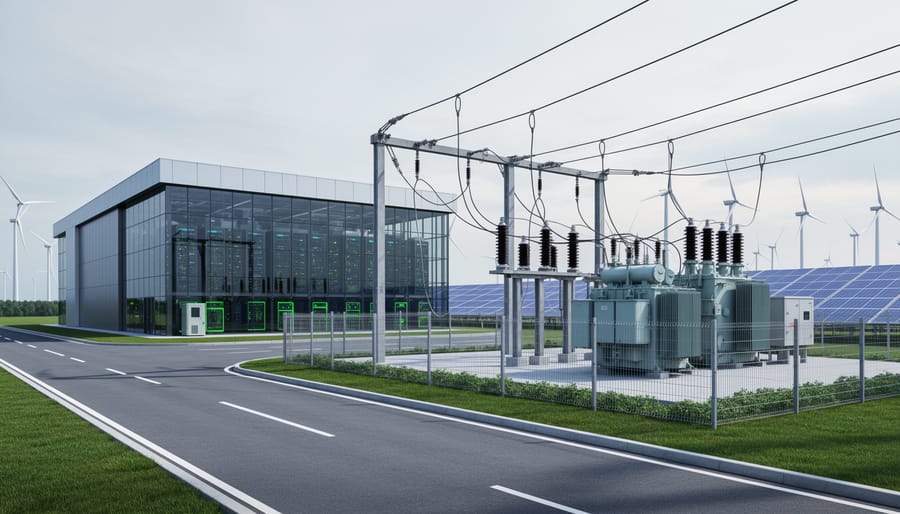
AI and Climate Change: Energy Appetite vs. Climate Promise and What the Difference Means for Grid Planning
AI is both a heavy new draw on the grid and a genuine climate tool, and the verdict is that it can be a net positive only if grid planning keeps pace with the demand it creates. That conclusion is for policy makers, utilities and energy professionals deciding how to plan for data centre growth without losing sight of decarbonisation goals.
The scale explains the urgency. Global data centre electricity consumption reached 415 TWh in 2024 and is projected to more than double to 945 TWh by 2030. A single modern data centre already uses as much electricity as 100,000 households, and facilities now under development could demand up to 20 times that. Power requirements for dedicated AI data centres are expected to quadruple. In the United States alone, electricity demand for data processing is expected to exceed the combined consumption of steel, cement and chemical manufacturing by 2030.
Yet the same technology can sharpen renewable forecasting, optimise grid operations and speed up the search for cleaner materials. Regulators are responding in practical ways. The UK government has committed to ensuring electricity networks can meet rising demand, including from data centres, and Ofgem has proposed new grid connection fees for AI data centre developers to remove speculative projects from the queue.
What follows compares AI as an energy consumer with AI as a climate enabler, so you can see where the risks are real and where the opportunity lies for Renewable Energy Solutions.
AI’s Appetite and AI’s Promise at a Glance
AI has two sides in the energy story, and they pull in different directions. As a consumer, it is a fast-growing load that grid planners must accommodate. As an enabler, it is a set of tools the sector is exploring to support Renewable Energy Solutions. The table sets them side by side across the four planning dimensions.
| Dimension | AI as energy consumer | AI as climate enabler |
|---|---|---|
| Electricity demand | Data centres used 415 TWh globally in 2024, projected to more than double to 945 TWh by 2030 | Tools for forecasting, balancing and optimisation that coalitions can pilot and evaluate |
| Grid capacity | One modern data centre uses as much electricity as 100,000 households; facilities under development could demand up to 20 times that | Smarter grid operation that may help networks use existing capacity more effectively |
| Projected growth | Power requirements for dedicated AI data centres are expected to quadruple | Growth in uptake as pilots show what works in practice |
| Regulatory response | Ofgem has proposed grid connection fees for AI data centre developers to remove speculative projects | UK government commitment to ensure networks can meet rising demand, including from data centres |
Read the left column as a planning challenge and the right as an opportunity. A terawatt-hour (TWh) is a billion kilowatt-hours, so the jump from 415 to 945 TWh is a very large step in annual demand. Concentration matters too. Load that arrives in large single blocks is harder to connect than demand spread across many small users.
The right column is deliberately qualitative. The sector is exploring these applications, but this article does not claim quantified savings for them. What the verified facts do show is that policy is already responding to the demand side, which gives coalitions of academics, government and industry a clear moment to shape both halves of the story. The sections that follow take each dimension in turn.
Two Roles, Defined: Data Centre Load and AI-Enabled Energy Solutions
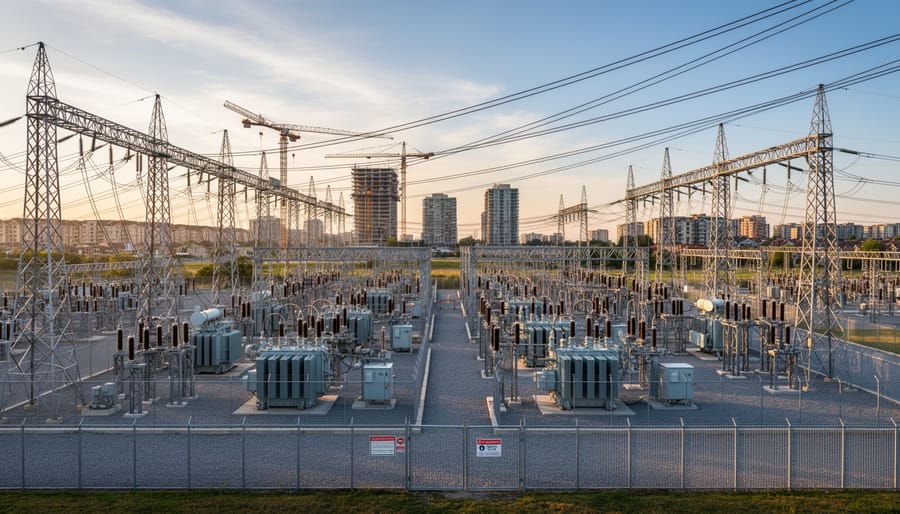
The Demand Side: Why Data Centres Strain the Grid
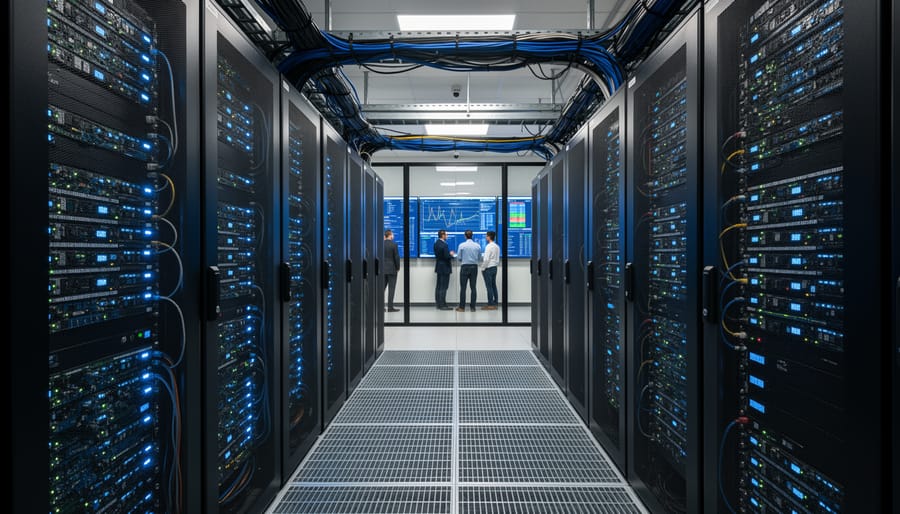
Data centres are different from most large electricity users because their demand is concentrated and rarely pauses. A single modern facility already consumes as much electricity as 100,000 households, and it draws that power around the clock rather than in daily peaks and troughs. For a network planner, that means a large, steady block of load arriving at one point on the grid.
This is why siting and connection timing matter so much. Power lines, substations and new generation take time to build, while a data centre developer may want to connect on a much shorter schedule. When facilities under development could demand up to 20 times that amount, the gap between what a site asks for and what the local network can deliver becomes a central planning question. Matching new load to available capacity, and to new clean supply, is where Renewable Energy Solutions and grid planning meet.
The Solution Side: Where AI Can Support Renewable Energy Solutions
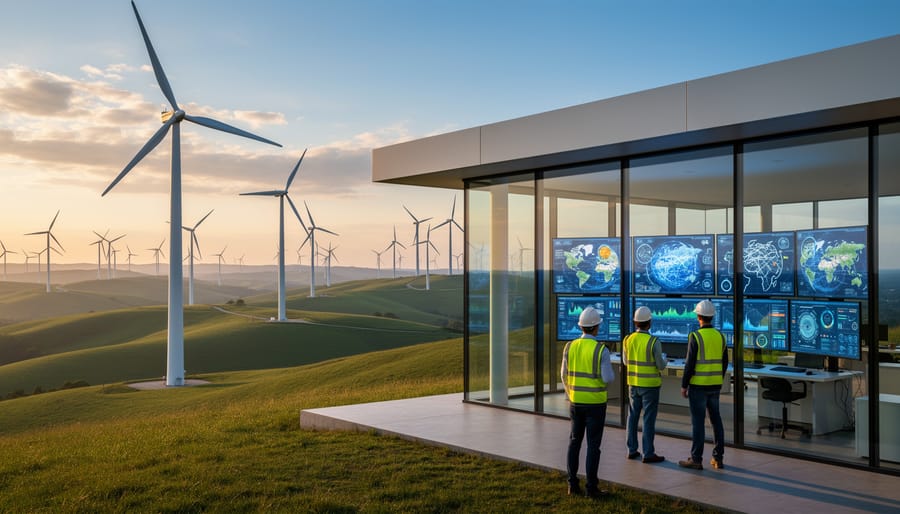
AI can also work in the other direction, helping the grid absorb more clean power. The sector is exploring several categories of application, and each is a candidate for coalition pilots rather than a proven fix.
The first is forecasting. Machine-learning models can predict wind and solar output from weather data, helping operators schedule other generation with less guesswork. A grounding in understanding solar energy helps partners judge which forecasting claims hold up in practice.
The second is balancing and storage. AI tools can help match supply to demand in real time and decide when batteries should charge or discharge, which makes community energy storage schemes easier to operate. Predictive maintenance is the third, flagging turbines or inverters before they fail.
Taken together, these uses sit within wider energy system integration. Universities, government and industry can test them side by side, measure the results honestly, and share what works.
Dimension by Dimension: Demand, Capacity, Growth and Regulation
Electricity Demand: From 415 TWh Toward 945 TWh
Start with the scale. Global electricity consumption by data centres reached 415 TWh in 2024. A terawatt-hour (TWh) is one billion kilowatt-hours, the unit your household meter counts in, so 415 TWh is a vast quantity of power drawn almost continuously, day and night.
The trajectory matters more than the starting point. Demand is set to more than double reaching a projected 945 TWh by 2030, according to the IEA.
- Global data centre consumption reached 415 TWh in 2024.
- Consumption is projected to reach 945 TWh by 2030.
- US data processing demand is expected to exceed the combined consumption of steel, cement and chemical manufacturing by 2030.
That last comparison deserves a pause. Steel, cement and chemicals are among the most energy-hungry industries in the economy. For data processing in one country to overtake all three combined shows how quickly digital infrastructure is becoming a core industrial load.
For grid planners, this is not a reason for pessimism. It is a planning signal. Demand growth of this kind is easier to meet when new load and new clean supply are developed together, which is exactly where Renewable Energy Solutions can lead.
Grid Capacity: When One Facility Equals 100,000 Homes
A single modern data centre currently consumes as much electricity as 100,000 households. That is the scale a network operator has to plan around. A town-sized load arrives at one connection point, running around the clock, and it does not ask the grid to wait.
The pipeline is where planning gets harder. New facilities under development could demand up to 20 times that amount, and power requirements for dedicated AI data centres are expected to quadruple. Concentrated demand like this shapes three areas of grid planning.
Connection queues are the first. Large requests compete for limited network capacity, and speculative ones can crowd out viable projects. This is why Ofgem has proposed grid connection fees for AI data centre developers, aimed at removing speculative projects.
Network reinforcement is the second. A load of this size may need new lines, substations or upgrades before it can switch on, and that work takes time.
Renewable integration is the third, and the most hopeful. Pairing a new facility with new clean supply can turn a strain into a catalyst for Renewable Energy Solutions. Coalitions bringing grid planners, government and industry together are well placed to make that match happen deliberately.
Projected Growth: Planning Under Uncertainty
When demand could more than double between 2024 and 2030, planners can’t wait for certainty. They need approaches that hold up whichever way the numbers land.
Scenario planning is the first tool. Rather than betting on one forecast, network operators can model a range of growth paths and test which reinforcements pay off in all of them. That keeps investment focused on no-regret upgrades.
Staged connections are the second. Energising a large facility in phases lets the grid and the developer prove each step before committing to the next, and it limits the risk of stranded assets if projects stall. Connection fees aimed at removing speculative projects, as Ofgem has proposed, support the same logic by helping separate firm plans from placeholders.
The third is pairing new load with new clean supply. When a large facility arrives alongside dedicated renewable generation or storage, its demand strengthens the case for Renewable Energy Solutions instead of crowding them out. Coalitions can convene the partners to make that pairing routine.
Regulatory Response: UK Commitments and Ofgem’s Connection Fee Proposal
The policy response is taking shape on two fronts. The UK government has committed to ensuring electricity networks can meet rising demand, including from data centres. That signals a willingness to build capacity rather than ration it.
Alongside this, Ofgem has put forward proposed grid connection fees for AI data centre developers, with the aim of removing speculative projects from the queue.
The process logic is straightforward. Today, a developer can request a large connection at little cost, and each request can reserve network capacity that other projects then cannot use. If a fee attaches to that request, applicants have a financial reason to apply only when a project is serious and likely to proceed. Fewer placeholder requests mean planners see a clearer picture of genuine demand, which supports better decisions on network reinforcement and on pairing new load with new clean supply.
Case Studies: How Regions and Coalitions Can Approach the Trade-Off

Every region meets this trade-off differently, so it helps to picture how it might play out. The two scenarios below are illustrative, not reports of real projects, and they carry no invented results.
Imagine a utility in Northern Europe, a region with strong wind resources, receiving a request from a very large new facility. Instead of simply connecting the load, the planners tie the connection to dedicated renewable supply and stage it in phases. Because a single modern data centre already consumes as much electricity as 100,000 households, and facilities under development could demand up to 20 times that amount, the sequencing matters as much as the headline capacity. In this story, the new load becomes a reason to build clean generation sooner, not a reason to delay it.
Now imagine a regional gathering of universities, government and industry that decides to pilot AI forecasting for wind output. Researchers supply the models, the network operator supplies real operating data, and policy makers learn what the tools can and cannot do before scaling them. It is a modest, practical way of testing whether AI can support Renewable Energy Solutions while its own demand grows.
Neither scenario is a forecast. They simply show that regional choices, made early and together, can shape the outcome.
Real examples will teach us more than hypotheticals. If you work with a partner organisation and have a case study or expert insight to share, the coalition would welcome the conversation.
Who Should Prioritise What: Matching Approaches to Your Role
Different roles face different parts of the AI and climate puzzle, so the sensible priority depends on where you sit. Here is a practical starting point for each group.
Grid planners and network operators sit closest to the demand question. Their priorities:
– Treat a single data centre, which can consume as much electricity as 100,000 households, as a major planning event.
– Use scenario planning and staged connections to cope with uncertain growth.
– Pair new load with new clean supply wherever possible.
Policy makers and regulators shape the rules of the road. Their priorities:
– Keep networks ready for rising demand, as the UK government has committed to do.
– Test whether measures such as Ofgem’s proposed connection fees for AI data centre developers help remove speculative projects.
– Keep the focus on outcomes, not ideology.
Energy industry leaders can turn pressure into opportunity. Their priorities:
– Explore AI for forecasting wind and solar output and optimising storage.
– Build partnerships with developers who bring their own clean supply.
Academics and educators in coalition networks hold the long game. Their priorities:
– Develop the skills pipeline that AI-enabled energy systems need.
– Evaluate pilots with honest evidence, not hype.
– Invest in human capital so the next generation of engineers, analysts and planners can steer both the technology and the transition.
Because the priorities interlock, coalitions that bring these four groups to the same table are best placed to move quickly and well.
Common Questions About AI, Data Centres and Climate Goals
How much electricity do data centres use?
Global data centre electricity consumption reached 415 TWh in 2024 and is projected to more than double to 945 TWh by 2030. A single modern data centre currently consumes as much electricity as 100,000 households.
Will AI make climate goals harder to reach?
Rising demand adds pressure, since power requirements for dedicated AI data centres are expected to quadruple. The outcome depends on planning choices, including whether new load is paired with new clean supply.
What is Ofgem proposing for data centre grid connections?
Ofgem has proposed new grid connection fees for AI data centre developers, aimed at removing speculative projects from the queue. The UK government has also committed to ensuring electricity networks can meet rising demand, including from data centres.
Why does one data centre matter so much to the grid?
Its demand is concentrated and constant, and new facilities under development could demand up to 20 times the 100,000-household figure. That is why siting and connection timing weigh so heavily on network planners.
These answers share a common thread: the numbers are large, but they are not destiny. Coalitions that bring academia, government and industry together can turn that planning challenge into a shared agenda for Renewable Energy Solutions.
AI’s energy appetite and its climate promise are both real, and neither one settles the outcome on its own. Global data centre electricity use reached 415 TWh in 2024 and is projected to more than double to 945 TWh by 2030. That is a serious planning challenge for anyone responsible for keeping networks reliable and affordable.
At the same time, the tools that create this demand can also help manage it. Forecasting renewable output, balancing grids and optimising storage are all areas where AI can support cleaner systems. Which of these futures we get depends less on the technology than on the choices made around it: where large loads connect, how quickly new clean supply arrives, and how regulators filter serious projects from speculative ones.
This is where coalitions earn their place. When universities, government and industry share evidence and test ideas together, planners spend less time guessing and more time acting. No single organisation holds every piece of this puzzle, but a connected network can assemble it.
So let’s treat this as an opportunity to build. Invest in the skills that bridge energy and computing, strengthen the partnerships across sectors and regions, and put Renewable Energy Solutions at the centre of every conversation about digital growth. Done well, AI expansion and the clean energy transition can move forward together.