

Why Climate Change Awareness Matters More in 2026 Than Ever Before
The gap between understanding climate change and acting on it has never been narrower, yet 2026 finds us at a critical juncture where awareness alone no longer suffices. What professionals in energy and sustainability sectors now recognize is that awareness has evolved from a public education challenge into a strategic imperative for organizational resilience, career advancement, and competitive positioning in an economy rapidly restructuring around carbon reduction.
Consider the transformation at Ørsted, Denmark’s energy giant. When Chief Sustainability Officer Mads Nipper spoke at the Copenhagen Climate Forum in March 2026, he revealed that the company’s climate awareness programs now focus less on explaining why climate change matters and more on embedding carbon literacy into procurement decisions, supply chain negotiations, and innovation pipelines. Every employee, from finance to operations, receives training not just on climate science but on identifying decarbonization opportunities within their specific role. This shift from passive awareness to active integration has become the hallmark of organizations leading the energy transition.
The numbers support this evolution. A 2026 study by the International Energy Agency found that companies with structured climate awareness programs targeting professional staff reported 34% faster implementation of emissions reduction initiatives compared to those relying on general public campaigns. The difference lies in specificity. Modern climate awareness for professionals translates global temperature targets into sector-relevant metrics, connects international policy developments to regional market opportunities, and transforms abstract concepts like “net zero” into concrete project pipelines.
Yet awareness remains foundational. Without understanding the urgency encoded in climate science, the opportunities emerging from policy frameworks like the EU’s updated Carbon Border Adjustment Mechanism, or the regional nuances of adaptation needs, professionals cannot position themselves or their organizations for what comes next. This article examines how climate awareness has matured into a professional competency, exploring pathways from understanding to implementation that define career trajectories and organizational success in 2026.
The Evolution of Climate Change Awareness: From Knowledge to Action
Climate awareness has undergone a profound transformation over the past two decades, evolving from an academic specialty into a driving force reshaping energy markets, corporate strategy, and public policy. In the early 2000s, understanding the science behind climate change remained largely confined to environmental science departments and research institutes. Today, that knowledge permeates boardrooms where executives develop decarbonization roadmaps, policy chambers where legislators craft emission reduction frameworks, and community halls where citizens organize local resilience initiatives.
This shift from passive understanding to active engagement reflects a fundamental change in how society processes climate information. Where awareness once meant recognizing the problem existed, it now means accepting responsibility for solutions. Data from recent sentiment analyses shows that professionals in energy and environmental sectors increasingly view climate literacy not as optional context but as core competency required for career advancement and organizational effectiveness.
Northern Europe has demonstrated what sustained awareness campaigns can achieve when coupled with institutional support. Countries like Denmark and Sweden integrated climate education into vocational training programs throughout the 2010s, creating workforces equipped to implement renewable infrastructure at scale. These regional initiatives proved that awareness becomes powerful when it connects scientific understanding to tangible economic opportunity. Workers who understood why offshore wind installations mattered also understood how to build careers installing turbines, maintaining grid systems, and managing energy transitions.
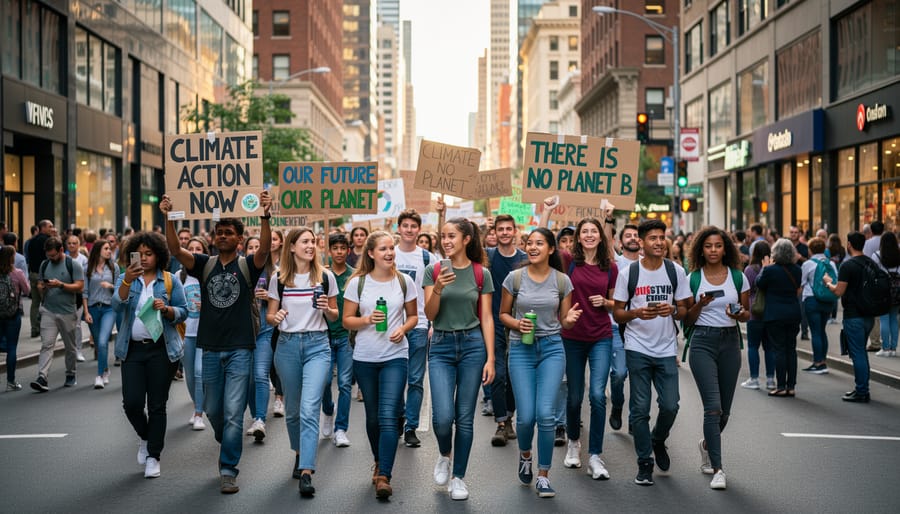
The progression from knowledge to action has accelerated notably in recent years. Youth-led movements pushed climate conversations beyond environmental circles into mainstream discourse, while extreme weather events made abstract projections feel immediate. Corporate sustainability commitments, once dismissed as greenwashing, now face scrutiny from investors demanding measurable progress. Government policies increasingly reflect public pressure for decisive climate action, creating regulatory frameworks that reward innovation and penalize inaction.
What distinguishes awareness in 2026 is its practical orientation. Professionals don’t simply acknowledge climate risks anymore, they identify specific interventions within their spheres of influence. Engineers design resilient infrastructure. Policy makers create incentive structures for clean technology adoption. Business leaders restructure supply chains to reduce carbon intensity. This shift represents awareness maturing into a catalyst for systemic change, where understanding the challenge becomes inseparable from pursuing solutions.
Key Drivers of Climate Awareness in 2026
The Role of Cross-Sector Partnerships
Cross-sector partnerships are rewriting how climate knowledge translates into tangible progress. When universities, government agencies, and private industry align around shared sustainability goals, they create ecosystems where research findings don’t gather dust on shelves but instead inform policy frameworks and commercial-scale solutions. These coalitions accelerate the movement from theoretical understanding to measurable emissions reductions and job creation.
Consider how academic institutions contribute cutting-edge climate science and workforce development programs while industry partners provide real-world testing environments and capital for scaling innovations. Governments bridge these actors through policy incentives, funding mechanisms, and regulatory frameworks that reward collaboration. This three-way exchange produces outcomes no single sector could achieve alone: breakthrough battery technologies commercialized within months rather than years, regional green hydrogen hubs that simultaneously advance decarbonization and create hundreds of skilled positions, and climate literacy programs that reach both boardrooms and community centres.
Energy system integration exemplifies this collaborative model in practice. Researchers mapping grid modernization needs work alongside utility companies piloting smart infrastructure and policy makers designing interconnection standards. The result is coherent transition strategies grounded in technical feasibility, economic viability, and regulatory support.
These partnerships also democratize climate expertise. Joint workshops, open-access data platforms, and secondment programs between sectors ensure knowledge flows bidirectionally. An engineer from a renewable energy firm gains insight into policy constraints; a government analyst understands commercial deployment challenges; a university researcher sees which questions matter most to practitioners. That cross-pollination sharpens awareness across professional domains and builds the trust required for ambitious, coordinated climate action at speed.
Education as the Foundation
Education sits at the core of meaningful climate action, transforming abstract awareness into the technical competence and strategic thinking needed to redesign our energy systems. University programs now integrate climate science with engineering, economics, and policy analysis, producing graduates who can navigate the complexities of decarbonization. These curricula move beyond theory, embedding students in real-world projects, grid modernization pilots, renewable energy feasibility studies, carbon accounting for municipalities, that bridge classroom learning and immediate application.
Community workshops and professional development courses are equally critical, reaching practitioners already in the workforce who need to retool for a low-carbon economy. Energy education for professionals delivers targeted training in areas such as energy efficiency retrofitting, heat pump installation, and distributed generation management, equipping tradespeople, engineers, and planners with skills directly tied to emerging job markets. These programs often partner with local governments and industry to ensure curricula reflect actual labor demands, not hypothetical futures.
The accessibility of climate education has expanded dramatically. Online platforms, evening courses, and credential micro-programs lower barriers for mid-career transitions, while corporate training initiatives bring climate literacy directly into organizations driving the energy transition. When education meets people where they are, geographically, professionally, financially, it stops being an abstract good and becomes the engine of systemic change.
Climate Awareness Events and Mobilization in 2026
The calendar for 2026 is packed with opportunities for energy professionals, policy makers, and sustainability leaders to connect, collaborate, and turn climate awareness into tangible progress. These events reflect the sector’s maturation from isolated conferences to interconnected mobilization points where research meets implementation, where global ambitions meet regional realities, and where individuals can plug into the networks driving the energy transition.
The year opens with Engineers Without Borders Canada hosting its flagship sustainability event in Toronto on 10-11 January, bringing together engineers, social innovators, and development practitioners to explore systems-level solutions. This gathering has become a proving ground for cross-sector partnerships, where technical expertise meets human-centered design. Just weeks later, from 25-28 January, Victoria, British Columbia hosts a major sustainability conference that draws attendees from across the Pacific Rim, positioning Canada as a bridge between North American policy frameworks and Asia-Pacific clean technology markets. The momentum continues into February with another gathering on 19-20 February, creating a sustained drumbeat of engagement through the winter months when strategic planning cycles peak for many organizations.
| Event | Date(s) | Location | Organizer | Focus Area |
|---|---|---|---|---|
| EWB Sustainability Conference | 10-11 January 2026 | Toronto, ON | Engineers Without Borders Canada | Systems-level solutions, cross-sector innovation |
| Victoria Sustainability Conference | 25-28 January 2026 | Victoria, BC | TBD | Pacific Rim collaboration, clean technology |
| February Sustainability Gathering | 19-20 February 2026 | TBD | TBD | Strategic planning, winter mobilization |
| World Climate Day | 23 March 2026 | Global | International coalitions | Public awareness, coordinated action |
| Climate Week Exchange | 23-29 November 2026 | Canada-wide | Citizens’ Climate Lobby Canada | Policy advocacy, grassroots engagement |
World Climate Day on March 23 serves as a global focal point, coordinating actions across continents and creating a shared moment for organizations to launch campaigns, announce commitments, and spotlight breakthroughs. This annual marker has evolved from symbolic observance to strategic launchpad, with corporations timing net-zero roadmap announcements and governments unveiling policy updates to capture the amplified attention.
The year closes with Canada’s Climate Week Exchange Nov 23-29, 2026a week-long series of coordinated events spanning the country. This mobilization model demonstrates how distributed action can achieve national scale while respecting regional contexts. From policy workshops in Ottawa to technology showcases in Calgary, the Exchange creates multiple entry points for professionals at different stages of their sustainability journey. The timing, positioned after budget cycles but before year-end, allows organizations to translate new insights directly into 2027 planning.
What distinguishes these gatherings from earlier conference cycles is their intentional interconnection. Organizers are sharing speaker rosters, coordinating themes, and creating pathways for attendees to move from one event to the next with cumulative learning. The Engineers Without Borders event details and other programs increasingly include pre-conference collaborations and post-event working groups, extending impact far beyond the scheduled dates. For professionals seeking to deepen expertise, build coalitions, or identify partnership opportunities, this calendar represents a structured pathway through 2026’s climate awareness landscape.
Case Study: Regional Initiatives Driving Global Impact
Denmark’s energy transformation offers a blueprint that demonstrates how regional commitment to climate awareness translates into measurable global influence. Between 2012 and 2023, the country reduced emissions by 43% while growing GDP by 18%, achieving this through a deliberate strategy that positioned climate literacy not as an environmental obligation but as an economic opportunity.
The Danish model rests on three integrated pillars. First, national policy frameworks mandated transparent carbon accounting across sectors, making climate data accessible to businesses, municipalities, and citizens alike. Second, cross-sector partnerships connected utilities, universities, and local government to co-develop solutions grounded in shared understanding of regional energy patterns. Third, workforce development programs retrained fossil fuel workers for offshore wind installation and district heating management, creating 35,000 new jobs in renewable sectors by 2024.
Copenhagen’s district heating system illustrates this integration in practice. The city deployed geothermal and waste heat sources to serve 98% of buildings by 2024, cutting heating emissions by 76%. Critical to this success was a decade-long public engagement campaign that moved beyond explaining climate risks to showing residents how participation in energy cooperatives would stabilize their heating costs. The initiative combined climate science communication with tangible financial benefit, a dual approach that secured widespread buy-in and accelerated infrastructure adoption.
These outcomes rest on a foundation of climate-literate governance. Municipal planners, energy managers, and community leaders underwent structured training in climate systems, policy instruments, and stakeholder engagement, ensuring decisions were informed by science rather than political expediency. Universities embedded sustainability modules across engineering, economics, and public administration programs, normalizing climate considerations in professional practice.
The model is now adapting globally. Gothenburg applied Copenhagen’s district heating framework, achieving a 60% emissions reduction in residential heating by 2025. Amsterdam adopted the cooperative ownership structure for solar installations, engaging 20,000 households in distributed generation projects. Scottish regions replicated the workforce retraining approach, redirecting oil sector expertise toward offshore wind development and creating 8,000 jobs between 2023 and 2025.
What distinguishes these initiatives is the recognition that awareness alone achieves nothing without institutional support, financial mechanisms, and clear pathways from understanding to participation. The Danish experience proves that when climate awareness permeates policy design, economic planning, and professional education, regions can deliver emissions reductions, technological leadership, and employment growth simultaneously.
Expert Perspectives: Voices from the Field
Effective climate awareness in 2026 requires more than data and reports. Leaders across sectors agree that translating complex science into compelling narratives is what drives lasting change.
Dr. Helena Nordström, a climate policy researcher at Stockholm University, observes that awareness efforts falter when they rely on abstract global statistics. “We’ve found that people respond when climate impacts are connected to their immediate environment, local flooding patterns, regional employment shifts in energy sectors, or changes they’ve witnessed firsthand,” she explains. Her team’s work with Nordic municipalities demonstrates that grounding awareness campaigns in tangible, place-based stories increases public support for transition policies by measurable margins.
Overcoming entrenched resistance remains a central challenge. Marcus Chen, sustainability director at a major European energy consortium, points to institutional inertia within established industries. “The barrier isn’t ignorance; it’s the difficulty of aligning long-term climate imperatives with quarterly performance cycles,” he notes. His approach involves building cross-functional teams that frame climate action as risk mitigation and market opportunity rather than regulatory compliance. This reframing has proven essential in securing executive buy-in.
Scaling successful awareness models presents its own complexities. Dr. Amara Okonkwo, who leads climate education programs across West African universities, emphasizes the need for cultural adaptation. “A storytelling framework that resonates in Oslo may not work in Lagos without significant modification,” she says. Her methodology involves partnering with local educators to co-create content that reflects regional realities while maintaining scientific rigor. This participatory model has enabled rapid expansion across diverse contexts.
The role of narrative in making climate science accessible cannot be overstated. James Kowalski, a former journalist now consulting for environmental NGOs, argues that effective awareness campaigns use human-centered stories to illustrate systemic issues. “Show a coastal community adapting to rising seas, or a worker retraining for solar installation roles. These narratives make abstract concepts concrete and demonstrate agency,” he advises.
These practitioners converge on a shared insight: awareness becomes transformative when it moves beyond information delivery to create emotional resonance, practical relevance, and pathways for participation. The most effective initiatives in 2026 combine rigorous science with authentic storytelling, localized contexts, and clear opportunities for engagement.

Translating Awareness into Sustainable Action
Awareness gains traction only when it transforms into measurable, sustainable action. For professionals and organizations navigating the energy transition, this means building frameworks that turn climate understanding into operational strategy, green technology deployment, and meaningful employment opportunities.
Start by establishing internal climate literacy as a foundation. This isn’t a one-off training session. Develop ongoing learning pathways that connect climate science to job-specific responsibilities, showing engineers how renewable integration affects grid stability, helping procurement teams evaluate supply chain emissions, or equipping HR to assess green skills gaps. When employees understand how climate considerations intersect with their daily work, awareness becomes embedded rather than abstract.
Cross-functional sustainability teams accelerate this integration. Bringing together finance, operations, R&D, and policy expertise breaks down silos and ensures climate strategies aren’t confined to environmental departments. These teams can identify ways to combat climate change specific to your sector, whether that’s optimizing energy efficiency in manufacturing processes, transitioning commercial fleets to electric vehicles, or redesigning product lifecycles for circularity.
To operationalize awareness into strategic action, consider this sequence:
- Conduct a climate impact baseline assessment across operations, identifying emission hotspots and resource dependencies.
- Develop sector-specific green technology roadmaps with clear timelines, budget allocations, and accountability structures.
- Establish measurable targets tied to both environmental outcomes (emissions reductions, renewable adoption percentages) and employment metrics (green jobs created, workforce reskilling completion rates).
- Create feedback loops that track progress quarterly and adjust strategies based on emerging technologies, policy shifts, and market conditions.
- Share learnings transparently, contributing to industry-wide knowledge ecosystems that accelerate collective progress.
Measuring impact requires moving beyond carbon accounting alone. Track how awareness initiatives translate into tangible outcomes: renewable capacity installed, sustainable procurement contracts signed, research partnerships launched, or employees transitioned into climate-focused roles. These metrics demonstrate that awareness isn’t passive, it’s driving economic transformation and creating pathways for long-term sustainable employment across energy, engineering, policy, and finance sectors.
The most effective organizations treat climate literacy as infrastructure, not an initiative. They embed it in performance reviews, capital allocation decisions, and strategic planning cycles, ensuring that every team member can connect their work to broader climate goals and contribute meaningfully to solutions.

Climate awareness in 2026 stands at a critical juncture where knowledge alone no longer suffices. The events, partnerships, and regional models explored throughout this article demonstrate that awareness has evolved into a catalyst for tangible transformation across energy systems, policy frameworks, and economic structures. We’ve seen how coalitions connecting academia, industry, and government are translating understanding into green technology development and sustainable employment. We’ve witnessed how educational initiatives are building the climate literacy that underpins this transition.
The path forward requires each of us to move from passive observation to active participation. Engage with the climate mobilization events happening this year, World Climate Day on 23 March 2026, Canada’s Climate Week Exchange from 23-29 November, or the sustainability conferences in Toronto, Victoria, and beyond. Join cross-sector coalitions in your region. Study what people can do to apply lessons from successful Northern European models to your own organizational context. Build internal climate literacy teams, develop measurable sustainability roadmaps, and share your progress transparently.
The collective capacity for transformation exists today. It resides in the professionals who translate research into policy, the engineers designing next-generation renewable systems, and the educators preparing the workforce for tomorrow’s challenges. Climate awareness in 2026 isn’t a destination, it’s the fuel for systemic change that creates resilient communities and sustainable prosperity.