
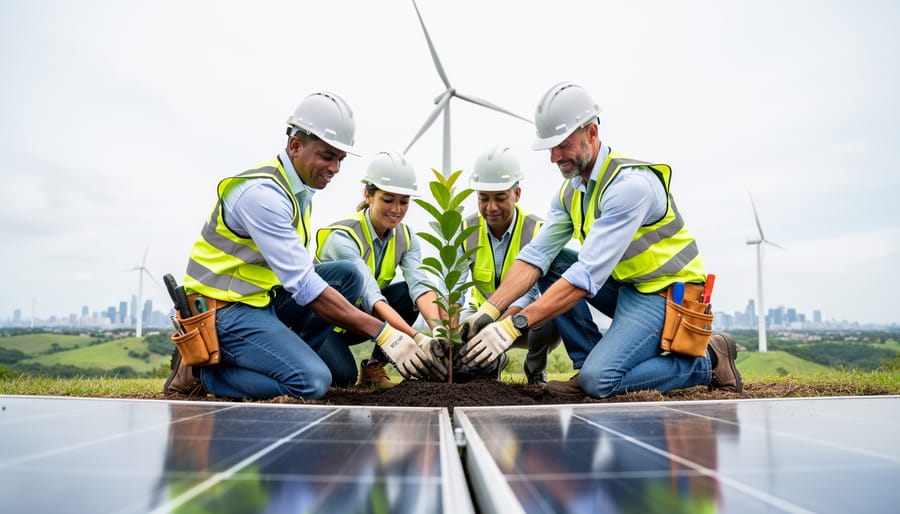
Why World Environment Day 2026 Matters for Energy Leaders Right Now
Every June 5th, World Environment Day mobilizes millions across the globe to confront our most pressing ecological challenges. Established by the United Nations in 1972, this annual event has evolved from symbolic awareness campaigns into a critical catalyst for tangible environmental action, particularly within the energy and climate sectors.
For professionals working at the intersection of energy transition and environmental sustainability, World Environment Day represents far more than ceremonial observance. It’s an opportunity to accelerate project timelines, secure stakeholder buy-in, and amplify the business case for renewable infrastructure. The day’s concentrated global attention creates windows for policy advancement that might otherwise take months to achieve.
Recent editions have demonstrated measurable impact. The 2023 focus on plastic pollution spurred 58 countries to strengthen regulations on single-use plastics within six months of the event. Host nations leverage their platforms strategically. Rwanda’s 2020 hosting catalyzed a wave of biodiversity commitments across East Africa, while Pakistan’s 2021 leadership accelerated reforestation pledges that directly support renewable energy land-use planning.
The United Nations Environment Programme coordinates this global movement, but success depends on localized implementation. Energy sector leaders who align corporate sustainability announcements, pilot project launches, or community engagement initiatives with World Environment Day consistently report higher media visibility and stakeholder engagement than identical efforts launched at other times.
Understanding how to harness this annual momentum matters. The following analysis examines World Environment Day’s proven mechanisms for driving energy sector transformation and provides frameworks for maximizing its strategic value in your organization’s sustainability roadmap.
From Awareness to Action: What World Environment Day 2026 Signals
The 2026 edition of World Environment Day marks a decisive shift from symbolic environmentalism to operational urgency. UNEP’s framing, “step in, move further, steer a world already in motion”, explicitly rejects passive observation in favor of active participation. For energy transition stakeholders, this language carries specific implications: the momentum already exists, renewable capacity installations are breaking records annually, and the question is no longer whether to transition but how aggressively to accelerate.
Climate change as the central theme grounds the conversation in the sector where energy professionals wield the most influence. Buildings, transport, and electricity generation account for roughly three-quarters of global greenhouse gas emissions. When UNEP calls on actors to “steer a world already in motion,” they’re acknowledging that wind farms are being built, grid batteries are being deployed, and policy frameworks are being implemented, but the pace remains inadequate to meet Paris Agreement targets.
This creates tangible pressure points for decision makers. “Step in” translates to securing funding for pilot projects that have stalled in feasibility studies. “Move further” means expanding successful renewable installations beyond demonstration scale to commercial deployment. “Steer” requires active participation in policy consultations, standard-setting processes, and technology roadmap development rather than waiting for regulatory clarity.
The framing also signals a departure from blame-focused climate discourse. Energy sector professionals often operate within inherited infrastructure constraints and regulatory environments they didn’t create. The 2026 messaging acknowledges existing efforts while pushing for acceleration, which opens space for constructive dialogue about removing implementation barriers, permitting bottlenecks, grid connection delays, skills gaps, rather than rehearsing responsibility arguments.
For academics and research institutions, this represents an invitation to translate findings into actionable recommendations. The gap between climate science and energy policy implementation remains significant, not because research is lacking but because translation mechanisms are weak. World Environment Day 2026’s action-oriented language creates opportunities to position research outputs as implementation tools rather than purely academic contributions.
Azerbaijan as Host: Regional Energy Context and Transition Dynamics
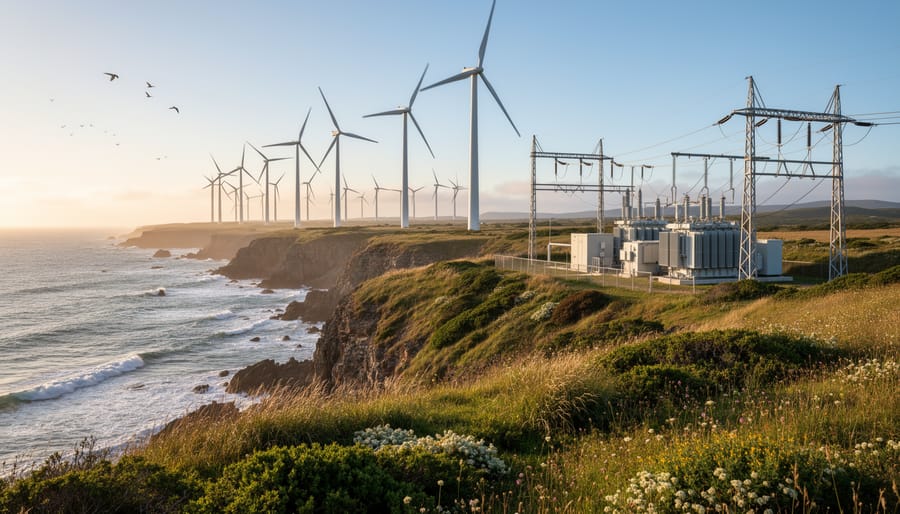
Azerbaijan’s selection as the hosted in Baku, Azerbaijan location for World Environment Day 2026 carries profound symbolic weight. The country derives roughly 90% of its export revenue from oil and gas, positioning it among the world’s most fossil-fuel-dependent economies. Yet this very tension makes Baku’s hosting role particularly revealing: it mirrors the challenge facing dozens of petrostates worldwide that must reconcile current economic realities with unavoidable decarbonization pathways.
Azerbaijan faces distinct transition pressures that resonate across the Caspian and Central Asian energy corridor. Its aging oil infrastructure requires substantial reinvestment at the same moment that global capital increasingly favors renewable projects. The country has announced plans to expand renewable capacity, particularly solar and wind installations in the Absheron Peninsula and Caspian coastal zones, yet implementation remains modest compared to stated ambitions. This gap between policy announcements and operational deployment parallels patterns seen across multiple emerging economies navigating similar fossil-to-clean transitions.
Northern European experiences offer instructive contrasts. Norway, another petroleum-rich nation, has leveraged oil revenues to fund aggressive electrification and renewable deployment while maintaining hydrocarbon exports. The Netherlands accelerated offshore wind development precisely because North Sea gas revenues provided capital for early-stage technology investment. These examples demonstrate that energy transition pathways differ fundamentally based on existing infrastructure, revenue dependencies, and institutional capacity, factors Azerbaijan shares more closely with Gulf states and Central Asian neighbors than with Western European models.
Regional hosting reveals three broader energy shift dynamics. First, it underscores that transition isn’t optional even for producers heavily reliant on fossil exports; market forces and climate impacts impose change regardless of national preferences. Second, it highlights the urgent need for technology transfer and capacity-building partnerships that account for different starting points rather than imposing one-size-fits-all approaches. Third, it demonstrates that credible climate action requires engaging fossil fuel producers in transition planning, not excluding them from global conversations about sustainable energy futures.
Turning Global Momentum Into Local Energy Innovation
Building Cross-Sector Partnerships Around Climate Priorities
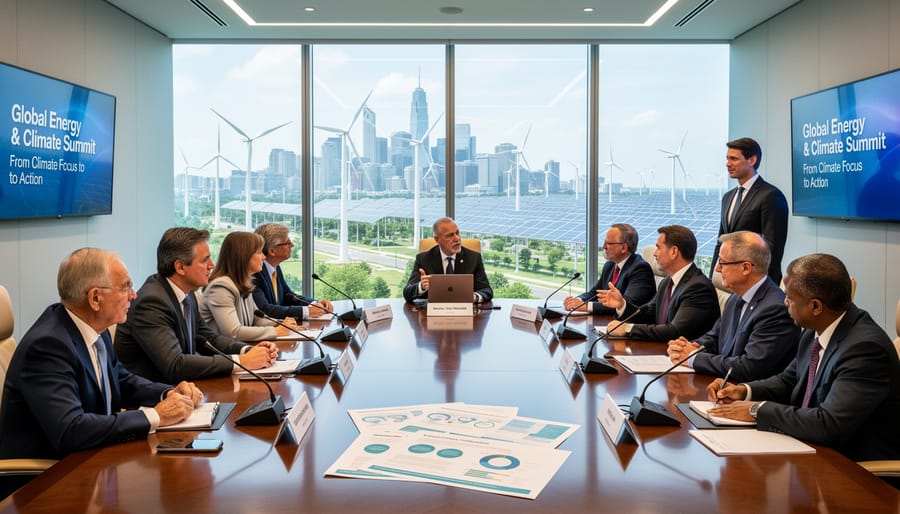
World Environment Day’s climate-centered focus in 2026 creates a natural alignment point for partnerships that might otherwise remain siloed. Government ministries, research institutions, and private energy companies rarely share identical priorities, but UNEP’s framing, to “step in, to move further, to steer a world already in motion”, offers common ground around measurable climate outcomes rather than vague sustainability commitments.
Energy professionals can use 5 June 2026 as an anchor date for convening multi-stakeholder roundtables focused on specific transition challenges. Instead of generic symposia, frame these gatherings around concrete deliverables: jointly authored policy recommendations on grid modernization, collaborative funding proposals for renewable pilot projects, or memoranda of understanding linking university research agendas with industrial decarbonization targets. The day’s visibility provides political cover for companies hesitant to lead alone and creates momentum for academics seeking real-world application of their work.
The climate theme particularly supports energy system integration partnerships, where government regulatory frameworks must align with academic modeling expertise and private sector implementation capacity. When three sectors commit to shared climate objectives tied to a recognized global event, accountability structures naturally emerge, quarterly progress reviews, public reporting benchmarks, and coordinated media engagement all become easier to justify internally.
Rather than treating World Environment Day as a one-off event, position it as the launch point for twelve-month partnership cycles. Announce collaborative initiatives on 5 June, review progress at COP summits, and report outcomes the following June. This cadence transforms symbolic participation into structured collaboration with defined endpoints and measurable contributions toward energy transition goals.
Accelerating Skills Development for Green Energy Economies
The climate-focused theme of World Environment Day 2026 underscores a fundamental challenge facing energy transition: the gap between ambitious decarbonization targets and the skilled workforce needed to deliver them. Building a workforce for zero-carbon industries requires immediate investment in technical training, reskilling programs, and pathways that connect fossil fuel workers to emerging green energy roles.
Energy companies and academic institutions can use this moment to launch collaborative training initiatives that address specific skills shortages, from wind turbine technicians to grid integration specialists. These programs should prioritize workers in regions heavily dependent on traditional energy sectors, creating practical transition pathways rather than abstract promises. Partnerships between technical colleges and renewable energy developers have proven effective in Northern Europe, where apprenticeship models tie classroom learning to real project deployment.
Sustainable employment also means addressing the quality of green jobs, not just their quantity. Training programs must prepare workers for careers with competitive wages, safety standards, and advancement opportunities comparable to established energy sectors. Policy makers can strengthen this connection by tying climate investment packages to workforce development requirements, ensuring public funding builds both infrastructure and human capital.
The 2026 commemoration serves as a checkpoint to measure progress: Are training pipelines scaling at the pace required by renewable energy expansion? Are transition support programs reaching the communities most affected by fossil fuel phase-outs? Answering these questions honestly determines whether climate advocacy translates into genuinely inclusive economic transformation.
Case Study: How Previous World Environment Days Catalyzed Energy Policy Shifts
World Environment Day 2014 offers a concrete example of how the event’s thematic focus translated into energy sector movement. When UNEP centered that year on Small Island Developing States and climate change, it catalyzed the formation of the Alliance of Small Island States’ renewable energy financing mechanisms within months. The theme amplified policy conversations already underway but provided diplomatic cover for Caribbean nations to formalize power purchase agreements with regional solar developers, shifting what had been theoretical climate vulnerability discussions into procurement frameworks.
The 1974 edition, focused on biodiversity and natural resources, demonstrates longer-arc influence. Though renewable technology adoption lay decades ahead, that year’s global attention contributed to the wave of national energy conservation legislation across OECD countries in 1975-76. Denmark’s first district heating efficiency standards and Sweden’s early building insulation mandates emerged partly from environmental ministries gaining political capital during this period. The causal chain isn’t direct, but archival policy documents from the Swedish Energy Commission reference the “heightened environmental consciousness” of 1974 as context for their regulatory proposals.
These historical precedents matter for 2026 because they reveal the event’s strength: creating temporal anchors where advocacy groups, academic institutions, and policy makers can synchronize initiatives. When energy education for professionals programs launched in conjunction with past World Environment Days, they reached broader audiences than standalone academic offerings. The day doesn’t create policy from scratch, but it provides legitimacy and urgency for advancing proposals already circulating within energy transition circles.
Expert Perspective: Climate Advocacy Meets Energy Transition Reality
Dr. Sarah Mitchell, who leads cross-sector energy partnerships at The Coalition offers a grounded perspective on how advocacy moments intersect with the slower, more complex work of energy system transformation. “World Environment Day creates valuable political space for conversations that might otherwise get delayed,” she explains. “When a UN-backed event puts climate change front and center, it gives our regional partners leverage to advance projects that have been sitting in feasibility studies for months.”
That political window, however, comes with real constraints. Mitchell points to the gap between awareness campaigns and implementation timelines. “A one-day event can’t compress the three-to-five-year horizon required for meaningful grid modernization or industrial electrification. The risk is that stakeholders treat June 5th as the finish line when it should be a checkpoint.” She’s seen this pattern before: enthusiastic commitments announced around high-profile climate dates, followed by funding delays and regulatory bottlenecks that stretch delivery by years.
The value lies in how organizations prepare for these moments. “We use World Environment Day as a deadline to finalize partnership agreements, launch pilot programs, or release research findings that would otherwise drift,” Mitchell says. “It’s less about the awareness itself and more about creating internal accountability structures around an external milestone.”
She cautions against expecting these campaigns to drive fundamental policy shifts on their own. “Sustained energy transition requires boring, persistent work, regulatory reform, skills training, infrastructure investment. Annual awareness days can amplify that work, but they can’t substitute for it. The danger is confusing visibility with progress.”
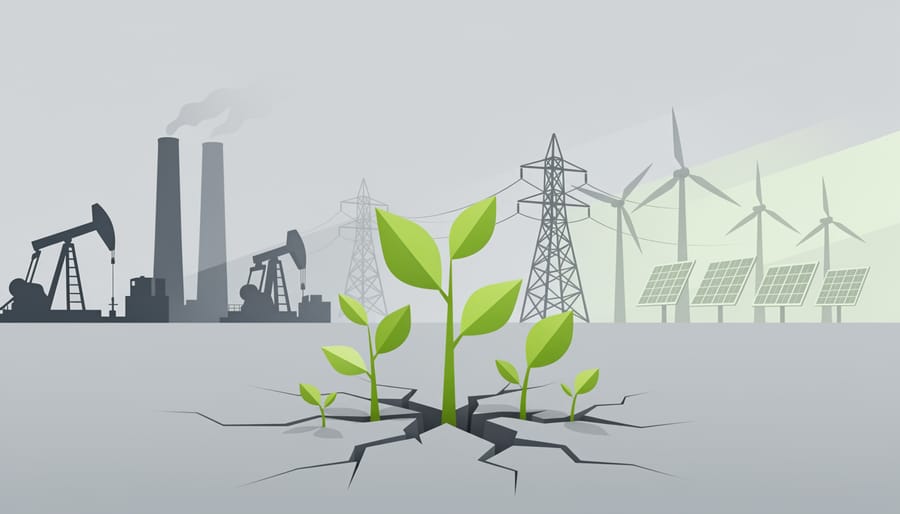
World Environment Day 2026 arrives at a defining moment for energy transition advocates who have spent years building the technical and policy foundations for sustainable systems. The verified climate change theme and UNEP’s framing, “step in, move further, steer a world already in motion”, acknowledges what energy professionals already know: the transition is underway, but execution speed matters more than awareness. Baku hosting on 5 June 2026 brings these dynamics into sharp relief, positioning a fossil fuel-producing region as the global stage for climate action conversations that directly intersect with energy sector realities.
For energy leaders, this creates three concrete opportunities. First, use the day’s momentum to formalize cross-sector partnerships that have been in exploratory phases, universities developing green skills curricula with industry partners, or regional coalitions aligning renewable deployment with employment programs. Second, frame ongoing energy transition initiatives within the broader climate narrative to secure stakeholder buy-in and funding that might otherwise remain elusive. Third, demonstrate measurable progress through project launches or milestone announcements timed to the global platform, translating “stepping in” from aspiration to documented implementation.
The energy sector’s challenge isn’t awareness, it’s coordinated execution at scale. World Environment Day 2026 offers a moment to synchronize advocacy with action, showing how climate commitment translates into operational energy system transformation, workforce development, and partnership models that outlast the calendar event itself.