
Anthropogenic Meaning: Why This Word Defines Our Climate Responsibility
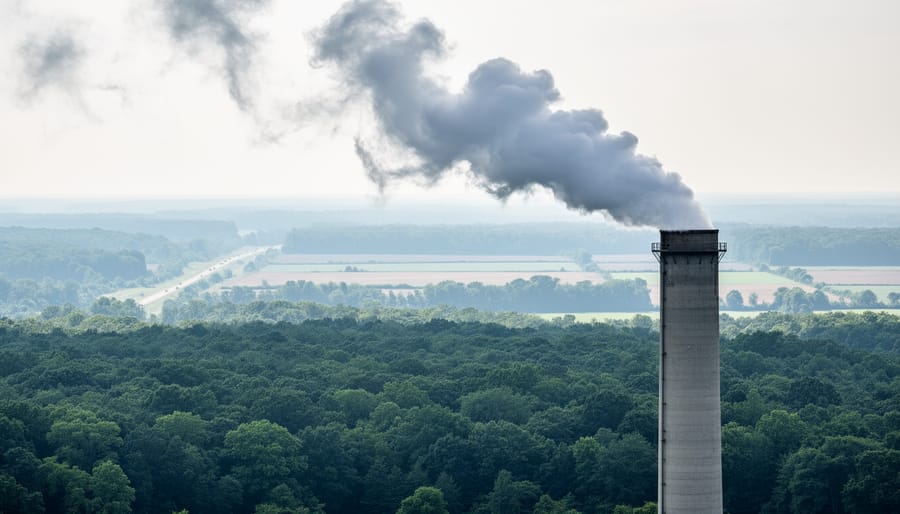
When climate scientists discuss rising global temperatures, they’re almost always talking about anthropogenic drivers. The term means “originating from human activity,” and it has become the defining lens through which we understand modern climate change. Every ton of carbon dioxide from a coal plant, every molecule of methane from agricultural operations, every particle of black carbon from diesel engines falls under this classification.
The distinction matters profoundly in 2026. As nations implement increasingly ambitious climate policies, identifying what’s anthropogenic versus natural allows us to target interventions effectively. A forest fire sparked by lightning presents different challenges than one caused by power line infrastructure. Natural methane seeps from wetlands require different responses than fugitive emissions from natural gas systems.
Consider Indonesia’s recent success in reducing deforestation rates by 34% between 2023 and 2025. Policymakers distinguished anthropogenic forest loss from natural disturbances, then designed land-use reforms addressing the human causes: palm oil expansion, illegal logging, and settlement patterns. This precision turned abstract climate goals into measurable outcomes.
Understanding anthropogenic sources also shapes how energy professionals allocate resources. A utility executive evaluating carbon reduction strategies needs to separate the anthropogenic signal from natural climate variability. A sustainability officer tracking Scope 1 emissions focuses exclusively on anthropogenic sources under company control.
The term isn’t just academic vocabulary. It’s the foundation for emissions accounting, climate attribution science, and every serious conversation about our energy future.
What Does Anthropogenic Actually Mean?
Anthropogenic meaning centers on a straightforward concept: human-made or human-caused. The term derives from the Greek words anthropos (human) and genes (born or produced), literally translating to “born of humans.” In climate and energy contexts, this definition carries profound weight. When scientists refer to anthropogenic climate change, they’re identifying warming and environmental shifts directly traceable to human activities rather than natural Earth cycles.
The precision matters. Climate systems respond to many forces, volcanic eruptions, solar radiation variations, ocean circulation patterns, but anthropogenic emissions are human-caused greenhouse gases from burning fossil fuels, industrial processes, and land use changes. This distinction shapes everything from international agreements to corporate sustainability strategies. By 2026, separating anthropogenic from natural climate drivers has become essential for energy professionals designing interventions that actually address root causes.
Understanding this terminology transforms how we frame responsibility and solutions. Natural climate variability occurs on geological timescales, often over thousands of years. Anthropogenic warming, by contrast, has accelerated dramatically since the Industrial Revolution, compressing centuries of potential change into mere decades. For policy makers and industry leaders, this human signature creates both accountability and opportunity. If human actions drive the problem, human innovation can solve it.
The scientific community has studied anthropogenic greenhouse gas effects for over a century, building the evidence base that now underpins renewable energy transitions, carbon pricing mechanisms, and net-zero commitments. In energy sector discussions, using “anthropogenic” rather than vague terms like “environmental impact” signals technical rigor and acknowledges the specific challenge: reversing human-caused emissions through deliberate, human-designed solutions.

Why ‘Anthropogenic’ Matters in Energy and Climate Policy
From Scientific Consensus to Action
The scientific community has been investigating human-caused emissions for well over a century building a robust foundation that now underpins every major climate policy framework worldwide. Early researchers identified carbon dioxide’s heat-trapping properties in the 1800s, and by the mid-20th century, scientists were measuring rising atmospheric CO2 concentrations and linking them directly to fossil fuel combustion. This wasn’t speculation. It was systematic observation, repeated experiments, and data collection across decades.
What began as theoretical physics evolved into comprehensive climate modeling, ice core analysis, and atmospheric monitoring. Thousands of studies across multiple disciplines converged on the same conclusion: human activities, particularly burning coal, oil, and gas, are fundamentally altering Earth’s climate system. The science behind climate change isn’t a recent discovery. It represents generations of accumulated evidence.
This scientific consensus transformed how governments, industries, and international bodies approach energy planning. Once the anthropogenic link was established beyond reasonable doubt, it became impossible to address climate challenges without tackling emissions at their source. The knowledge base built over more than a hundred years gave policymakers the certainty needed to negotiate international agreements, justify energy transitions, and invest billions in renewable infrastructure. Understanding that humans caused the problem also clarified that humans possess the capacity to solve it through deliberate choices in energy production and consumption.
The Attribution Question: Natural vs. Human-Caused
Climate scientists face a fundamental challenge: Earth’s climate has always varied naturally through ice ages, solar cycles, and volcanic eruptions. So how do researchers separate these natural fluctuations from the fingerprint of human activity? The answer lies in attribution science, which examines the timing, pattern, and magnitude of observed warming against the natural variability backdrop.
Natural climate drivers change slowly over millennia or occur in short, irregular bursts. Volcanic eruptions cool the planet temporarily. Solar output varies on 11-year cycles. These processes leave distinct signatures in temperature records, ice cores, and ocean sediment layers. By contrast, the warming observed since the mid-20th century is rapid, sustained, and correlates directly with rising atmospheric CO2 from fossil fuel combustion and land use changes.
Attribution studies use climate models to run parallel simulations: one set includes only natural factors, another adds anthropogenic greenhouse gas emissions. The models that include human influences match observed warming patterns. Those with natural factors alone do not. This distinction matters profoundly for energy policy because it clarifies where intervention can work. We cannot engineer the sun or prevent all volcanic activity, but we can transform how we generate and consume energy. Understanding this separation empowers energy professionals to focus resources on solutions that address the actual driver of current climate change: human emissions from our energy systems.
Anthropogenic Emissions: The Energy Sector’s Central Challenge
Case Study: Northern Europe’s Anthropogenic Emissions Tracking
Northern Europe has emerged as a proving ground for translating anthropogenic understanding into measurable action. Countries across Scandinavia and the Baltic region have developed sophisticated frameworks for tracking human-caused emissions at granular levels, moving beyond national inventories to sector-specific and even facility-level monitoring. These systems distinguish anthropogenic sources, power generation, transportation, industrial processes, agriculture, from natural carbon cycles, creating accountability that drives targeted reduction strategies.
The approach centers on coalition partnerships that connect government agencies, research institutions, and energy companies around shared emissions data. When all stakeholders work from the same anthropogenic baseline, they can identify the highest-impact intervention points. Danish energy providers, for example, use detailed anthropogenic tracking to demonstrate how offshore wind expansion directly displaces fossil fuel emissions, quantifying the human-caused reduction in real time. Swedish industrial coalitions track process emissions to pilot hydrogen alternatives in steel production, measuring the anthropogenic difference as they scale.
What makes Northern Europe’s model instructive is its integration across scales. Regional governments coordinate standards so that local municipalities, national authorities, and cross-border partnerships measure anthropogenic emissions consistently. This interoperability means that a retrofit program in one city can share verified emission reductions with policymakers crafting national energy plans, while researchers access the data to refine climate models.
The practical lesson extends beyond Northern Europe: understanding anthropogenic meaning transforms from abstract vocabulary into operational intelligence. When coalitions establish clear metrics for what qualifies as human-caused emissions versus natural processes, they create the foundation for verifiable progress. Tracking becomes transparent, innovation becomes accountable, and the energy transition becomes something you can measure in tonnes of anthropogenic CO₂ avoided, not just policy intent.
How Understanding ‘Anthropogenic’ Transforms Energy Innovation
Understanding that climate change is human-caused transforms passive observation into active problem-solving. When energy professionals accept the anthropogenic nature of emissions, it doesn’t just assign blame, it identifies leverage points for innovation. This recognition has catalyzed unprecedented investment in clean technology, creating entirely new industries and career pathways that didn’t exist two decades ago.
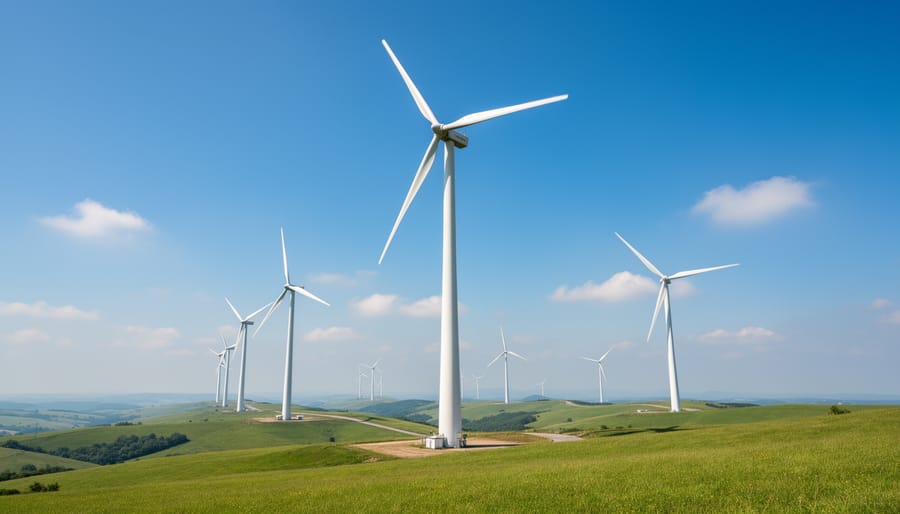
The logic is straightforward: if human activities created the problem through fossil fuel combustion and industrial processes, then human ingenuity can solve it through better technologies and systems. This mindset shift has driven breakthroughs in solar efficiency, battery storage capacity, and wind turbine design. Engineers who understand anthropogenic emissions as a design challenge rather than an inevitable byproduct approach their work differently, asking how to eliminate emissions at the source rather than simply measuring them.
This same principle applies to energy system integration where recognizing human control over energy networks enables coordinated solutions across generation, storage, and distribution. By 2026, this understanding has matured into sophisticated approaches that balance renewable intermittency, optimize grid stability, and reduce waste throughout the energy lifecycle.
Carbon capture technologies offer another example. Accepting that humans released these emissions creates the mandate, and the business case, for technologies that remove them. What started as theoretical concepts in the early 2000s has evolved into commercial-scale operations, driven by the clear assignment of responsibility that the term anthropogenic provides.
The sustainable employment dimension matters too. Framing climate solutions as addressing anthropogenic causes creates jobs with purpose. Workers transitioning from fossil fuel industries to renewable sectors aren’t just changing employers; they’re shifting from contributing to the problem to building solutions, a narrative that attracts talent and investment alike.
Expert Perspectives: Why Vocabulary Shapes Climate Solutions
When energy professionals from different sectors meet to discuss climate solutions, their ability to collaborate depends entirely on a shared understanding of core concepts. The term “anthropogenic” serves as a foundational bridge in these conversations, creating common ground between scientists who measure emissions, engineers who design clean energy systems, and policymakers who craft regulations. Without precise vocabulary, cross-sector partnerships struggle to translate knowledge into action.
Clear terminology transforms climate discussions from abstract debates into concrete problem-solving sessions where every participant understands the scope and source of the challenge.
Climate scientists emphasize that using “anthropogenic” rather than vague terms like “man-made” or “pollution-related” maintains scientific rigor while communicating human agency. This precision matters when drafting international agreements, setting emissions targets, or designing carbon accounting frameworks. Policymakers note that shared vocabulary accelerates legislative processes, as stakeholders across government, industry, and academia can engage without repeatedly clarifying basic concepts.
The practical benefits extend to energy education for professionals where consistent terminology enables faster skill development and knowledge transfer. Energy sector leaders report that teams fluent in climate vocabulary collaborate more effectively on renewable energy projects, efficiency upgrades, and transition strategies. When everyone understands that anthropogenic emissions represent the specific target for reduction efforts, conversations shift from defining the problem to implementing solutions. This linguistic clarity ultimately accelerates the pace of innovation and deployment across the sustainable energy landscape.
Understanding what anthropogenic means is more than a vocabulary lesson. It is a lens that clarifies both the scale of our responsibility and the power of our response. When we recognize that human activities drive climate change, we also acknowledge our capacity to reverse course through innovation, collaboration, and deliberate action across the energy sector.
This clarity transforms how we approach the energy transition in 2026. Precise language enables better partnerships between scientists, policymakers, and industry leaders. It grounds international agreements in shared understanding and drives targeted solutions, from renewable energy deployment to carbon capture technologies.
The term anthropogenic reminds us that the challenge is human-made, yes, but so are the solutions. The same ingenuity that powered industrial growth now fuels the clean energy revolution. By mastering this vocabulary and embracing what it reveals about our role, we equip ourselves to lead meaningful change.
Use this understanding to build bridges across sectors, to advocate for evidence-based policy, and to champion sustainable innovation. The climate crisis demands action rooted in clear-eyed recognition of cause and effect. In 2026 and beyond, let the anthropogenic reality inspire not paralysis, but purpose.