What Is Global 5 Communications (and How Does It Drive Collaboration)?
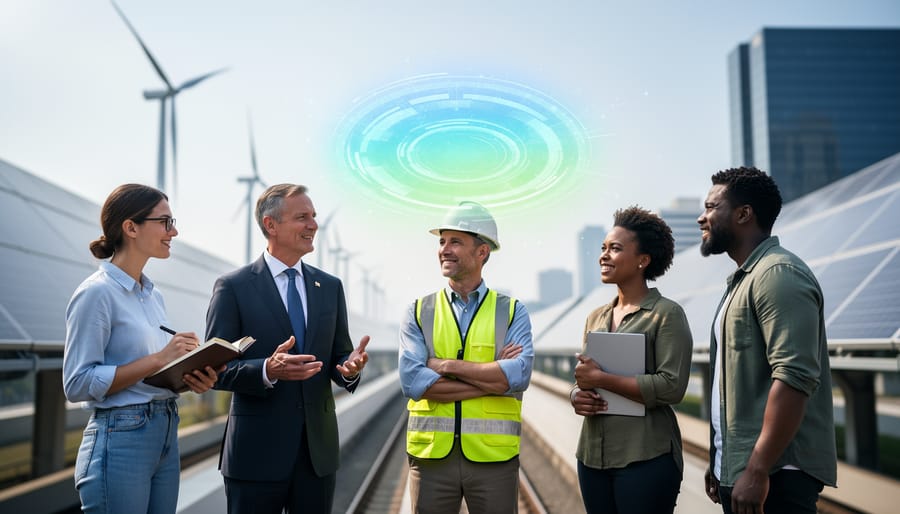
Global 5 Communications is a structured framework for convening five essential stakeholder groups, academia, government, industry, civil society, and communities, to accelerate sustainable energy transitions through coordinated dialogue and action. This multi-stakeholder engagement model addresses a fundamental challenge in energy transformation: siloed decision-making that slows innovation and implementation when the climate crisis demands unprecedented speed and scale.
The framework matters because traditional bilateral partnerships and sector-specific initiatives consistently fall short of the coordination required for systemic change. When academic researchers develop breakthrough technologies without industry pathways to market, when policy makers craft regulations without community input, or when civil society advocates for change without understanding technical constraints, progress stalls. Global 5 Communications creates the connective tissue between these actors, transforming fragmented efforts into unified momentum.
At its core, this approach recognizes that each stakeholder group holds distinct knowledge, resources, and authority that the others lack. Universities bring research capacity and long-term thinking. Governments wield regulatory power and public funding. Industry commands capital and deployment infrastructure. Civil society organizations mobilize public support and ensure equity considerations. Communities possess local knowledge and lived experience that determines whether solutions succeed or fail on the ground.
This article examines how the framework operates in practice, breaks down the specific role each stakeholder plays, and explores real-world applications where Global 5 Communications has catalyzed breakthroughs in renewable energy deployment, grid modernization, and just transition planning. By understanding this methodology, professionals can design more effective global collaborations that deliver measurable climate impact.
What Global 5 Communications Means in Energy Partnerships

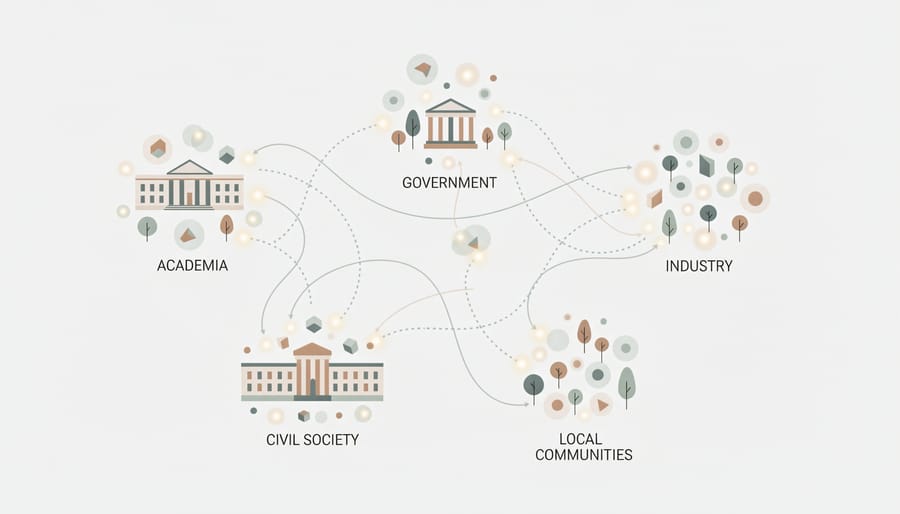
Global 5 Communications represents a systematic framework for orchestrating dialogue and knowledge exchange among five distinct stakeholder groups essential to the energy transition. Unlike conventional partnership models that connect two or three parties, this approach recognizes that sustainable energy transformation requires coordinated input from academia, government, industry, civil society, and local communities working in concert.
The framework emerged from the recognition that traditional bilateral partnerships, such as government-to-industry agreements or academic-corporate collaborations, often miss critical perspectives that later derail implementation. Energy projects designed by governments and utilities without community input frequently face resistance. Technologies developed in labs without industry participation struggle to commercialize. Policies crafted without civil society perspectives may overlook equity concerns that undermine public support.
- Academia
- Universities and research institutions that generate evidence-based solutions, train the next generation of energy professionals, and provide independent analysis of transition pathways.
- Government
- Public sector bodies at national, regional, and local levels that establish regulatory frameworks, allocate resources, and coordinate infrastructure development.
- Industry
- Private sector entities that deploy capital, commercialize technologies, and operate energy systems at scale.
- Civil Society
- Non-governmental organizations, advocacy groups, and social movements that represent public interests, ensure accountability, and champion environmental justice.
- Local Communities
- Residents, Indigenous groups, and place-based organizations who hold contextual knowledge, bear direct impacts, and shape social acceptance of energy initiatives.
What distinguishes Global 5 Communications from traditional stakeholder consultation is its emphasis on multi-directional exchange rather than one-way information flow. Each group holds distinct expertise, operates under different incentives, and faces unique constraints. Academia contributes rigorous analysis but may lack implementation experience. Industry brings execution capacity but answers to shareholders. Communities possess lived experience but often lack formal platforms for influence.
The framework treats these five groups as co-equal partners in defining problems, designing solutions, and evaluating outcomes. Information doesn’t simply flow from researchers to policymakers to implementers. Instead, community observations inform academic research priorities, industry insights shape policy design, and civil society perspectives refine corporate strategies. This simultaneity of exchange accelerates learning and reduces the costly cycles of proposal, opposition, and redesign that plague many energy projects.
How Global 5 Communications Works in Practice
Communication Channels and Protocols
The five stakeholder groups exchange knowledge through layered communication infrastructure designed for different scales and purposes. Digital platforms form the foundational layer, providing continuous access to shared databases, project dashboards, and collaborative workspaces where stakeholders monitor progress and coordinate activities across time zones. These systems enable real-time data sharing between research institutions and industry partners while maintaining transparency for civil society observers.
Structured convenings create dedicated spaces for deeper dialogue. Quarterly forums bring together representatives from all five groups to review regional energy initiatives, address implementation barriers, and align priorities. These gatherings follow standardized protocols: pre-circulated briefing materials ensure participants arrive informed, facilitated sessions allocate equal speaking time to each stakeholder group, and documented outcomes include clear action items with assigned responsibilities.
Formal memoranda of understanding establish the governance framework guiding these exchanges. These agreements specify information-sharing obligations, outline decision-making authorities, and define escalation procedures when stakeholders disagree. The protocols deliberately build redundancy into communication flows, critical updates travel through multiple channels simultaneously, ensuring that no single group controls the information architecture or becomes a bottleneck that slows collaboration.
Integration Mechanisms for Knowledge Transfer
Knowledge transfer in Global 5 Communications relies on systematic mechanisms that convert regional experiences into actionable intelligence for all stakeholder groups. This process begins with standardized capture frameworks that document what worked, what failed, and why in specific energy initiatives. Academic partners typically design these frameworks to ensure rigour, while civil society organizations often lead the ground-level documentation, particularly in community-led projects.
Translation layers transform technical findings into formats each stakeholder group can apply. When industry develops a breakthrough battery storage solution, academic partners translate the technical specifications into policy recommendations for government while civil society translates the implications for community adoption. Government agencies might simultaneously translate the regulatory requirements into implementation guidance for industry. This multi-directional translation prevents knowledge from remaining siloed within one sector’s vocabulary.
Digital knowledge repositories serve as the infrastructure backbone, though their design matters more than their sophistication. Effective systems like those used in mapping regional energy initiatives create searchable databases tagged by stakeholder relevance, geographic context, and development stage. These platforms enable a community group in one region to quickly locate similar challenges solved elsewhere, while allowing policymakers to identify patterns across multiple projects.
Regular synthesis meetings where representatives from all five groups review captured knowledge together close the integration loop, ensuring insights don’t just flow through channels but actually reshape decisions across the network.
Components of Effective Multi-Stakeholder Communication
Multi-stakeholder communication doesn’t succeed by accident. It requires deliberate architecture that addresses the inherent challenges of coordinating diverse groups with different priorities, languages, and institutional cultures. The Global 5 framework depends on five interconnected components, each addressing a specific barrier to effective collaboration.
Trust-building frameworks form the foundation. Without mutual confidence, stakeholders withhold critical information or pursue parallel agendas rather than coordinated action. Effective frameworks establish clear expectations around data sharing, intellectual property, decision authority, and credit attribution. They create psychological safety through confidentiality protocols and structured dialogue formats that prevent any single group from dominating conversations. In energy transitions, where decisions affect livelihoods and regional economies, trust mechanisms must explicitly address how the framework will protect vulnerable communities during technological and policy shifts.
Shared vocabularies bridge technical divides. Academics, policymakers, engineers, advocates, and community representatives each use specialized terminology that can obscure rather than clarify. Successful Global 5 initiatives invest in translation work, developing glossaries and reference documents that explain concepts in multiple registers. This isn’t dumbing down; it’s precision in communication. When everyone understands what “just transition” or “baseload capacity” means in practice, conversations accelerate.
Transparency mechanisms ensure accountability. These include:
- Public repositories for meeting summaries and decision rationales
- Open-access dashboards tracking progress against shared goals
- Regular reporting cycles with standardized metrics across stakeholder groups
- Clear documentation of funding sources and potential conflicts of interest
- Accessible channels for questions and challenges from all participants
Conflict resolution protocols acknowledge that disagreement is inevitable when diverse interests converge. Rather than avoiding tension, mature frameworks establish mediation processes, escalation pathways, and decision-making fallbacks when consensus proves elusive.
Adaptive governance structures allow the communication framework itself to evolve. Fixed bureaucracies calcify as circumstances change. Effective multi-stakeholder systems build in regular reviews of their own processes, empowering participants to redesign channels and protocols as the collaboration matures.
Applications Across the Energy Transition
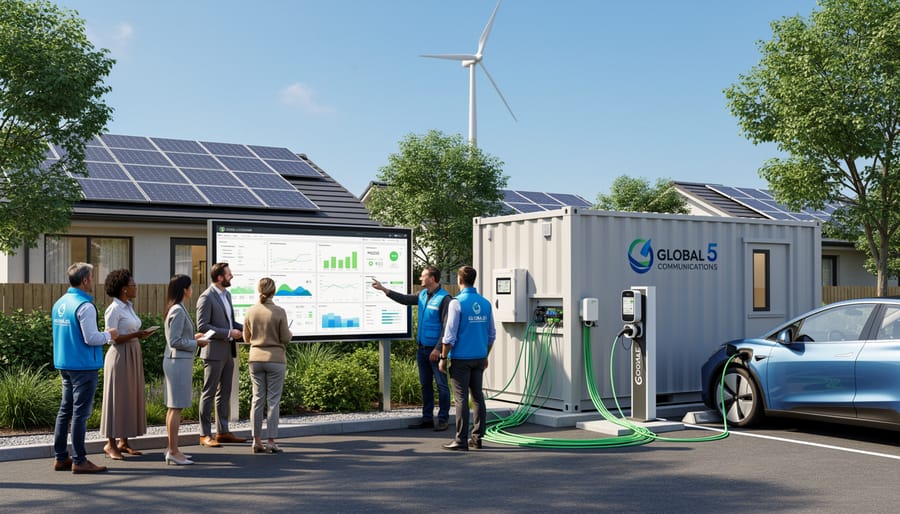
Northern European Green Skills Initiatives
Northern Europe’s approach to building a green skills workforce demonstrates how the five stakeholder groups can align around a shared challenge. In Denmark and Sweden, universities partner with wind turbine manufacturers to design apprenticeships that directly address industry gaps in offshore wind installation and maintenance. Meanwhile, national employment agencies coordinate with municipal governments to identify workers in declining sectors who could transition into renewable energy roles. Community colleges work alongside civil society organizations to deliver training in underserved regions, ensuring geographic equity in access to green jobs.
The communication infrastructure supporting these programs includes quarterly convenings where industry representatives share evolving skill requirements, which academic institutions then translate into updated curricula within six-month cycles. Local communities provide feedback through regional workforce boards, highlighting barriers such as childcare or transportation that might prevent participation. This loop creates responsive programs rather than static courses. Government funding flows to initiatives that demonstrate active input from all five groups, creating an incentive structure that reinforces the collaborative model. The result has been a 40 percent increase in certified renewable energy technicians across the region since 2024, with retention rates exceeding traditional vocational programs.
Cross-Regional Technology Transfer Programs
Cross-regional technology transfer programs demonstrate how the five-stakeholder model accelerates sustainable energy adoption across borders. When academia identifies breakthrough innovations, government provides regulatory frameworks, industry offers commercialization capacity, civil society ensures community acceptance, and local communities contribute implementation insights, technologies move faster between regions than through traditional bilateral agreements.
Consider offshore wind deployment. Danish academic institutions developed foundational turbine designs, their government established testing zones, industry partners refined manufacturing processes, environmental organizations addressed marine ecosystem concerns, and coastal communities shaped siting protocols. This knowledge package, technical specifications, regulatory templates, stakeholder engagement playbooks, now transfers to emerging markets through coordinated five-party exchanges rather than fragmented consultancies.
The model proves particularly effective for lowering emissions in regions transitioning away from fossil fuels. Southeast Asian nations adopting solar microgrids receive not just hardware from Germany or Japan but comprehensive implementation frameworks: university research on tropical climate adaptations, government procurement models, industry maintenance protocols, civil society monitoring systems, and community ownership structures. Each stakeholder group transfers domain-specific knowledge simultaneously.
Technology transfer also works in reverse. Brazilian biofuel innovations developed through indigenous community partnerships now inform European rural energy strategies, with local knowledge about sustainable biomass harvesting enriching academic research and industrial processes. This multi-directional flow addresses the renewables vs coal transition by sharing both technological solutions and social implementation strategies across vastly different energy contexts.
Building Your Organization’s Global 5 Framework
Organizations ready to adopt Global 5 Communications need a structured approach that balances ambition with practicality. Start with a comprehensive stakeholder audit across all five dimensions. Map existing relationships within academia, government, industry, civil society, and community groups, identifying both active partners and potential connections. This exercise often reveals surprising gaps, many energy initiatives discover they have strong industry-government ties but weak connections to community organizations or academic researchers working on relevant problems.
Next, establish your communication infrastructure before launching major initiatives. This doesn’t require expensive platforms initially. A shared digital workspace with clear information architecture, regular virtual convenings with rotating facilitators from different stakeholder groups, and transparent documentation practices create the foundation. The key is designing systems that lower barriers to participation rather than adding bureaucratic layers. One regional energy coalition found success by creating a simple monthly briefing format where each stakeholder group contributed a two-page update, creating a continuous knowledge stream without overwhelming participants.
Governance design matters more than many organizations realize. Traditional hierarchical structures don’t serve multi-stakeholder frameworks well. Consider rotating leadership, decision-making protocols that require input from at least three stakeholder groups on major initiatives, and clear escalation pathways when conflicts arise. Build in formal feedback mechanisms where community representatives and civil society groups can flag concerns early rather than after plans are finalized.
Develop success metrics that reflect collaborative health alongside project outcomes. Track participation rates across stakeholder groups, measure knowledge transfer through specific examples of shared learning influencing decisions, and assess trust levels through periodic surveys. A renewable energy consortium in Central Europe monitors “cross-sector citations”, instances where one stakeholder group references or builds upon another group’s contribution in their own work.
Start small with pilot projects involving all five groups, learn from what works, then scale gradually. The framework becomes more valuable as network effects build over time.
The shift from siloed decision-making to genuinely inclusive collaboration represents more than an operational preference, it’s a strategic necessity for achieving meaningful climate action. Global 5 Communications provides both the conceptual foundation and the practical infrastructure to make this transition possible, transforming how knowledge flows between the groups that shape our energy systems.
Organizations that embrace this framework gain access to insights they would never discover through traditional partnerships. When academic research meets community-based knowledge, when industry innovation aligns with civil society priorities, and when government policy reflects all these perspectives, the resulting solutions carry greater legitimacy and demonstrate higher adoption rates. The evidence from Northern European workforce programs and cross-regional technology transfers shows that five-way collaboration accelerates implementation timelines while reducing friction costs.
Can smaller organizations participate effectively in Global 5 Communications?
Yes. The framework scales to organizational capacity, allowing participation through existing networks and coalitions rather than requiring independent infrastructure. Many smaller entities contribute specialized knowledge that becomes valuable when connected to broader stakeholder groups.
How long does it take to establish functional Global 5 Communications?
Initial frameworks can be operational within six to twelve months, though building trust and refining protocols continues throughout the partnership. Early wins in specific project areas help validate the approach and build momentum.
What happens when stakeholder groups have conflicting priorities?
The framework includes structured conflict resolution protocols and transparent decision-making processes that surface disagreements early. Most conflicts resolve when groups understand each other’s constraints and can identify shared objectives.
The distinction between aspirational sustainability goals and achieved outcomes often traces back to communication architecture. Well-designed stakeholder engagement doesn’t just facilitate information exchange, it creates the conditions for joint problem-solving, mutual accountability, and adaptive learning. As energy systems grow more complex and interdependent, the ability to coordinate across institutional boundaries becomes as critical as the technologies themselves.