
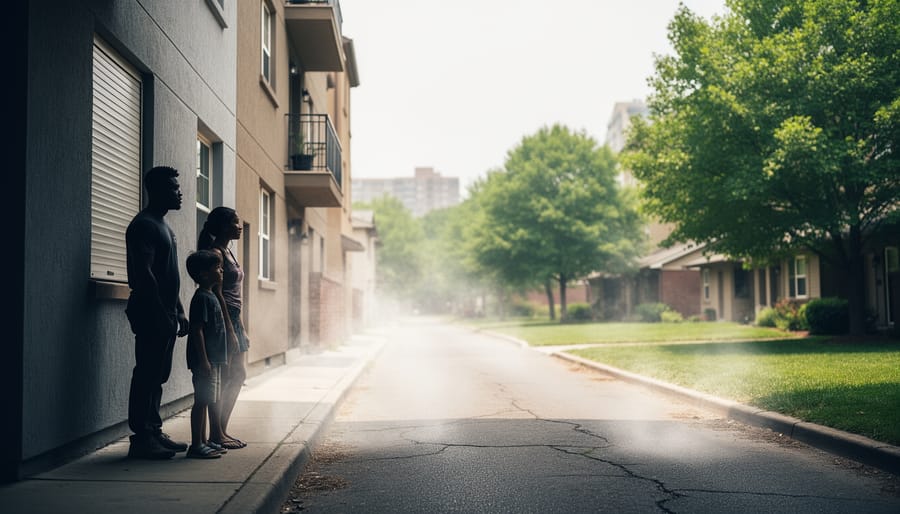
Why the Greenhouse Effect Hits Vulnerable Communities Hardest
The greenhouse effect works like a thermal blanket around Earth. Solar radiation passes through our atmosphere, warms the planet’s surface, and then radiates back as infrared heat. Greenhouse gases including carbon dioxide, methane, and water vapor trap some of this outgoing heat, preventing it from escaping to space. Without this natural process, Earth’s average temperature would plummet to around -18°C, making our planet uninhabitable. But here’s what transforms a scientific mechanism into a justice issue: the communities least responsible for excess greenhouse gas emissions face the most severe consequences.
Dr. Amara Okonkwo, a climate scientist at the Lagos Institute for Environmental Research, saw this disparity firsthand in 2024 when she documented temperature patterns across Nigerian cities. “We measured a 4.2°C temperature increase in low-income neighborhoods compared to 2.1°C in areas with green infrastructure,” she explains. “The greenhouse effect doesn’t discriminate, but our built environments do. Concrete absorbs and re-radiates heat differently than tree cover, and wealth determines who gets shade.”
The physics remains straightforward: more greenhouse gases intensify the trapping effect, raising global temperatures. Since the Industrial Revolution, atmospheric CO2 has increased from 280 parts per million to over 425 ppm in 2026. That enhanced greenhouse effect now drives cascading impacts, from agricultural disruption to infrastructure damage, disproportionately affecting frontline communities.
Understanding this definition means recognizing both the mechanism and its unequal outcomes. A subsistence farmer in Bangladesh experiences the greenhouse effect as rising sea levels flooding rice paddies. A Phoenix resident working outdoors confronts it as dangerous heat exposure. For professionals communicating climate science in 2026, explaining the greenhouse effect requires connecting atmospheric chemistry to lived human experience, particularly for those communities shouldering climate impacts they did little to create.
The Greenhouse Effect Explained: Beyond the Basics
The Key Greenhouse Gases Driving Warming
While the science behind climate change involves multiple factors, certain greenhouse gases drive the majority of warming. Understanding which gases matter most, and where they come from, is fundamental for professionals developing decarbonization strategies across energy, industry, and policy sectors.
| Greenhouse Gas | Primary Sources | Atmospheric Lifetime | Global Warming Potential (100-year) |
|---|---|---|---|
| Carbon dioxide (CO2) | Fossil fuel combustion, deforestation, cement production | 300-1,000 years | 1 (baseline) |
| Methane (CH4) | Natural gas systems, livestock, landfills, agriculture | 12 years | 28-36 |
| Nitrous oxide (N2O) | Agricultural fertilizers, industrial processes, combustion | 114 years | 265-298 |
| Fluorinated gases (HFCs, PFCs, SF6) | Refrigeration, electronics manufacturing, electrical equipment | 1-50,000 years | 1,300-23,500 |
Carbon dioxide dominates by sheer volume, accounting for roughly three-quarters of global emissions. Every coal-fired power plant, combustion engine, and industrial furnace contributes. Yet methane packs an outsized punch despite shorter atmospheric persistence, its immediate warming effect makes reducing methane leaks from natural gas infrastructure and agricultural systems a high-impact strategy. Nitrous oxide, often overlooked, persists for over a century and emerges primarily from intensive farming practices. Fluorinated gases, though less abundant, can linger for millennia with warming potentials thousands of times greater than CO2, making containment in HVAC systems and manufacturing crucial. For coalition members working toward equitable climate solutions, recognizing these differences shapes where interventions deliver the greatest benefit, both for the climate and for vulnerable communities affected by emissions from these sectors.
From Science to Suffering: How the Greenhouse Effect Creates Unequal Impacts
Geographic Disparities in Climate Vulnerability
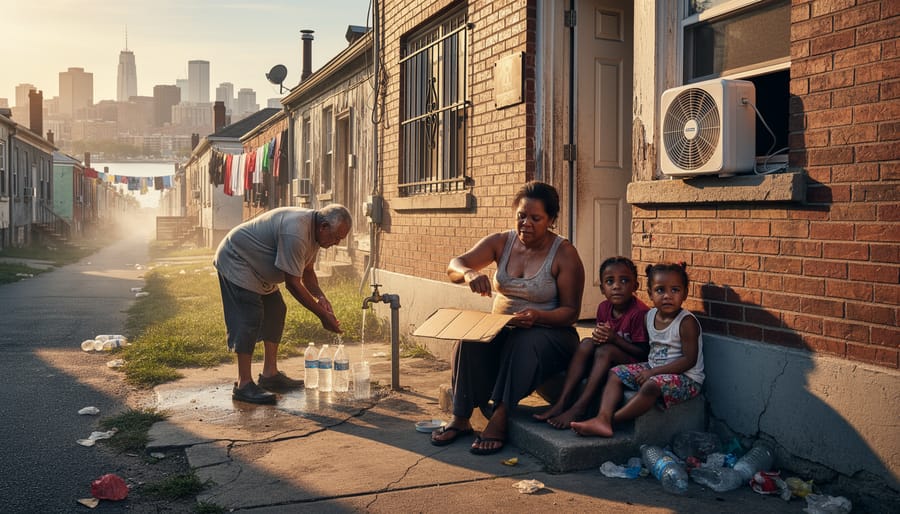
The greenhouse effect warms the entire planet, but its consequences land far from evenly. Geography determines who swelters and who survives, transforming a global process into a localized crisis that continues to harm the poor most severely.
Small island nations face an existential calculation. Tuvalu, the Maldives, and the Marshall Islands watch tide gauges rise millimeter by millimeter as thermal expansion and melting ice sheets push seawater onto their shores. For these communities, enhanced greenhouse warming translates directly into submerged homes, contaminated freshwater supplies, and entire nations negotiating for territory elsewhere. The greenhouse effect doesn’t just change their climate, it erodes the land beneath their feet.
In the Arctic, warming occurs at twice the global average rate, a phenomenon called Arctic amplification. Indigenous communities across Alaska, northern Canada, Greenland, and Siberia confront collapsing permafrost that buckles infrastructure, vanishing sea ice that disrupts hunting traditions spanning millennia, and coastlines retreating as frozen ground thaws and slumps into warming seas. Their food security, cultural practices, and physical safety depend on frozen landscapes that the greenhouse effect is systematically dismantling.
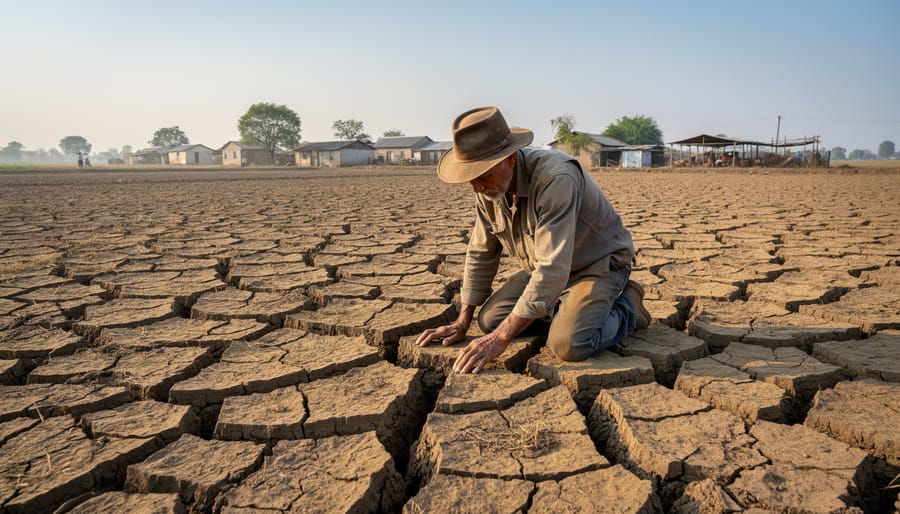
Sub-Saharan Africa experiences greenhouse-driven temperature increases overlaid on regions already wrestling with water scarcity. The Sahel stretches across a belt where rainfall patterns have shifted unpredictably, turning once-reliable growing seasons into gambles. Farmers in Kenya, Ethiopia, and Somalia face intensified droughts that shrivel crops, decimate livestock, and force migration when wells run dry.
Coastal Bangladesh represents the convergence of multiple greenhouse effect impacts: sea level rise pushing saltwater into the Ganges-Brahmaputra delta, intensified cyclones driven by warmer ocean temperatures, and seasonal flooding that displaces millions. Here, greenhouse warming creates cascading disruptions that compound poverty, limit opportunity, and force impossible choices about when to abandon ancestral homes.
Socioeconomic Factors That Amplify Risk
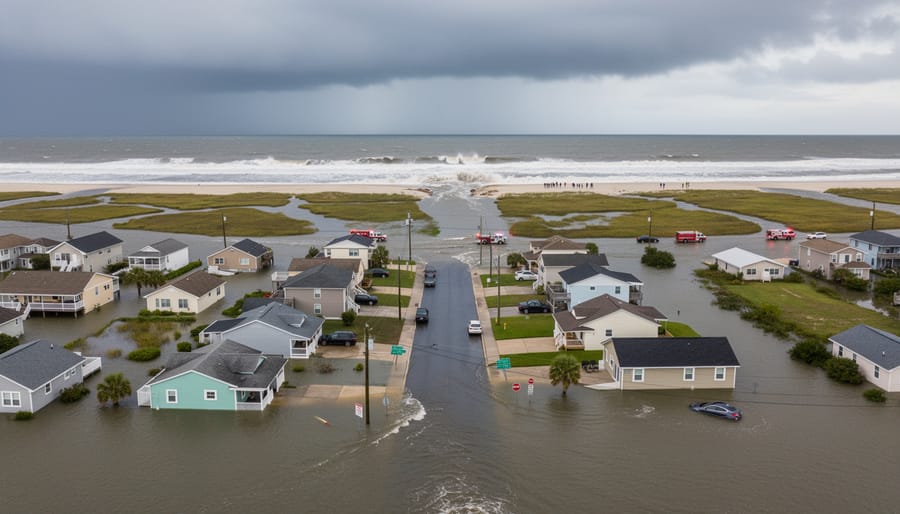
The greenhouse effect’s warming doesn’t discriminate, but its consequences absolutely do. Vulnerability to climate impacts isn’t randomly distributed. It clusters where poverty limits options, where infrastructure has been neglected, and where power structures have historically excluded certain populations from decision-making.
In cities across North America and Europe, low-income neighborhoods experience urban heat islands that trap temperatures 5-7°C higher than wealthier districts just kilometers away. These communities often lack tree canopy, have more heat-absorbing pavement, and live in buildings without air conditioning. When heat waves intensify under continued greenhouse gas accumulation, residents face health crises that affluent neighborhoods can simply cool away.
Agricultural communities tell a parallel story. Smallholder farmers without access to irrigation technology watch crops fail during droughts that climate models projected decades ago. They understand the greenhouse effect’s consequences intimately, even if they never contributed meaningfully to the emissions driving it. Meanwhile, industrial agriculture deploys technology and insurance mechanisms that buffer against the same climate variability.
Healthcare access determines survival during climate extremes. Communities with robust public health infrastructure, early warning systems, and emergency response capacity weather heat waves, floods, and disease outbreaks that devastate regions lacking these resources. Governance structures matter profoundly here. Regions with transparent institutions, participatory planning processes, and accountability mechanisms can mobilize adaptive responses. Where corruption, disenfranchisement, or institutional weakness prevail, vulnerable populations face climate impacts without the collective support systems that make adaptation possible.
The greenhouse effect operates as pure physics. The distribution of its harm reflects purely human choices about investment, equity, and who gets protected.
Case Study: Northern Europe’s Climate Equity Initiatives in 2026
In Finland’s capital region, a 2026 workforce development initiative demonstrates how greenhouse gas reduction and social equity can advance together. The Helsinki Metropolitan Skills Transition Program recruits participants from immigrant communities, refugee populations, and formerly incarcerated individuals for intensive training in heat pump installation, energy auditing, and building retrofit techniques. Participants receive living stipends during the six-month certification process, and the program guarantees job placements with cooperatives and municipal contractors committed to emission-reducing building improvements. By year’s end, over 300 people from historically marginalized backgrounds had entered careers directly addressing the enhanced greenhouse effect while securing economic stability.
The program’s design reflects a deliberate strategy: as Northern Europe accelerates building decarbonization to meet climate commitments, it can simultaneously create pathways out of poverty rather than reinforcing existing inequalities. Trainees work on retrofit projects prioritizing social housing and low-income neighborhoods, meaning the communities most vulnerable to energy poverty benefit first from efficiency improvements that reduce both emissions and utility costs. This dual focus emerged from coalition discussions among energy sector representatives, municipal governments, and community advocates who recognized that climate action divorced from equity concerns would leave vulnerable populations behind.
Sweden’s approach extends beyond domestic boundaries through its Climate Technology Access Initiative, launched in early 2026. The program partners Swedish renewable energy firms with communities in East Africa and South Asia facing intensified drought and heat from greenhouse effect-driven warming. Rather than simply exporting technology, the initiative establishes multi-year partnerships where Swedish engineers work alongside local technicians to adapt solar irrigation systems, rainwater harvesting infrastructure, and cooling technologies to regional conditions. Participating companies receive tax incentives, while recipient communities gain both immediate adaptive capacity and long-term technical expertise to maintain and improve systems independently.
Norway’s approach centers on finance. Its Adaptation Equity Fund, capitalized at 2 billion kroner in 2026, directs resources specifically toward climate adaptation projects in regions experiencing disproportionate greenhouse effect impacts, small island nations confronting sea level rise, Arctic indigenous communities facing rapid temperature increases, and sub-Saharan agricultural zones dealing with changing precipitation patterns. The fund requires projects to demonstrate not just technical effectiveness but also community governance structures ensuring that adaptation benefits reach the most vulnerable rather than concentrating among local elites. Early disbursements supported mangrove restoration protecting coastal villages in Bangladesh, drought-resistant seed distribution programs in Kenya, and traditional knowledge preservation initiatives among Sami reindeer herders facing ecosystem disruption.
These Northern European models share common DNA: recognition that the greenhouse effect creates vastly unequal suffering, conviction that addressing emissions requires confronting inequality, and commitment to measuring success by both atmospheric concentrations and human outcomes. They offer templates for coalition members seeking to translate climate literacy into action that heals rather than deepens social divisions.
Expert Voices: Climate Scientists and Justice Advocates Speak
Understanding how greenhouse gases function as Earth’s insulation reveals why this knowledge matters beyond academic circles. Climate researchers, energy professionals, and justice advocates working across sectors agree that grasping the mechanism behind planetary warming is essential to crafting solutions that serve everyone.
Dr. Helena Martins, a climate scientist who has contributed to IPCC assessment reports, emphasizes that effective climate communication requires meeting people where they are. “When we explain that greenhouse gases trap heat like insulation rather than using abstract formulas, we create a foundation for productive conversations about emissions sources and reduction pathways,” she notes. “But understanding the science is only step one. The harder question is who bears the costs of both the problem and the solutions.”
This perspective resonates with energy sector leaders navigating the transition to cleaner systems. Rajesh Kumar, who directs renewable infrastructure development for a Northern European utility company, sees greenhouse effect literacy as a prerequisite for just decarbonization. “Our teams need to understand not just the climate imperative but also the differentiated impacts,” he explains. “When we deploy solar arrays or wind farms, we ask ourselves whether these projects create opportunities for the communities most affected by climate change, or whether they primarily serve those already advantaged. The technical know-how means nothing if it perpetuates inequalities.”
Environmental justice advocates add crucial dimensions to these conversations. Maria Santos, who works with vulnerable coastal communities in Southern Europe, argues that success metrics must extend beyond emissions reductions alone. “We measure progress by whether families can stay in their homes, whether children breathe cleaner air, whether workers transition to secure livelihoods,” she says. “The ways to combat climate change must prioritize the people who contributed least to the problem but face the greatest harm.”
What emerges from these diverse voices is a shared conviction: climate literacy without equity analysis produces incomplete solutions. Researchers provide the evidence base, industry leaders control significant resources and infrastructure decisions, and advocates ensure that vulnerable communities shape rather than simply receive climate action. Together, they demonstrate that addressing the greenhouse effect requires technical competence married to ethical commitment.
Pathways Forward: Addressing the Greenhouse Effect With Equity at the Center
Policy Frameworks That Work: Learning From Canada and Beyond
Canada’s climate framework demonstrates how ambitious greenhouse gas reduction targets can integrate equity when designed thoughtfully. The country’s Canada’s 40-45% target by 2030 and Net-zero by 2050 commitment provide a foundation, but the real test lies in implementation mechanisms that protect workers and communities during the transition.
Scotland offers instructive parallels. Their Climate Change Act includes a Just Transition Commission that advises government on supporting affected workers and regions as fossil fuel industries contract. The commission examines who bears transition costs and ensures policy doesn’t amplify existing inequalities. This institutional structure creates accountability beyond emissions numbers alone.
Costa Rica’s approach centers on preserving both ecological systems and rural livelihoods. Their reforestation programs employ local communities as forest stewards, compensating them for carbon sequestration while maintaining traditional land relationships. The model shows how climate policy can distribute benefits rather than concentrate them.
Effective frameworks share common elements: binding targets with interim checkpoints, dedicated funding for worker retraining and community adaptation, representation of vulnerable groups in decision-making processes, and impact assessments that track equity outcomes alongside emissions reductions. They recognize that vulnerable populations contributed least to greenhouse gas accumulation yet face the steepest adaptation challenges.
The distinction between aspirational targets and equitable implementation matters enormously. A policy that drives rapid emissions cuts while displacing Indigenous communities or gutting manufacturing towns without transition support fails the justice test, regardless of its carbon accounting success.
Understanding how greenhouse gases trap heat is where climate action begins, but that knowledge only becomes transformative when we recognize it as inseparable from questions of justice. The same mechanism that warms our planet operates everywhere, yet its consequences fall hardest on communities with the least responsibility for emissions and the fewest resources to adapt. This isn’t a side effect of the greenhouse effect. It’s the story of who gets protected and who gets left behind.
For energy professionals, policymakers, and researchers working toward a livable future, this creates both a responsibility and an opportunity. The energy transition we’re building doesn’t just need to reduce greenhouse gas concentrations. It needs to repair damage, redistribute resources, and create pathways out of poverty rather than deepen existing divides. When we design renewable energy systems, draft climate policies, or allocate adaptation finance, we’re making choices about whose suffering matters.
The science gives us clarity about the problem. Justice determines whether our solutions are worth building. As you apply your climate literacy in boardrooms, laboratories, and policy chambers, remember that every ton of CO2 reduced matters less if vulnerable communities remain exposed to the warming already locked in. The greenhouse effect taught us how we broke the climate. Equity will determine whether we fix it for everyone.